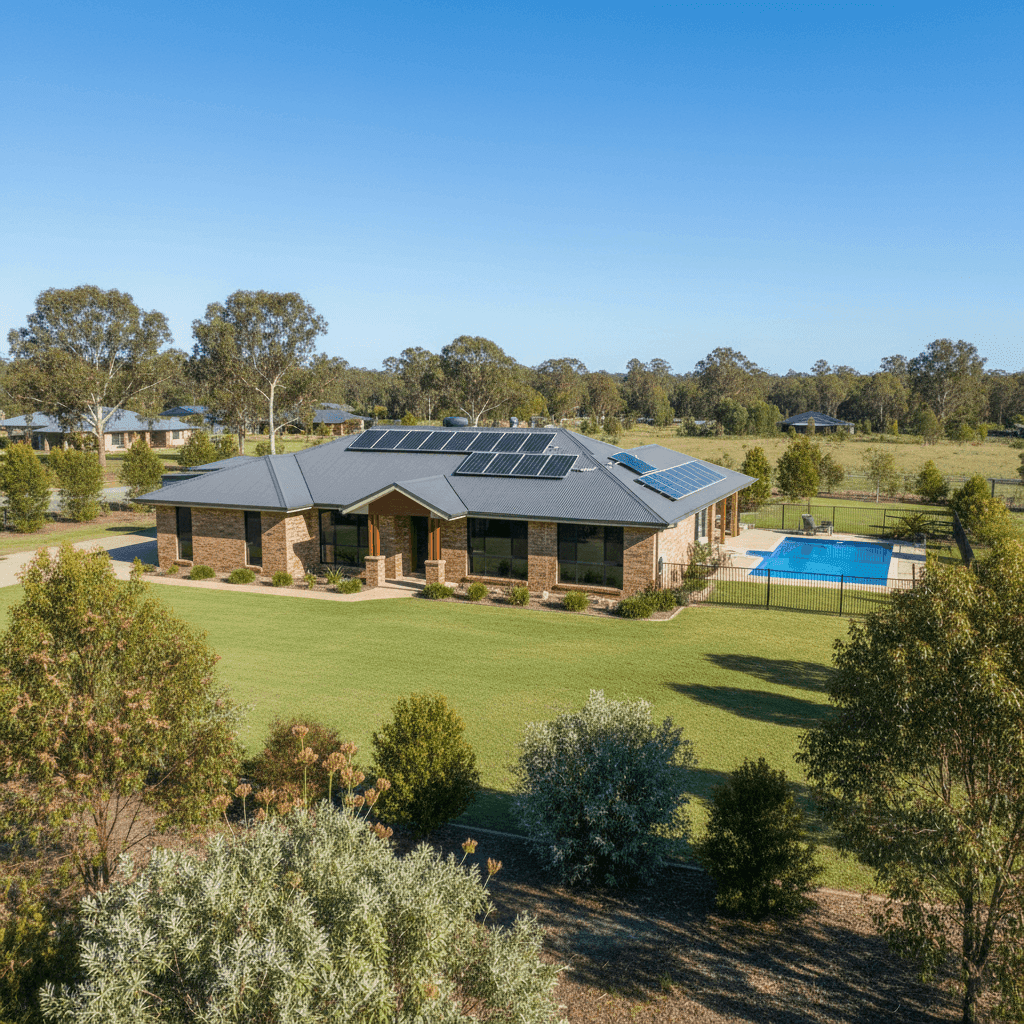
Curra is a quiet semi-rural locality in Queensland's Gympie Region, sitting inland from the Sunshine Coast hinterland. It's the kind of place where larger, well-appointed homes are common — and where insuring them properly matters. This article takes a close look at a recent home and contents insurance quote for a five-bedroom free standing home in Curra, QLD 4570, breaking down whether the premium is competitive and what factors are likely driving the cost.
---
Is This Quote Fair?
The annual premium on this quote comes in at $5,167 per year (or $501/month), covering $1,200,000 in building sum insured and $200,000 in contents. Our price rating for this quote is Expensive (Above Average).
To put that in context: the suburb average for Curra sits at $2,683/year, with a median of $2,367. This quote is nearly double the local median — a significant gap that warrants some explanation.
That said, it's worth noting that this is not a typical property. A 214 sqm home built in 2021 with above-average fittings, a swimming pool, solar panels, and ducted climate control is insured for $1.2 million in building cover — well above what many local properties would be insured for. Higher sums insured naturally attract higher premiums, and the contents cover of $200,000 adds further to the total. When you account for the sheer scale of what's being covered, the premium becomes more understandable — though it still sits at the upper end of the range.
---
How Curra Compares
Here's how this premium stacks up across different benchmarks:
| Benchmark | Average Premium | Median Premium |
|---|---|---|
| Curra (suburb) | $2,683/yr | $2,367/yr |
| Fraser Coast LGA | $3,385/yr | — |
| Queensland | $4,547/yr | $3,931/yr |
| National | $2,965/yr | $2,716/yr |
A few things stand out from this data:
- Queensland is an expensive state for home insurance. The QLD state average of $4,547/year is well above the national average of $2,965 — reflecting the state's elevated exposure to weather events including flooding, storms, and cyclones.
- Curra's local averages are relatively modest compared to the broader QLD picture, likely because many properties in the area are lower-value rural or semi-rural homes without the premium features found in this quote.
- This quote ($5,167) exceeds the QLD state average, placing it in the upper tier even by Queensland standards. However, given the high sum insured and premium inclusions, this isn't entirely surprising.
At the 75th percentile for the suburb, premiums reach $3,590/year — meaning this quote sits well above even the most expensive quarter of local quotes. Again, the elevated building sum insured is likely the primary driver.
---
Property Features That Affect Your Premium
Several characteristics of this property have a meaningful influence on what insurers charge:
High Sum Insured
At $1,200,000, the building sum insured is the single biggest cost driver here. Rebuild costs for a 214 sqm home with above-average fittings in regional Queensland can be substantial, and insurers price premiums proportionally to the amount they'd need to pay out in a total loss.
Above-Average Fittings
Premium fixtures, finishes, and appliances cost more to replace. Insurers factor in the quality of internal fittings when calculating both building and contents premiums, and "above average" fittings will push costs higher than a standard fit-out would.
Swimming Pool
Pools add to both the replacement cost of the property and the liability exposure for insurers. Most home and contents policies will cover the pool structure as part of the building, and this contributes to the overall sum insured.
Solar Panels
Solar panel systems — particularly larger residential arrays — are typically covered under the building component of a home insurance policy. Their inclusion adds to the rebuild cost and can influence the premium accordingly.
Ducted Climate Control
Ducted air conditioning systems are expensive to install and replace. As a fixed building feature, the system adds to the overall rebuild value and is factored into the building sum insured.
Brick Veneer Walls & Colorbond Roof
Brick veneer construction is generally viewed favourably by insurers — it's durable and fire-resistant. A Colorbond steel roof is similarly regarded as a resilient, low-maintenance roofing option. These construction types can help moderate premiums compared to less robust materials.
Slab Foundation & Tiled Flooring
A concrete slab foundation is structurally sound and offers good resistance to movement and moisture. Tiled flooring, while durable, is also relatively straightforward to replace — neither of these features would significantly inflate the premium.
Newer Construction (2021)
Homes built in recent years benefit from modern building codes, including improved cyclone and storm-resistance standards. Newer properties often attract slightly more competitive premiums than older homes requiring maintenance or updates.
---
Tips for Homeowners in Curra
1. Review Your Sum Insured Carefully
The building sum insured of $1.2 million is the dominant factor in this premium. It's worth periodically reviewing whether your sum insured accurately reflects current rebuild costs — not the market value of the property, but what it would genuinely cost to rebuild from scratch. Overinsuring can mean unnecessarily high premiums; underinsuring can leave you exposed. Consider using a professional building cost estimator or consulting your insurer.
2. Compare Quotes Annually
Insurance markets shift, and the quote you accepted last year may not be the most competitive option today. Given this premium is above the local suburb average, it's especially worth comparing quotes at CoverClub to see whether another provider can offer comparable cover at a lower price point.
3. Ask About Bundling Discounts
Many insurers offer discounts when you combine home and contents cover under a single policy — which this quote already does. However, it's worth confirming with your insurer that you're receiving any applicable multi-policy or loyalty discounts, and whether other bundled products (such as car insurance) could further reduce your overall insurance spend.
4. Consider Your Excess Settings
This policy carries a $2,000 building excess and a $1,000 contents excess. Opting for a higher excess is one of the most straightforward ways to reduce your annual premium. If you're financially comfortable absorbing a larger out-of-pocket cost in the event of a claim, increasing your excess could deliver meaningful savings — particularly on a premium at this level.
---
Compare Your Home Insurance Today
Whether you're a Curra local or just doing your research, it pays to know where your premium stands. CoverClub makes it easy to compare home insurance quotes from multiple providers in one place. Get a quote now at CoverClub and see how much you could save — or simply confirm you're already getting a fair deal. You can also explore detailed insurance stats for Curra and surrounds to benchmark your own policy.