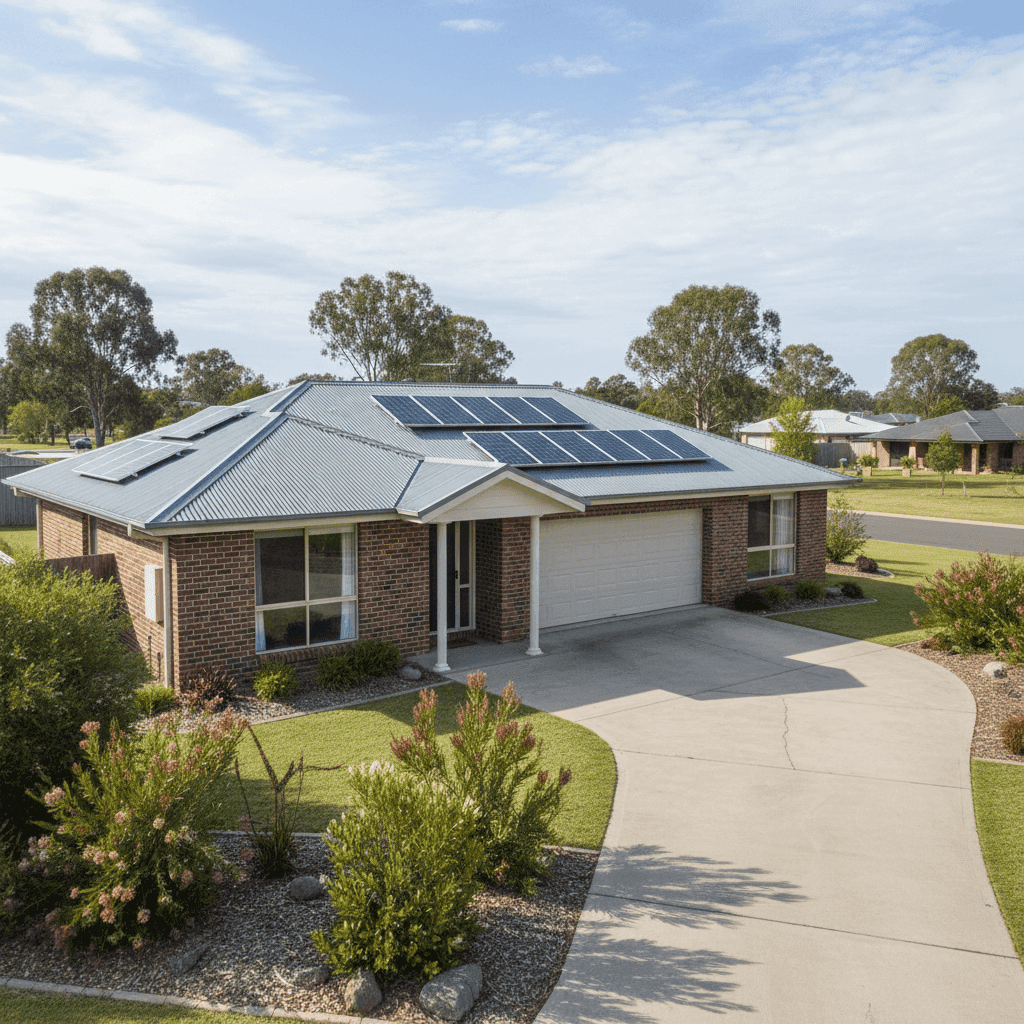
Home insurance in regional Queensland can vary enormously depending on where you live, what your home is made of, and how much cover you're after. This article breaks down a real home and contents insurance quote for a four-bedroom free standing home in Curra, QLD 4570 — a semi-rural locality in the Fraser Coast region — and puts the numbers into context so you can make a more informed decision about your own cover.
---
Is This Quote Fair?
The annual premium for this property came in at $2,005 per year (or $192 per month), covering both building and contents with a building sum insured of $442,000 and contents valued at $50,000. Both the building and contents excess are set at $1,000.
Our price rating for this quote is FAIR — Around Average, and the data backs that up. Based on 82 quotes collected for the Curra area, the suburb average sits at $2,683 per year and the median at $2,367 per year. This quote lands comfortably below both of those figures, which is an encouraging sign.
To put it in percentile terms: the 25th percentile for Curra premiums is $1,792 per year, and the 75th percentile is $3,590 per year. At $2,005, this quote sits in the lower-middle band of the local market — not the cheapest available, but well clear of the higher end. Homeowners paying above $3,590 per year for a similar property in this suburb may have room to shop around.
It's worth noting that "fair" doesn't necessarily mean "the best you can do." Insurance premiums are calculated differently by every insurer, and even a quote that benchmarks well against the suburb average could potentially be beaten by another provider for the same level of cover.
---
How Curra Compares
Zooming out reveals just how significant location is when it comes to home insurance pricing in Queensland.
| Benchmark | Annual Premium |
|---|---|
| This Quote | $2,005 |
| Curra Suburb Average | $2,683 |
| Curra Suburb Median | $2,367 |
| LGA Average (Fraser Coast) | $3,385 |
| QLD State Average | $4,547 |
| QLD State Median | $3,931 |
| National Average | $2,965 |
| National Median | $2,716 |
The standout figure here is the Queensland state average of $4,547 per year — more than double this quote, and a stark reminder of how expensive home insurance can be in parts of the state. Much of that state-wide inflation is driven by high-risk coastal and cyclone-prone areas in Far North Queensland, where premiums can climb well above $10,000 annually for some properties.
Curra itself sits in a more favourable risk position. It's not classified as a cyclone risk area, which is a meaningful factor in keeping premiums lower than the state average. The Fraser Coast LGA average of $3,385 per year suggests that some nearby properties — potentially those with greater flood or storm exposure — attract higher premiums, making this quote look even more competitive in local context.
Compared to the national average of $2,965 and median of $2,716, this quote also comes in below par, which is a positive outcome for the homeowner.
---
Property Features That Affect Your Premium
Every home is different, and insurers weigh up a range of physical characteristics when calculating your premium. Here's how the features of this particular property are likely influencing the cost:
Brick Veneer Walls Brick veneer is generally viewed favourably by insurers. It offers solid fire resistance and durability compared to timber weatherboard, which can reduce the perceived risk of structural damage claims.
Steel / Colorbond Roof A Colorbond steel roof is one of the more insurer-friendly roofing materials available. It's resistant to fire, doesn't rot, and holds up well in storms — all of which can contribute to a more competitive premium compared to, say, an ageing tiled or fibrous cement roof.
Slab Foundation Concrete slab foundations are typically associated with lower subsidence and moisture-related risk than raised timber stumps, which can be a positive factor in premium calculations.
Construction Year: 1990 At around 35 years old, this home is not new, but it's also not old enough to attract significant age-related loading. Homes built after the 1980s generally comply with more modern building codes, which insurers tend to view positively.
Solar Panels Solar panels are worth declaring to your insurer, as they add to the replacement value of your home. Some policies cover rooftop solar systems as part of the building sum insured, while others may require a specific endorsement. It's worth confirming this with your insurer to avoid a gap in cover.
Ducted Climate Control Ducted air conditioning systems are a fixed installation and are typically covered under building insurance. Their inclusion can influence the building sum insured, so it's important to ensure your $442,000 building cover adequately accounts for the cost of replacing this system if damaged.
Tile Flooring Tiled floors are durable and less susceptible to water damage than carpet or timber, which can be a minor positive factor in contents and building claims.
Building Size: 130 sqm At 130 square metres, this is a modest footprint for a four-bedroom home. A smaller floor area generally means a lower rebuild cost, which is reflected in the building sum insured and can keep premiums more manageable.
---
Tips for Homeowners in Curra
1. Review Your Building Sum Insured Regularly Construction costs in regional Queensland have risen significantly in recent years. It's worth checking that your $442,000 building sum insured still reflects the true cost of rebuilding your home from scratch — not just its market value. Underinsurance is one of the most common and costly mistakes homeowners make.
2. Confirm Solar Panel Coverage If your insurer covers solar panels under the building policy, make sure the system's replacement value is factored into your sum insured. If it's not explicitly included, ask about adding it — a rooftop solar system can represent a significant investment.
3. Shop Around at Renewal Time Even a quote rated "fair" can be improved upon. Insurers reprice their books regularly, and your renewal premium may not reflect the most competitive rate available. Using a comparison tool like CoverClub at renewal time takes only a few minutes and could save you hundreds of dollars.
4. Consider Your Excess Level Both the building and contents excess on this policy are set at $1,000. Opting for a higher excess can reduce your annual premium, while a lower excess means less out-of-pocket expense at claim time. Think about what you could comfortably afford to pay in the event of a claim and set your excess accordingly.
---
Compare Your Home Insurance with CoverClub
Whether you're renewing your existing policy or shopping for cover on a new property, it pays to see what the market looks like before you commit. CoverClub collects real premium data from homeowners across Australia, giving you genuine benchmarks to compare against — not just marketing estimates.
Get a home insurance quote today and see how your premium stacks up against your neighbours in Curra and across Queensland. You can also explore detailed suburb-level insurance stats for Curra or browse Queensland-wide premium data to get a fuller picture of the market.