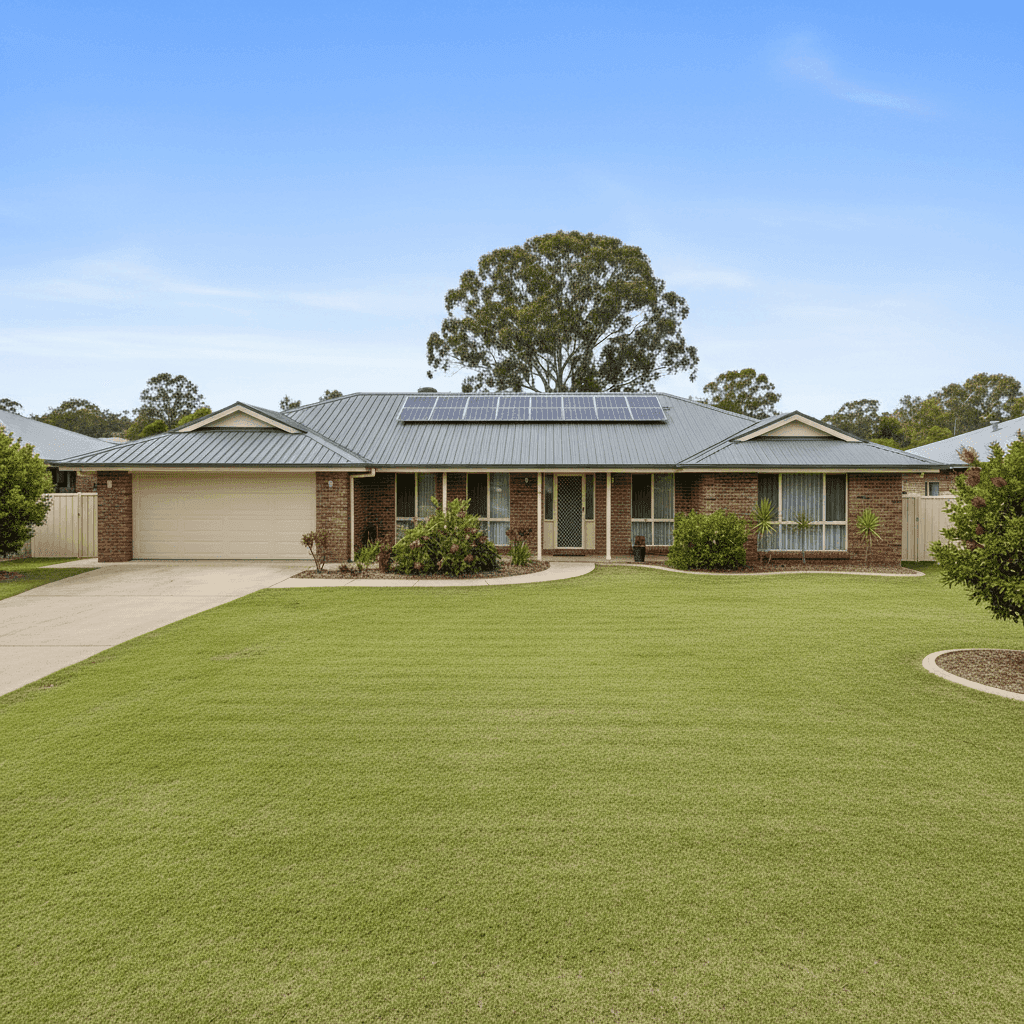
Curra is a quiet rural locality in Queensland's Gympie region, sitting within the Fraser Coast hinterland and surrounded by the kind of wide, open landscapes that make regional Queensland living so appealing. For owners of a four-bedroom, free-standing home in this area, understanding what you should be paying for home and contents insurance — and why — is an important part of protecting one of your most significant assets.
This article breaks down a real insurance quote for a property in Curra (postcode 4570) and puts it in context using suburb, state, and national data sourced from the CoverClub national stats database.
---
Is This Quote Fair?
The quote in question is $3,336 per year (or $313 per month) for combined home and contents cover, with a building sum insured of $444,000 and contents valued at $148,000. The building excess sits at $1,000 and the contents excess at $500.
CoverClub's pricing engine rates this quote as Fair — Around Average, and when you dig into the numbers, that assessment holds up well.
The suburb median premium for Curra sits at $3,770 per year, meaning this quote comes in roughly $434 below the local median — a meaningful saving. It also falls comfortably within the interquartile range for the suburb, with the 25th percentile at $3,061 and the 75th percentile at $5,066. In other words, this quote is in the lower-middle portion of what most Curra homeowners are paying, which is a solid position to be in.
It's not the cheapest quote available in the area, but it's well clear of the upper end of the market. For a property of this size and specification, "Fair" is a reasonable outcome — and potentially one worth accepting if the policy terms are strong.
---
How Curra Compares
To fully appreciate this quote, it helps to zoom out and look at the broader pricing landscape.
| Benchmark | Premium |
|---|---|
| This quote | $3,336/yr |
| Curra suburb median | $3,770/yr |
| Curra suburb average | $5,873/yr |
| Fraser Coast LGA average | $4,810/yr |
| QLD state median | $3,903/yr |
| QLD state average | $9,129/yr |
| National median | $2,764/yr |
| National average | $5,347/yr |
(Based on 83 quotes collected for the Curra area.)
A few things stand out here. First, the gap between the Queensland state average ($9,129) and the state median ($3,903) is enormous — a sign that a relatively small number of very high-risk or high-value properties are dragging the average upward significantly. This is a common pattern in Queensland, where cyclone-prone coastal and far-north regions push premiums to extraordinary levels.
Curra itself follows a similar pattern locally: the suburb average of $5,873 is notably higher than the median of $3,770, suggesting some outlier properties in the area are attracting steep premiums.
The national median of $2,764 is lower than Curra's median, which reflects the fact that regional Queensland — even in non-cyclone zones — tends to attract higher premiums than many parts of southern Australia due to storm, flood, and bushfire exposure.
For this property, coming in below both the suburb median and the Fraser Coast LGA average of $4,810 is a genuinely good result.
---
Property Features That Affect Your Premium
Several characteristics of this property will have influenced how insurers priced the risk. Here's what matters most:
Brick veneer construction and Colorbond roof Brick veneer walls are viewed favourably by insurers — they're durable, fire-resistant, and hold up well in high-wind events. Combined with a steel Colorbond roof (which is lightweight, corrosion-resistant, and performs well in storms), this is a solid construction profile that typically attracts more competitive premiums than timber-framed or fibro homes.
Slab foundation A concrete slab foundation is generally considered lower risk than raised timber stumps, as there's no under-floor cavity to trap moisture or harbour pests. It also reduces the risk of subsidence-related claims.
Age of construction (1990) At roughly 35 years old, this home sits in a middle-risk age bracket. It's old enough that some building elements (plumbing, electrical) may be approaching end-of-life, but modern enough to have been built under relatively contemporary building codes. Insurers tend to price this cohort reasonably.
Solar panels Solar panels add value to the property and can increase the cost to rebuild or repair — both of which are relevant to the building sum insured. Insurers typically factor in the replacement cost of panels when assessing risk.
Ducted climate control Ducted air conditioning systems are a meaningful asset and contribute to the contents or building value depending on how they're installed. Fixed systems are usually covered under building; portable or semi-fixed units under contents.
No pool, no cyclone zone The absence of a pool removes a common source of liability and maintenance claims. Importantly, Curra is not classified as a cyclone risk area, which keeps premiums substantially lower than they would be in coastal north Queensland.
130 sqm building size At 130 square metres, this is a modest footprint for a four-bedroom home. Rebuild costs are directly tied to floor area, so a smaller home generally means a lower building sum insured — and, all else being equal, a lower premium.
---
Tips for Homeowners in Curra
1. Review your sum insured regularly Construction costs in regional Queensland have risen significantly in recent years. Make sure your $444,000 building sum insured reflects current rebuild costs — not what it cost to build in 2020. Underinsurance is one of the most common and costly mistakes homeowners make.
2. Check what's covered under your solar panels Not all policies treat solar panels the same way. Some cover them under building, others require a separate endorsement. Confirm with your insurer that your system is fully covered for storm damage, hail, and electrical faults.
3. Don't overlook flood cover While Curra isn't in a cyclone zone, the broader Gympie region has experienced significant flood events. Check whether your policy includes flood cover as standard or as an optional extra — and if it's optional, strongly consider adding it.
4. Compare at renewal, not just once Insurance markets shift year to year. The fact that this quote is currently below the local median doesn't mean it will stay that way. Set a reminder to compare quotes at CoverClub each year before your renewal date to make sure you're still getting a competitive rate.
---
Ready to Compare?
Whether you're buying a new policy or reviewing your existing cover, CoverClub makes it easy to compare home and contents insurance quotes for properties across Australia. Get a quote today and see how your premium stacks up against the suburb, state, and national benchmarks — in seconds.