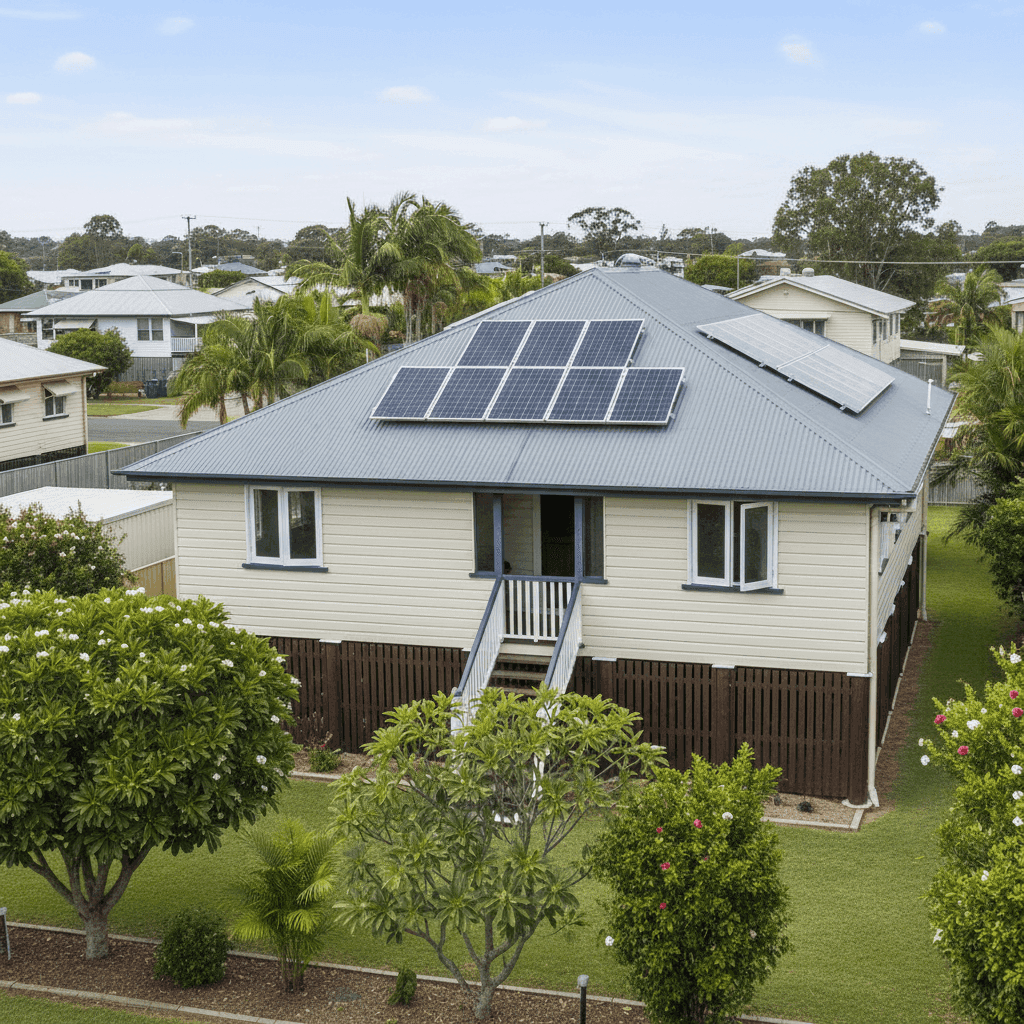
Currajong is a well-established residential suburb sitting just a few kilometres from the Townsville CBD, known for its mix of classic Queensland homes and a strong sense of community. If you own a free standing home here — particularly one built in an earlier era — understanding what you should be paying for building insurance is genuinely important, especially given the region's exposure to tropical weather events. This article breaks down a real building-only insurance quote for a 2-bedroom, 1-bathroom free standing home in Currajong (postcode 4812), and puts the numbers into context so you can judge whether your own premium is fair.
---
Is This Quote Fair?
The quote in question sits at $4,509 per year (or $432 per month) for building-only cover on a home insured for $344,000, carrying a $4,000 building excess. Our pricing analysis rates this as CHEAP — below average for the area.
That's a meaningful finding. Currajong sits within the Townsville Local Government Area, a region that consistently attracts some of the highest home insurance premiums in Queensland — and indeed the country — due to its cyclone exposure, flooding history, and the sheer cost of claims following major weather events. A premium that comes in below average benchmarks here is worth paying attention to.
To be clear, "cheap" in this context doesn't mean the cover is inadequate — it simply means the quoted premium is lower than what comparable properties in the area are typically paying. For a homeowner in Currajong, that's a positive result.
---
How Currajong Compares
Putting this quote into perspective against broader market data reveals just how competitive it is:
| Benchmark | Premium |
|---|---|
| This quote | $4,509/yr |
| Townsville LGA average | $7,340/yr |
| QLD state average | $9,129/yr |
| QLD state median | $3,903/yr |
| National average | $5,347/yr |
| National median | $2,764/yr |
The quote sits $2,831 below the Townsville LGA average and a striking $4,620 below the Queensland state average. It does come in slightly above the QLD state median ($3,903) and the national median ($2,764), which reflects the genuine risk premium attached to living in a cyclone-declared zone — but relative to what most Townsville homeowners are paying, this is a strong result.
You can explore more localised data for this postcode at our Currajong suburb insurance stats page, or compare it against broader trends on the Queensland state stats page and national insurance stats.
---
Property Features That Affect Your Premium
Every home is different, and insurers weigh up a range of property characteristics when calculating your premium. Here's how the features of this particular home are likely influencing the price:
Weatherboard Timber Walls
Weatherboard construction is common in older Queensland homes and adds a certain charm — but it's also a factor that insurers treat with caution. Timber is more susceptible to fire, termite damage, and wind uplift than brick or rendered masonry. This typically pushes premiums higher compared to solid-wall construction.
Steel/Colorbond Roof
Colorbond roofing is generally viewed favourably by insurers. It's durable, lightweight, and performs well in high-wind events when properly installed and maintained. In a cyclone-risk area, a well-secured metal roof can make a meaningful difference to both your premium and your home's resilience.
Stump Foundation
Homes on stumps (also called high-set or pole homes) are a hallmark of traditional Queensland architecture. Stumps allow airflow beneath the home and can reduce flood inundation risk in some scenarios — a genuine advantage in a region prone to heavy rainfall. However, the condition and material of the stumps (timber vs. concrete vs. steel) can also be a factor insurers consider.
Timber/Laminate Flooring
Timber flooring is attractive but can be costly to replace or repair after water ingress or flooding. For building-only cover, this is factored into the overall sum insured rather than as a separate risk driver, but it does contribute to the rebuild cost calculation.
Solar Panels
This property includes solar panels, which are worth noting. Many standard building policies cover solar panels as part of the structure, but it's always worth confirming with your insurer exactly what's included — particularly for storm or hail damage, which is common in North Queensland.
Construction Year: 1980
A home built in 1980 predates many of the modern building codes introduced after Cyclone Tracy and subsequent revisions to Australian Standards for cyclone-resistant construction. Older homes can attract higher premiums due to concerns about structural integrity, though the actual risk depends heavily on any upgrades or renovations that have been carried out since.
Cyclone Risk Area
This is arguably the single biggest premium driver for any Townsville property. Currajong sits within a designated cyclone risk zone, and insurers price this in significantly. The fact that this quote still comes in below the LGA average despite this risk factor is notable.
---
Tips for Homeowners in Currajong
Whether you're reviewing an existing policy or shopping around for the first time, here are four practical steps worth taking:
- Review your sum insured annually. Building costs in Queensland have risen sharply in recent years. A sum insured of $344,000 for a 105 sqm home is worth checking against current construction cost estimates — being underinsured in a cyclone zone can be financially devastating.
- Confirm your solar panels are covered. Ask your insurer specifically whether solar panels are included under your building policy and under what circumstances (storm, hail, fire, theft). Don't assume — get it in writing.
- Invest in cyclone preparedness. Some insurers offer discounts or better terms for homes that have undergone cyclone mitigation works — things like roof tie-downs, impact-resistant windows, or upgraded stump connections. It's worth asking whether any improvements to your home's resilience could reduce your premium.
- Compare quotes before renewing. Insurance loyalty rarely pays in Australia. Premiums can vary enormously between providers for the same property, and the difference can run into thousands of dollars per year — as the comparison data above clearly shows. Use a comparison tool to make sure you're not overpaying at renewal time.
---
Compare Your Own Quote
Whether this quote reflects your situation or not, the best way to know if you're getting a fair deal is to compare. At CoverClub, you can enter your property details and see how your premium stacks up against what other homeowners in Queensland and across Australia are paying. It takes minutes and could save you significantly — particularly if you're in a high-risk area like Townsville where premiums vary widely between insurers.