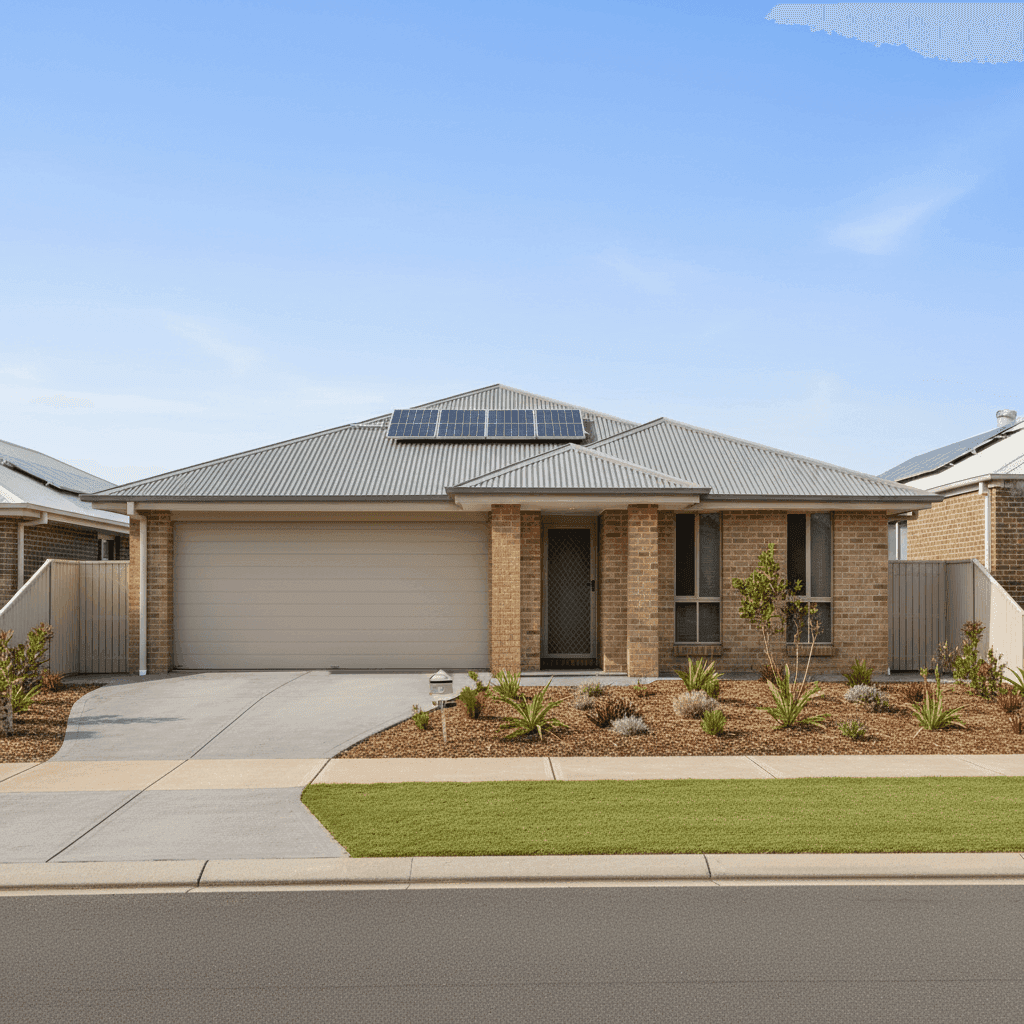
Currimundi is a relaxed coastal suburb on Queensland's Sunshine Coast, sitting just moments from the beach and the calm waters of Currimundi Lake. It's a popular spot for families and long-term residents alike, with a mix of established homes that reflect the area's steady growth since the 1980s. If you own a free standing home here, understanding what you should be paying for home and contents insurance — and why — can make a real difference to your household budget.
This article breaks down a real insurance quote for a 4-bedroom, 2-bathroom brick veneer home in Currimundi, and puts it in context against local, state, and national benchmarks.
---
Is This Quote Fair?
The annual premium for this property came in at $2,457 per year (or $240/month), covering both building (sum insured: $710,000) and contents ($120,000). Our price rating for this quote is CHEAP — below the suburb average — which is genuinely good news for the homeowner.
To put that in perspective:
- The suburb average for Currimundi (postcode 4551) is $3,860/yr
- The suburb median sits at $3,810/yr
- Even the 25th percentile — meaning only 25% of quotes in the area are cheaper — comes in at $3,462/yr
This quote lands well below all three benchmarks, suggesting the homeowner is receiving a competitive rate relative to their neighbours. At $2,457, they're paying roughly $1,400 less per year than the average Currimundi homeowner insuring a similar property. Over a five-year period, that's a saving of around $7,000 — a compelling reason to shop around rather than simply auto-renewing.
You can explore the full pricing data for this suburb at the Currimundi insurance stats page.
---
How Currimundi Compares
Home insurance costs on the Sunshine Coast are notably higher than the national average, largely driven by the region's exposure to weather-related risks. Here's how this quote stacks up across different geographic levels:
| Benchmark | Annual Premium |
|---|---|
| This quote | $2,457 |
| Currimundi suburb average | $3,860 |
| Sunshine Coast LGA average | $4,608 |
| QLD state average | $4,547 |
| QLD state median | $3,931 |
| National average | $2,965 |
| National median | $2,716 |
A few things stand out here. First, the Queensland state average of $4,547 is significantly higher than the national average of $2,965 — a gap of over $1,500 per year. This reflects the elevated risk profile of Queensland properties generally, where extreme weather events including storms, flooding, and hail are more frequent and more costly for insurers to cover.
Second, the Sunshine Coast LGA average of $4,608 is even higher than the state average, placing it among the pricier regions in Queensland for home insurance. This makes the $2,457 quote all the more notable — it's sitting comfortably below both state and national averages, not just the local suburb figures.
It's worth noting that the suburb sample size for Currimundi is 14 quotes, which gives us a reasonable snapshot of the local market, though a larger dataset would provide even greater confidence in these benchmarks.
---
Property Features That Affect Your Premium
Several characteristics of this property are likely contributing to its competitive premium. Let's unpack the key ones:
Brick Veneer Construction Brick veneer walls are generally viewed favourably by insurers. While not as robust as full brick, they offer good fire resistance and structural integrity compared to timber or weatherboard cladding. This can translate to lower rebuild risk assessments and, in turn, more competitive premiums.
Steel/Colorbond Roof Colorbond roofing is a strong performer in the Australian climate. It's durable, resistant to corrosion, and holds up well in high-wind events — a meaningful consideration for a coastal Queensland property. Insurers tend to price steel roofing more favourably than older tile or fibrous cement alternatives.
Slab Foundation A concrete slab foundation is a stable and widely accepted building base. Unlike raised stumped foundations, slabs have fewer entry points for moisture and pests, and are generally considered lower risk from a structural claims perspective.
1986 Construction Year Homes built in the mid-1980s sit in an interesting middle ground. They're old enough to potentially have ageing systems (plumbing, wiring), but many have been updated over the decades. Insurers may factor in the age of the building when assessing risk, so it's important to ensure your sum insured reflects the current cost to rebuild — not just the original build cost.
Solar Panels This property has solar panels installed, which can add modest complexity to a home insurance policy. Panels need to be covered for damage (from storms, hail, or fire), and some policies include them automatically while others require a specific endorsement. It's worth confirming with your insurer that your solar system is adequately covered under your current policy.
No Pool, No Ducted Climate Control The absence of a pool removes a common source of liability and maintenance-related claims. Similarly, no ducted air conditioning system means fewer mechanical components that could fail or cause water damage — both factors that can contribute to a cleaner risk profile.
---
Tips for Homeowners in Currimundi
1. Review your sum insured regularly With a building sum insured of $710,000 for a 214 sqm home, it's important to ensure this figure accurately reflects current construction costs. Building costs have risen sharply in recent years across Queensland, and being underinsured at claim time can leave you significantly out of pocket. Use a building cost calculator or speak with a quantity surveyor to verify your coverage.
2. Confirm your solar panels are covered As mentioned above, solar panels aren't always automatically included in standard home insurance policies. Check your Product Disclosure Statement (PDS) to confirm your system is covered for storm damage, hail, and fire — and ask about any limits that may apply.
3. Understand your excess structure This policy carries a $3,000 building excess and a $1,000 contents excess. A higher excess typically results in a lower premium, but it means you'll need to cover more out of pocket in the event of a claim. Make sure your chosen excess levels are genuinely affordable if you ever need to make a claim.
4. Don't auto-renew without comparing Given that this quote is already well below the suburb average, it's a good result — but insurance markets shift each year. Premiums can increase at renewal without any change to your property or claims history. Set a reminder to compare quotes annually before your renewal date to ensure you're still getting a competitive rate.
---
Compare Your Home Insurance at CoverClub
Whether you're a Currimundi local or own property elsewhere on the Sunshine Coast, it pays to know what you should be paying. CoverClub makes it easy to see how your current premium stacks up against real quotes from across your suburb, state, and the country. Get a home insurance quote today and find out if you could be paying less.