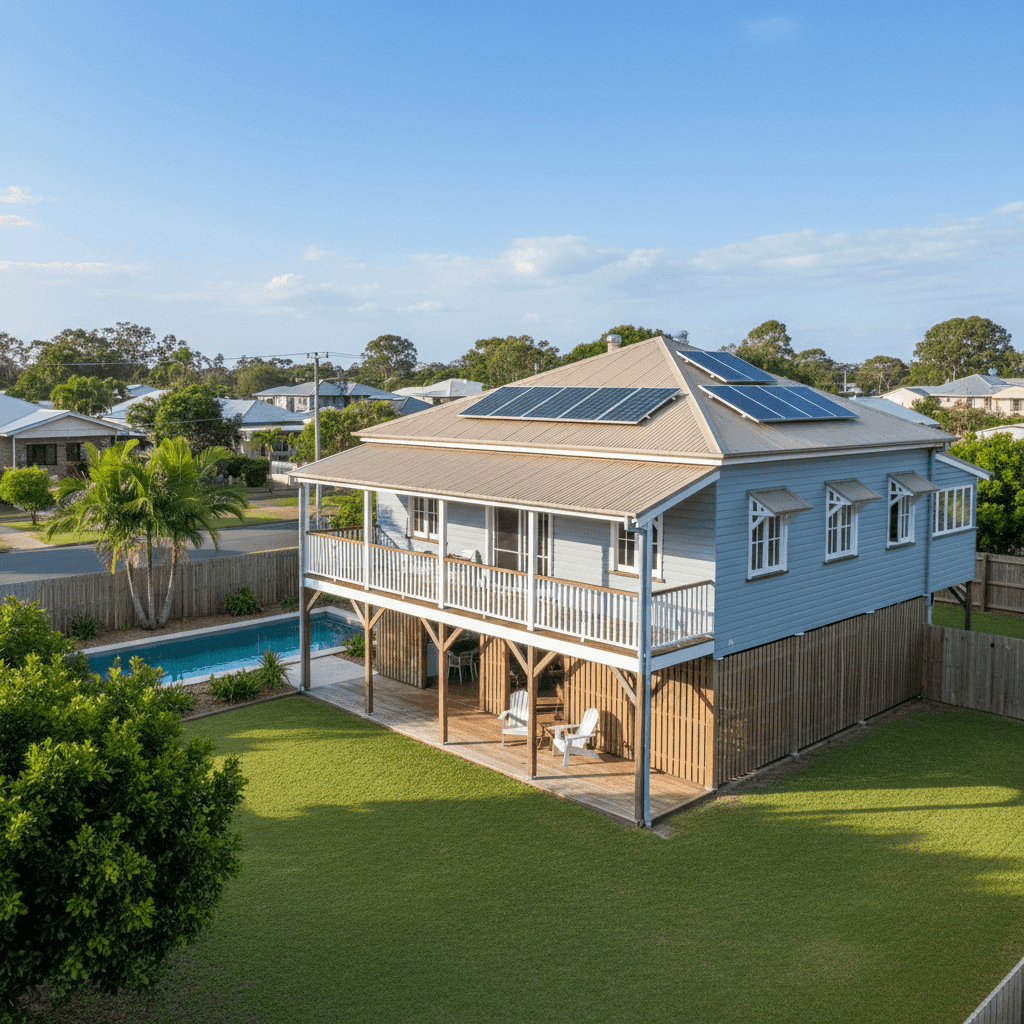
Currimundi is a relaxed coastal suburb on Queensland's Sunshine Coast, known for its lagoon, family-friendly streets, and proximity to the beach. It's a popular spot for homeowners who want the best of both worlds — suburban comfort with a laid-back seaside lifestyle. But owning a home here comes with its own set of insurance considerations, particularly for properties with features like weatherboard construction, elevated foundations, and backyard pools.
This article takes a close look at a recent building insurance quote for a 3-bedroom, 2-bathroom free-standing home in Currimundi (postcode 4551), and puts the $4,862 annual premium into context against local, state, and national benchmarks.
---
Is This Quote Fair?
The short answer: it's on the expensive side — but not wildly out of step with the broader market.
Our pricing analysis rates this quote as above average, and the numbers back that up. At $4,862 per year (or $486 per month), this premium sits above both the suburb average of $3,860/yr and the suburb median of $3,810/yr for Currimundi. It also lands above the 75th percentile for the suburb, which sits at $4,668/yr — meaning this quote is more expensive than approximately three-quarters of comparable quotes in the area.
That said, it's worth noting that the sum insured here is $900,000 for building-only cover, which is a substantial figure. Higher rebuild values naturally push premiums upward, so some of the above-average cost is likely a direct reflection of the coverage amount rather than the insurer simply charging more for the same risk.
The building excess is set at $2,000, which is relatively standard for Queensland properties at this coverage level. A higher excess can sometimes be used as a lever to bring premiums down — something worth exploring if the annual cost feels like a stretch.
---
How Currimundi Compares
Understanding where your suburb sits in the broader insurance landscape can help you gauge whether you're getting a fair deal — or whether it's time to shop around.
Here's how Currimundi stacks up:
| Benchmark | Annual Premium |
|---|---|
| This Quote | $4,862 |
| Currimundi Suburb Average | $3,860 |
| Currimundi Suburb Median | $3,810 |
| QLD State Average | $4,547 |
| QLD State Median | $3,931 |
| National Average | $2,965 |
| National Median | $2,716 |
| Sunshine Coast LGA Average | $7,249 |
A few things stand out here. First, Currimundi's suburb average of $3,860 is actually below the Queensland state average of $4,547, suggesting that — as a suburb — Currimundi is relatively affordable within QLD. This quote, however, exceeds both figures.
Second, the Sunshine Coast LGA average of $7,249/yr is strikingly high, which reflects the elevated risk profile of many coastal and hinterland properties across the region. By comparison, this quote at $4,862 looks considerably more reasonable when viewed through that lens.
Finally, the national average of $2,965 serves as a reminder of just how much more expensive Queensland home insurance tends to be compared to the rest of Australia — a trend driven by flood risk, storm exposure, and the high cost of rebuilding in coastal areas.
You can explore more local data on the Currimundi suburb stats page, or broaden your view with QLD state insurance statistics and national home insurance benchmarks.
---
Property Features That Affect Your Premium
Several characteristics of this property are likely influencing the premium, some pushing it higher and others potentially keeping it in check.
Weatherboard timber construction is one of the most significant factors. Timber-framed, weatherboard homes are generally considered higher risk by insurers than brick veneer or double-brick properties, primarily due to fire susceptibility and the higher cost of repair or replacement. This alone can add a meaningful loading to a premium.
Elevated on stumps is a double-edged sword. On one hand, raising a home at least one metre off the ground provides meaningful protection against surface water flooding — a genuine concern in many parts of South East Queensland. On the other hand, elevated homes can be more expensive to repair after storm or wind events, and the subfloor space introduces additional vulnerabilities. Insurers factor this in differently depending on their risk models.
Steel/Colorbond roofing is generally viewed favourably. Colorbond roofs are durable, low-maintenance, and perform well in high-wind conditions compared to terracotta or concrete tiles. This may provide a modest offset to some of the other risk factors.
A swimming pool adds to the insured value of the property and can increase liability exposure, both of which contribute to a higher premium. Similarly, solar panels represent an additional asset that needs to be covered — particularly important given the value of modern solar systems.
Ducted climate control is another feature that increases the overall replacement cost of the home. Ducted systems are expensive to install and repair, and insurers will factor this into their assessment of the building's total value.
Tile flooring throughout is relatively neutral from an insurance perspective, though it does contribute to the overall rebuild cost estimate.
Taken together, this is a well-appointed, feature-rich home with a construction type and elevation profile that naturally attracts a higher premium. The $900,000 sum insured reflects those features and the current cost of construction in coastal Queensland.
---
Tips for Homeowners in Currimundi
If you're looking to manage your home insurance costs without compromising on protection, here are some practical steps worth considering.
1. Review your sum insured regularly. Building costs fluctuate, and it's possible to be either under- or over-insured. Use a professional building calculator or speak with a quantity surveyor to confirm your rebuild cost is accurate. Over-insuring inflates your premium unnecessarily, while under-insuring can leave you significantly out of pocket after a claim.
2. Consider adjusting your excess. Increasing your building excess from $2,000 to a higher amount — say $2,500 or $3,000 — can reduce your annual premium. This strategy works best if you have the financial buffer to cover a larger out-of-pocket cost in the event of a claim.
3. Bundle where it makes sense. While this quote covers building only, some insurers offer discounts when you combine building and contents insurance under the same policy. If you have contents worth protecting, it's worth getting a combined quote to see whether the bundled price is more competitive.
4. Shop around at renewal time. Insurer loyalty rarely pays off in Australia's home insurance market. Premiums can vary significantly between providers for the same property and coverage level. Using a comparison platform like CoverClub makes it easy to see multiple quotes side by side, so you're not leaving money on the table.
---
Ready to Find a Better Deal?
Whether you're renewing soon or just curious about what else is out there, comparing quotes is the fastest way to find out if you're overpaying. CoverClub makes it simple — just enter your address and get a clear picture of what home insurance should cost for your property.
Get a quote at CoverClub today and see how your current premium stacks up.