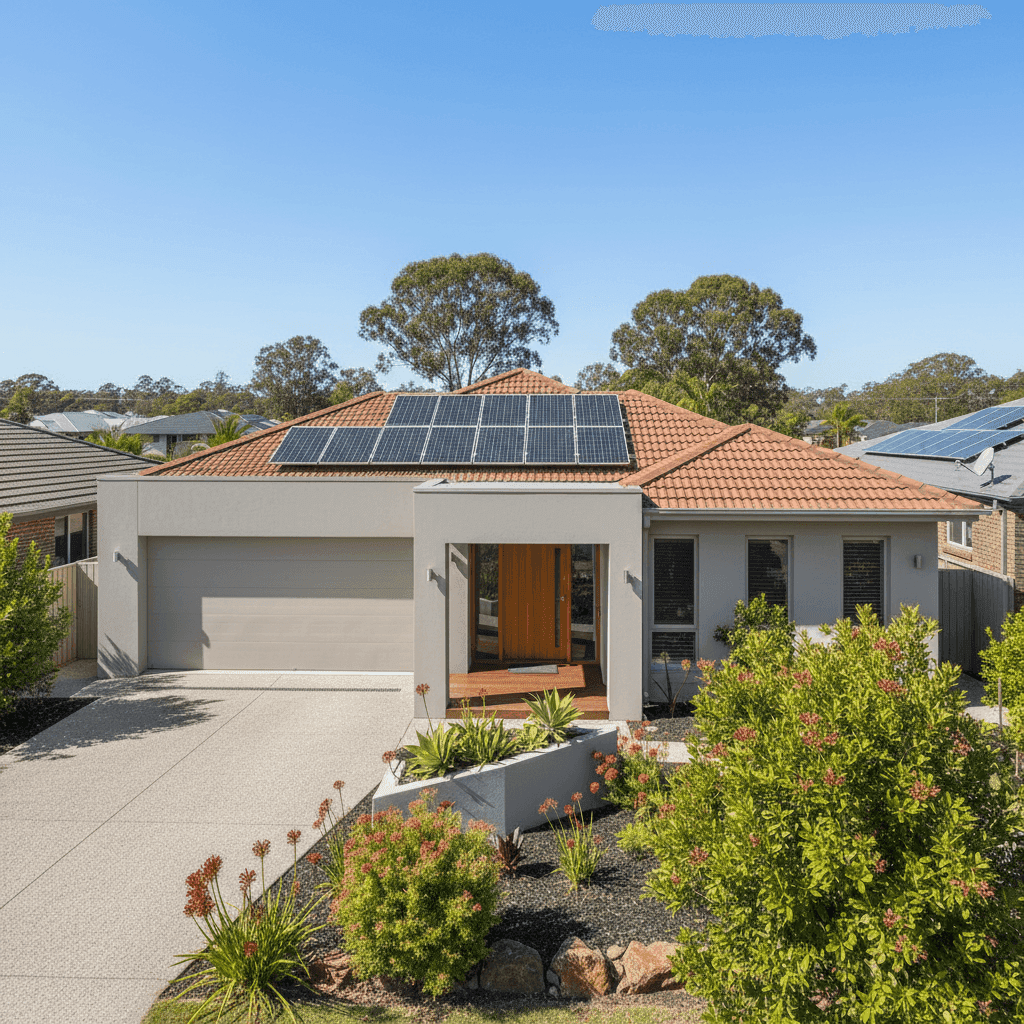
Currimundi is a laid-back coastal suburb on Queensland's Sunshine Coast, sitting just a short stroll from Currimundi Lake and the beach. It's a popular spot for families and sea-changers alike, and the local property market reflects that — with a healthy mix of established homes built across several decades. This article takes a close look at a real building insurance quote for a three-bedroom, two-bathroom free-standing home in Currimundi (postcode 4551), breaking down what the premium means, how it compares to the broader market, and what local homeowners can do to make sure they're getting the best deal possible.
---
Is This Quote Fair?
The quote in question comes in at $2,462 per year (or $236/month) for building-only cover, with a $1,000 building excess and a sum insured of $650,000. Our pricing analysis rates this as CHEAP — below average for the area.
That's a meaningful finding. Based on Currimundi suburb insurance data, the suburb average sits at $3,647/year and the median at $3,173/year. This quote comes in well below both benchmarks, and even falls beneath the suburb's 25th percentile of $2,661/year — meaning it's cheaper than at least three-quarters of comparable quotes collected in the area.
In practical terms, this homeowner is saving roughly $711–$1,185 per year compared to what their neighbours might be paying for similar cover. Over a five-year period, that's potentially $3,500–$5,900 in savings — not a trivial amount.
Of course, price alone doesn't tell the whole story. It's worth ensuring the policy terms, exclusions, and claim handling reputation of the insurer are up to scratch. But from a pure cost perspective, this is a genuinely competitive result.
---
How Currimundi Compares
To put this quote in proper context, it helps to zoom out and look at the bigger picture across Queensland and nationally.
| Benchmark | Average Premium | Median Premium |
|---|---|---|
| This Quote | $2,462/yr | — |
| Currimundi (suburb) | $3,647/yr | $3,173/yr |
| Sunshine Coast LGA | $7,249/yr | — |
| Queensland (state) | $9,129/yr | $3,903/yr |
| National | $5,347/yr | $2,764/yr |
A few things stand out here. First, the Queensland state average of $9,129/year is extraordinarily high — driven largely by cyclone-prone areas in Far North Queensland, where premiums can be eye-watering. The state median of $3,903/year is a more representative figure for most QLD homeowners, and this quote still beats it comfortably.
The Sunshine Coast LGA average of $7,249/year also looks steep compared to this quote, though again, that figure is likely skewed by higher-risk or higher-value properties across the broader council area.
Nationally, the median premium sits at $2,764/year — very close to this quote — while the national average of $5,347/year reflects the pull of high-risk and high-value markets around the country.
The takeaway: Currimundi sits in a relatively affordable pocket of Queensland for home insurance, and this particular quote is performing well even within that favourable context. Note that the suburb comparison is based on a sample of 21 quotes, which provides a solid local reference point.
---
Property Features That Affect Your Premium
Insurance pricing is never one-size-fits-all — it's shaped by dozens of factors specific to the property. Here's how the features of this home likely influence its premium:
Concrete external walls are viewed favourably by insurers. Concrete is highly resistant to fire and impact damage, and holds up well in storms. This is one of the more durable wall construction types available, and it typically attracts lower premiums compared to timber-framed homes.
Tiled roof is another positive. Terracotta and concrete tiles are durable, fire-resistant, and perform well in most weather conditions. They're a common and well-understood material for insurers, which helps keep pricing predictable.
Slab foundation is the standard for Queensland homes of this era and is generally considered low-risk. It eliminates the underfloor moisture and pest concerns that can come with raised or stumped foundations.
Vinyl flooring is practical and low-maintenance. From an insurance perspective, it's less costly to replace than hardwood or stone, which may contribute marginally to a lower sum insured calculation.
Standard fittings quality keeps the rebuild cost estimate grounded. Homes with premium or custom finishes carry higher replacement costs, which pushes up the sum insured and, in turn, the premium.
Solar panels are worth noting. These add value to the property and are typically covered under building insurance, but they do represent an additional asset that insurers factor into the risk profile. The impact on premium varies by insurer.
Ducted climate control is another built-in system that adds to the replacement value of the home. Like solar, it's generally covered under building insurance and is factored into the sum insured.
No pool removes one common source of liability and maintenance-related claims, which is a minor positive from a risk perspective.
Construction year of 1986 places this home in a well-understood era of Queensland residential building. Homes of this age are generally stable and well-maintained, though insurers may factor in the age of electrical systems, plumbing, and roofing materials when assessing risk.
---
Tips for Homeowners in Currimundi
Whether you're reviewing your existing policy or shopping around for the first time, here are some practical steps to make sure you're getting the right cover at the right price.
- Review your sum insured annually. Building costs have risen sharply in recent years, and an outdated sum insured could leave you underinsured in the event of a total loss. Use a reputable building cost calculator — or ask your insurer — to check that your $650,000 figure still reflects current rebuild costs for a 214 sqm concrete home in the Sunshine Coast region.
- Compare quotes before renewal. Insurers don't always reward loyalty with the best pricing. Even if your current premium seems reasonable, running a comparison through a platform like CoverClub takes minutes and could surface a better deal. The data here shows meaningful variation between providers in the same suburb.
- Consider your excess strategically. A $1,000 excess is fairly standard, but increasing it (say, to $2,000) can reduce your annual premium. If you have emergency savings and are unlikely to make small claims, a higher excess can be a cost-effective trade-off.
- Keep records of your solar and HVAC systems. Ducted climate control and solar panels are significant assets. Make sure you have documentation of their installation, value, and condition — this will streamline any future claim and help ensure you're adequately covered for their replacement.
---
Find Your Best Rate with CoverClub
Every home is different, and the right insurance policy depends on your specific property, risk profile, and budget. CoverClub makes it easy to compare building and contents insurance quotes from a range of Australian insurers — all in one place. If you're a Currimundi homeowner wondering whether you're paying too much (or too little), get a personalised quote today and see how your premium stacks up.