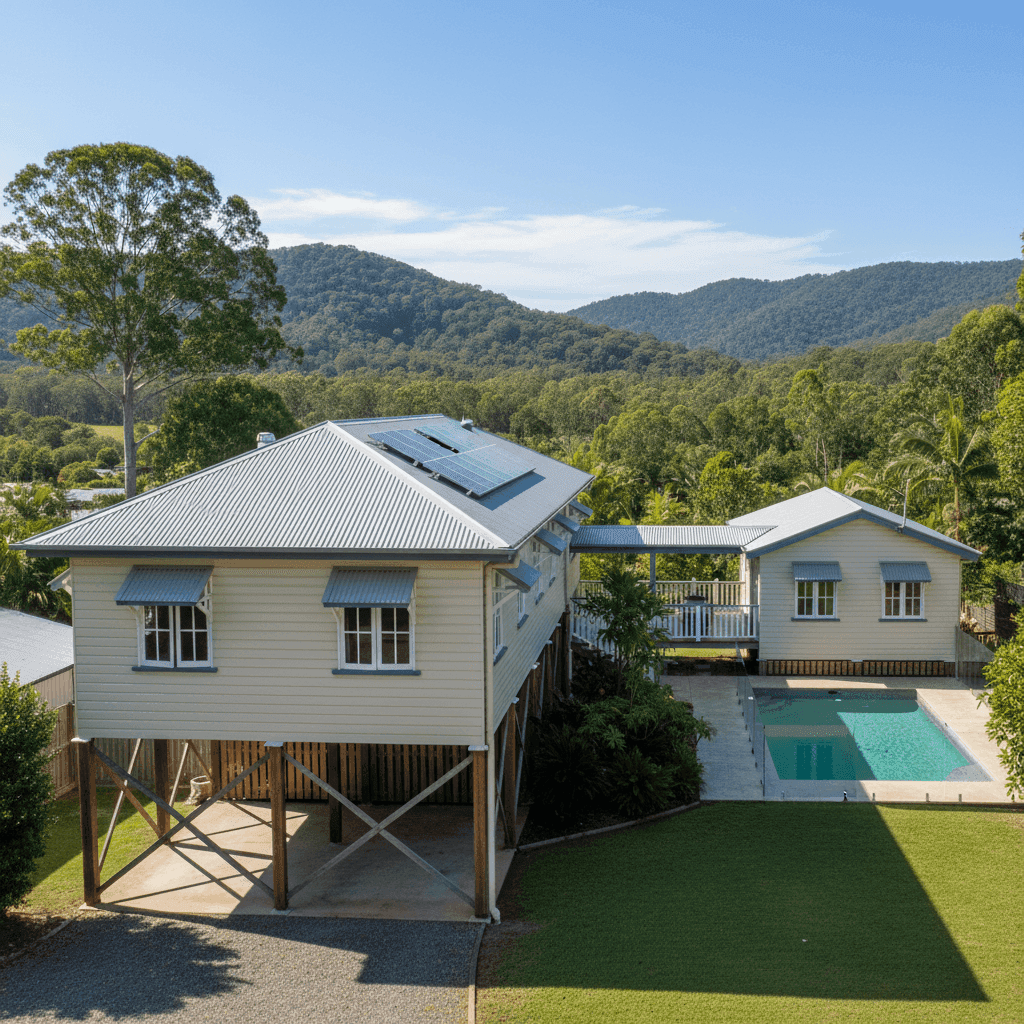
Nestled in the lush hinterland behind the Gold Coast, Currumbin Valley is a sought-after pocket of South East Queensland where acreage living meets coastal convenience. For owners of a four-bedroom, two-bathroom free standing home in this area, understanding what drives home insurance costs — and whether you're getting a fair deal — can make a meaningful difference to your household budget. This article breaks down a real quote of $3,052 per year (or $299 per month) for combined home and contents cover on a 214 sqm weatherboard property, and puts it in context against local, state, and national benchmarks.
---
Is This Quote Fair?
The short answer: yes — and then some. This quote has been rated Cheap (Below Average), meaning it sits well beneath what most comparable homeowners in the area are paying.
At $3,052 annually, this premium comes in:
- 45% below the Currumbin Valley suburb average of $5,601/yr
- 36% below the suburb median of $4,773/yr
- Even below the suburb's 25th percentile of $3,326/yr — meaning it's cheaper than at least 75% of quotes collected in the area
That's a genuinely strong result. The building is insured for $903,000 and contents for $50,000, which are reasonable sums for a well-appointed four-bedroom home in this region. The building excess sits at $3,000 and contents excess at $1,000 — slightly higher excesses, which will have contributed to keeping the premium down.
For context, home insurance across QLD averages $4,547/yr, and the Gold Coast LGA average is even higher at $5,494/yr. This quote beats both figures comfortably.
---
How Currumbin Valley Compares
To put this quote in full perspective, here's how Currumbin Valley's insurance costs stack up against broader benchmarks:
| Benchmark | Premium |
|---|---|
| This quote | $3,052/yr |
| Currumbin Valley 25th percentile | $3,326/yr |
| Currumbin Valley median | $4,773/yr |
| Currumbin Valley average | $5,601/yr |
| Currumbin Valley 75th percentile | $7,129/yr |
| QLD state average | $4,547/yr |
| QLD state median | $3,931/yr |
| National average | $2,965/yr |
| National median | $2,716/yr |
(Based on 41 quotes collected for the Currumbin Valley area.)
What stands out here is just how elevated Currumbin Valley premiums are relative to the national average of $2,965/yr. The suburb average is nearly 89% higher than the national figure — a reflection of the risk factors that insurers associate with hinterland Queensland properties, including flood-prone creek systems, bushfire exposure, and the general cost pressures facing the Gold Coast property market.
This quote, at $3,052, is only marginally above the national average, which is a remarkable outcome for a property in this region.
---
Property Features That Affect Your Premium
Several characteristics of this property will have influenced how insurers assessed the risk — some favourably, others less so.
Weatherboard Timber Walls
Timber weatherboard is one of the more common external wall types in older Queensland homes, but it does attract higher premiums than brick or rendered masonry. Timber is more susceptible to fire, termite damage, and moisture ingress, all of which insurers factor into their pricing.
Steel / Colorbond Roof
Colorbond roofing is generally viewed positively by underwriters. It's durable, low-maintenance, and performs well in high-wind events. Compared to terracotta tiles or older corrugated iron, a Colorbond roof can help moderate your premium.
Elevated on Stumps
The property is elevated by at least one metre on stumps — a classic Queensland construction style. This is a double-edged sword for insurance purposes. On the positive side, elevation significantly reduces flood inundation risk, which is a major rating factor in many QLD postcodes. On the downside, homes on stumps can be more vulnerable to wind uplift and may require more maintenance over time.
Timber / Laminate Flooring
Timber and laminate floors are standard in elevated Queensland homes and don't typically have a major impact on premiums either way, though they can be costly to replace following water damage events.
Swimming Pool
Having a pool on the property adds a small amount to the insured risk — pools can be damaged during storms and may increase liability exposure. It's worth confirming your policy includes pool cover under the building sum insured.
Solar Panels
Solar panels are increasingly common in QLD and most insurers now include them automatically under building cover. However, it's worth checking your policy wording to confirm the panels and inverter are explicitly covered, particularly for storm and hail damage.
Granny Flat
The presence of a granny flat adds both value and complexity to your cover. Make sure your building sum insured accounts for the full replacement cost of the secondary dwelling, not just the main house. Under-insurance is a common issue for properties with additional structures.
No Cyclone Risk
Despite being in Queensland, Currumbin Valley falls outside the designated cyclone risk zone — a meaningful premium advantage compared to properties in North Queensland or coastal Far North QLD.
---
Tips for Homeowners in Currumbin Valley
1. Review Your Sum Insured Annually
Construction costs have risen sharply across Australia in recent years. A building sum insured of $903,000 for a 214 sqm home works out to roughly $4,220 per square metre — which is reasonable but worth revisiting each year as building costs shift. Under-insurance can leave you significantly out of pocket after a major claim.
2. Confirm Your Granny Flat Is Fully Covered
Not all policies automatically extend full cover to secondary dwellings. Ask your insurer explicitly whether your granny flat is included in the building sum insured and whether it's covered for the same events as the main home.
3. Check Your Flood Cover
Currumbin Valley has creek systems and can experience flash flooding after heavy rainfall. Confirm your policy includes flood cover (not just storm damage), as these are treated differently by most insurers. Many standard policies exclude riverine flood unless you opt in.
4. Consider Your Excess Trade-Off
This policy carries a $3,000 building excess — higher than average. While this has helped reduce the annual premium, it means you'll need to cover the first $3,000 of any building claim yourself. If you'd prefer a lower out-of-pocket cost at claim time, it's worth getting comparison quotes with a reduced excess to see how much the premium difference actually is.
---
Compare and Save on Home Insurance
Whether you're a long-time Currumbin Valley local or new to the area, it pays to shop around. Insurance premiums can vary enormously between providers for the same property — and as this quote demonstrates, there are genuine bargains to be found even in a suburb where average costs are high.
Get a home insurance quote at CoverClub and see how your current premium stacks up against the market. It takes just a few minutes, and you might be surprised by what you find.