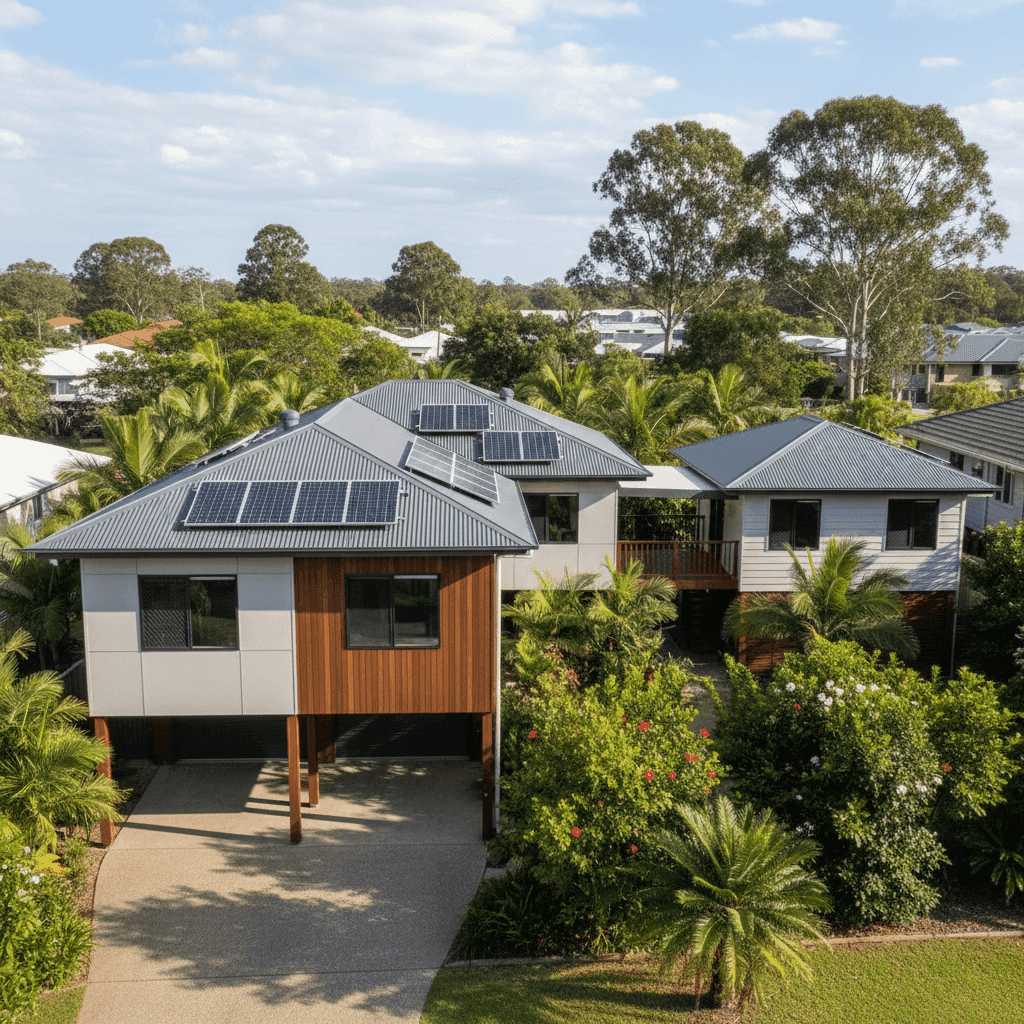
Nestled along the southern Gold Coast, Currumbin Waters is a relaxed, leafy suburb popular with families and lifestyle seekers alike. If you own a free standing home here, you already know the area offers a lot — but what does it cost to properly protect it? This article breaks down a real home and contents insurance quote for a four-bedroom property in Currumbin Waters (postcode 4223), benchmarks it against local, state, and national data, and offers practical advice for homeowners looking to get the best value on their cover.
---
Is This Quote Fair?
The quote in question comes in at $2,826 per year (or $271/month) for combined home and contents cover, with a building sum insured of $589,000 and contents valued at $35,000. Both the building and contents excess are set at $500.
Our pricing analysis rates this quote as Fair — Around Average. That's actually a solid outcome for a Gold Coast property. It means the premium sits in a competitive range — not the cheapest on the market, but well within what you'd reasonably expect to pay for this type of home and level of cover.
For context, the suburb's 25th percentile premium is $2,733/yr, meaning roughly a quarter of comparable quotes in Currumbin Waters come in cheaper than this one. The 75th percentile sits at $4,253/yr, so a significant portion of homeowners in the area are paying considerably more. At $2,826, this quote is comfortably below the midpoint of that range.
---
How Currumbin Waters Compares
Understanding where your premium sits relative to broader benchmarks is key to knowing whether you're getting a good deal. Here's how this quote stacks up:
| Benchmark | Premium |
|---|---|
| This quote | $2,826/yr |
| Currumbin Waters suburb average | $3,540/yr |
| Currumbin Waters suburb median | $3,674/yr |
| Gold Coast LGA average | $8,161/yr |
| QLD state average | $9,129/yr |
| QLD state median | $3,903/yr |
| National average | $5,347/yr |
| National median | $2,764/yr |
(Based on 23 quotes sampled in the Currumbin Waters area. View full [Currumbin Waters insurance stats](https://coverclub.com.au/stats/QLD/4223/currumbin-waters), [QLD state stats](https://coverclub.com.au/stats/QLD), and [national stats](https://coverclub.com.au/stats/national).)
A few things stand out here. First, the QLD state average of $9,129/yr looks alarmingly high — but this is heavily skewed by Far North Queensland postcodes that carry extreme cyclone and flood risk. The state median of $3,903/yr is a more representative figure, and this quote comes in well below that.
Second, the Gold Coast LGA average of $8,161/yr may seem surprising given the suburb's relatively benign risk profile, but again, averages across large geographic areas can be distorted by high-risk pockets. Currumbin Waters itself is not classified as a cyclone risk area, which meaningfully reduces the premium compared to many other Queensland locations.
Compared to the national median of $2,764/yr, this quote is only marginally higher — a reassuring sign that the pricing is grounded in reality rather than inflated by regional risk loadings.
---
Property Features That Affect Your Premium
Several characteristics of this property play a direct role in how insurers calculate the premium.
Stump Foundation
The home sits on stumps, which is common for Queensland homes built in the post-war and mid-century era. Stump foundations can be viewed as a mixed signal by insurers — they allow good airflow and can reduce flood inundation risk, but older stumps (particularly timber ones) may require maintenance or replacement over time. Insurers may factor in the additional complexity of repairing or re-stumping as part of their building risk assessment.
Steel/Colorbond Roof
A Colorbond steel roof is generally viewed favourably by insurers. It's durable, low-maintenance, resistant to fire embers, and performs well in high-wind events. This is a genuine premium-positive feature for a Queensland home.
Timber and Laminate Flooring
Timber and laminate flooring can be more expensive to replace than tiles or carpet, which may contribute slightly to the building sum insured. However, these materials are standard in Queensland homes of this era and wouldn't typically trigger a significant loading.
Solar Panels
The property has solar panels, which are now a common feature on Australian homes but do add a layer of complexity for insurers. Solar systems represent an additional asset on the roof that can be damaged by hail, storm, or fire. It's worth confirming with your insurer exactly how your solar system is covered — whether under the building policy, as a separate item, or excluded entirely.
Granny Flat
The presence of a granny flat on the property is an important consideration. Depending on your insurer, a secondary dwelling may or may not be automatically included under your main building policy. Some insurers include it within the sum insured, while others treat it as a separate structure requiring specific coverage. Make sure your $589,000 building sum insured accounts for the replacement cost of both the main dwelling and the granny flat.
Construction Year: 1991
At over 30 years old, this home may have ageing plumbing, electrical systems, or structural elements that could influence claims frequency. Some insurers apply age-related loadings to older properties, though a well-maintained 1991 build in Queensland is generally not considered high risk.
---
Tips for Homeowners in Currumbin Waters
1. Confirm Your Solar Panels Are Covered
Don't assume your solar system is automatically included in your building cover. Ask your insurer directly whether panels are covered, up to what value, and under what circumstances (e.g., storm damage vs. electrical fault). If they're not included, you may need to list them as a specified item.
2. Get Your Granny Flat Valued Separately
If your insurer doesn't explicitly include the granny flat in the building sum insured, you could be significantly underinsured in the event of a total loss. Request a separate rebuild cost estimate for the secondary dwelling and ensure it's reflected in your policy.
3. Review Your Building Sum Insured Annually
Construction costs in South East Queensland have risen sharply in recent years. A sum insured of $589,000 may have been accurate when the policy was first taken out, but it's worth checking against a current building replacement cost calculator to make sure you're not underinsured.
4. Compare Quotes at Renewal Time
This quote is rated as fair, but that doesn't mean there isn't a better deal available. The suburb data shows meaningful variation between the 25th and 75th percentile — a spread of roughly $1,500/yr. Shopping around at renewal time could put real money back in your pocket without sacrificing cover quality.
---
Ready to Compare?
Whether you're renewing your existing policy or buying cover for the first time, comparing quotes is the smartest way to make sure you're not overpaying. Get a home insurance quote at CoverClub and see how your premium stacks up against the market in minutes.