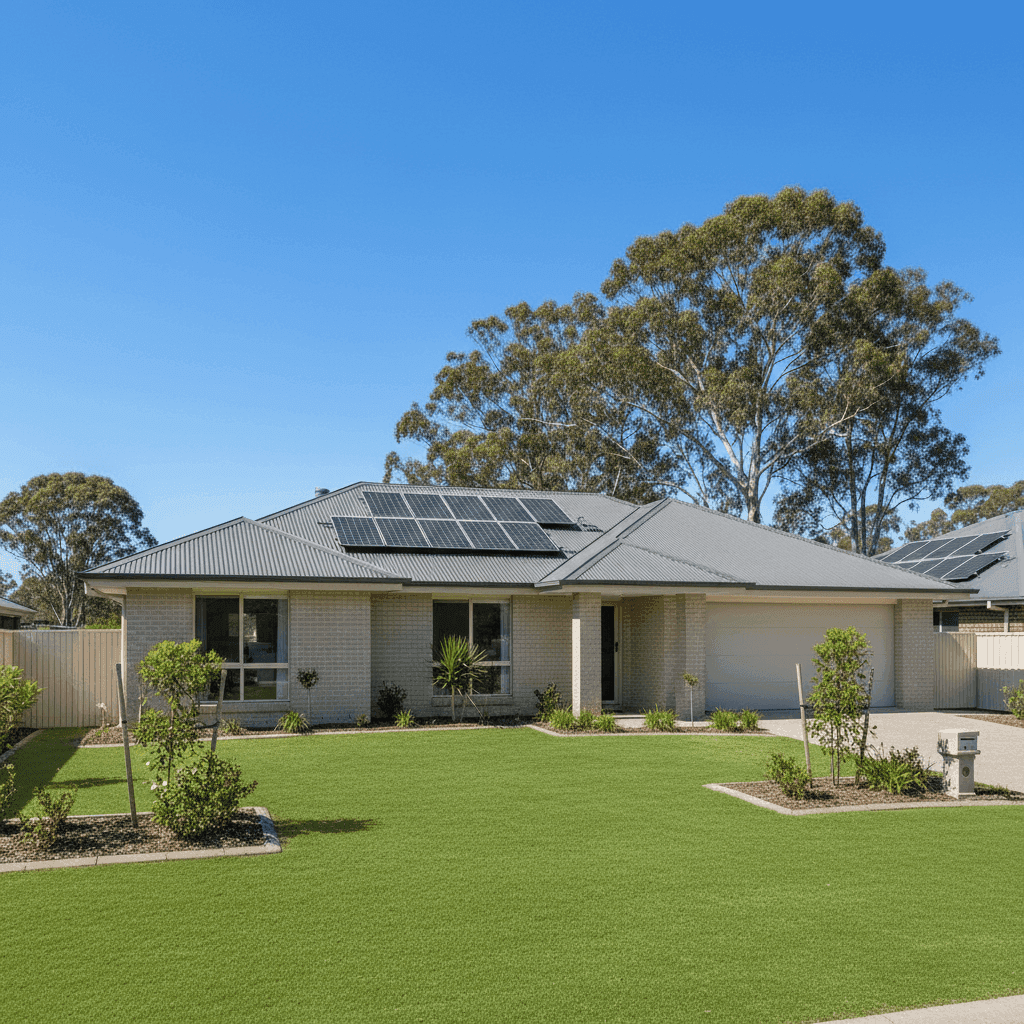
D'Aguilar is a quiet semi-rural suburb nestled in the Somerset region of South East Queensland, sitting on the fringe of the D'Aguilar National Park. It's the kind of place where double-brick homes with Colorbond roofs dot large blocks, and residents enjoy a lifestyle that's a world away from Brisbane's inner suburbs — yet still within commuting distance. If you own a free-standing home here, understanding what you should be paying for home and contents insurance is genuinely valuable. This article breaks down a real quote for a 3-bedroom property in D'Aguilar and puts it in context against local, state, and national benchmarks.
---
Is This Quote Fair?
The quote in question comes in at $2,954 per year (or $283/month) for combined home and contents cover, with a building sum insured of $745,000 and contents valued at $165,000. The building excess is $1,000 and the contents excess is $500.
Our pricing model rates this quote as CHEAP — below average for the area. That's genuinely good news for the homeowner. In a state like Queensland, where premiums are notoriously elevated due to severe weather risks, landing a quote below the key benchmarks is something worth recognising.
To put it plainly: this is a competitive result. The premium sits well below the Queensland state average of $9,129/year and also below the state median of $3,903/year. Even when measured against the national average of $5,347/year, this quote is significantly cheaper. It's only marginally above the national median of $2,764/year, which further confirms it represents solid value.
For a property with a reasonably high building sum insured ($745,000) and a meaningful contents value, achieving a sub-$3,000 annual premium in Queensland is no small feat.
---
How D'Aguilar Compares
Without suburb-level data available, we lean on the broader LGA and state figures to provide context. Here's how the numbers stack up:
| Benchmark | Annual Premium |
|---|---|
| This Quote | $2,954 |
| LGA (Somerset) Average | $3,203 |
| QLD State Median | $3,903 |
| National Median | $2,764 |
| QLD State Average | $9,129 |
| National Average | $5,347 |
This quote sits $249 below the Somerset LGA average, which is the most locally relevant comparison point available. That's a meaningful saving — roughly the cost of a decent weekend away — achieved simply by securing the right policy.
It's worth noting the significant gap between Queensland's average ($9,129) and its median ($3,903). This tells us that a relatively small number of very high-risk or high-value properties are pulling the average upward considerably. D'Aguilar, while in Queensland, doesn't carry the same cyclone or extreme flood exposure as coastal or Far North Queensland properties, which likely contributes to the more moderate pricing seen here.
You can explore more localised data for this postcode at the D'Aguilar suburb stats page and compare against broader QLD insurance trends.
---
Property Features That Affect Your Premium
Several characteristics of this particular property work in the homeowner's favour from an insurance pricing perspective.
Double Brick Construction Double brick is one of the most favoured wall materials among insurers. It offers excellent structural integrity, strong resistance to fire, and performs well in high-wind events. Compared to weatherboard or lightweight cladding, double brick typically attracts lower premiums — and for good reason.
Steel / Colorbond Roof Colorbond steel roofing is durable, low-maintenance, and performs reliably in Australian weather conditions. It's resistant to corrosion, handles heavy rain well, and doesn't carry the fire risk associated with older materials like wood shingles. Insurers generally view it favourably.
Slab Foundation A concrete slab foundation is considered stable and low-risk by most insurers. It doesn't carry the same vulnerability to subsidence or pest damage that can affect older stumped or timber-framed foundations.
Tile Flooring Tiles are a practical and insurance-friendly flooring choice. They're resistant to water damage and don't carry the replacement cost risk of hardwood timber or carpet in flood or leak scenarios.
1989 Construction The home is 35 years old — old enough to have some character, but not so old as to raise red flags around outdated wiring, plumbing, or structural materials. Homes built in this era were generally constructed to reasonable standards and don't typically attract age-related loading.
Solar Panels The presence of solar panels adds some complexity to a policy. Panels are typically covered under building insurance, but it's worth confirming with your insurer that they're explicitly included in the sum insured and that the coverage extends to inverters and associated electrical components.
Ducted Climate Control Ducted air conditioning systems are fixed to the building and are usually covered under building insurance. Given the cost of replacing a full ducted system, homeowners should ensure their building sum insured accounts for this.
No Pool, No Cyclone Zone The absence of a pool removes a common liability and maintenance cost from the risk profile. And while D'Aguilar is in Queensland, it sits outside designated cyclone risk areas — a significant factor in keeping premiums more moderate than coastal Queensland counterparts.
---
Tips for Homeowners in D'Aguilar
1. Review Your Building Sum Insured Annually At $745,000, the building sum insured here is substantial. Construction costs in Queensland have risen considerably in recent years, so it's important to revisit this figure each renewal. Underinsurance is one of the most common — and costly — mistakes homeowners make. Use a building cost calculator or speak with a quantity surveyor if you're unsure.
2. Confirm Solar Panel Coverage Explicitly Don't assume your solar panels are covered. Ask your insurer to confirm in writing that the panels, inverter, and associated wiring are included under your building policy — and check whether accidental damage (such as hail impact) is covered.
3. Shop Around at Renewal Even though this quote is rated as cheap, the insurance market shifts constantly. Premiums can change significantly year-on-year, and loyalty doesn't always pay. Make a habit of comparing quotes at renewal time — it takes minutes and can save hundreds of dollars.
4. Consider Your Excess Strategically This policy carries a $1,000 building excess and a $500 contents excess. Opting for a higher excess can reduce your annual premium, but only makes sense if you have the savings buffer to cover it in a claim. Think of it as a self-insurance decision — the right answer depends on your financial position.
---
Ready to Compare?
Whether you're renewing an existing policy or buying cover for the first time, comparing quotes is the single most effective way to make sure you're not overpaying. Get a home insurance quote at CoverClub and see how your current premium stacks up against the market in minutes. With data across thousands of properties in Queensland and beyond, CoverClub helps you make a genuinely informed decision.