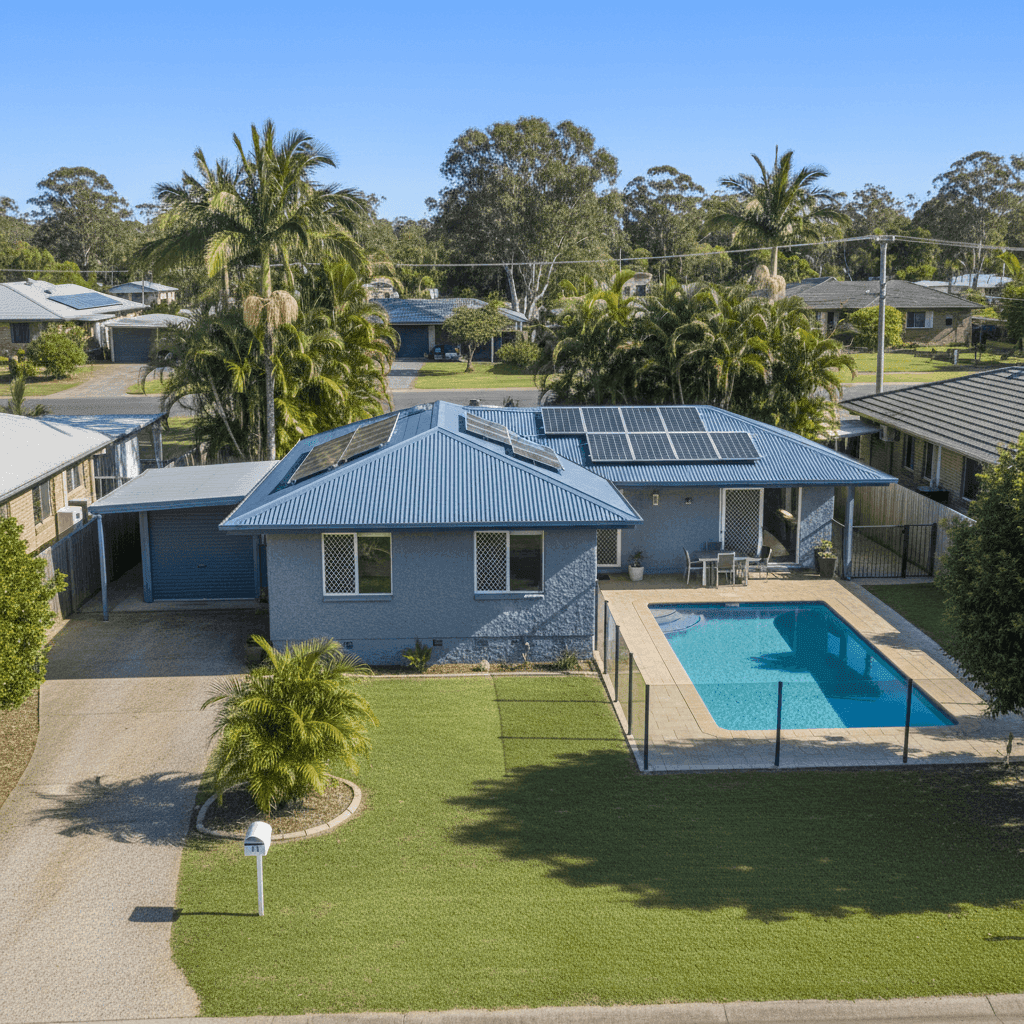
If you own a four-bedroom free standing home in Daisy Hill, QLD 4127, you're probably curious whether the premium sitting in your inbox is competitive — or whether you're leaving money on the table. In this article, we break down a real home and contents insurance quote for a property in this south-east Queensland suburb, compare it against local and national benchmarks, and highlight the property features most likely driving the cost. Whether you're renewing your policy or shopping around for the first time, this analysis will give you the context you need.
---
Is This Quote Fair?
The quote in question comes in at $4,688 per year (or $394/month) for a combined home and contents policy. It covers a building sum insured of $600,000 and $30,000 worth of contents, with a building excess of $5,000 and a contents excess of $1,000.
Based on our pricing data, this quote is rated Expensive — above average for the area. That's a meaningful signal worth paying attention to.
To put it in perspective: the suburb average for Daisy Hill sits at $3,919/year, and the suburb median is considerably lower at $2,428/year. This quote is roughly 20% above the suburb average and nearly double the suburb median — which places it well into the upper tier of what locals are paying.
That said, context matters. A higher-than-average premium isn't always a red flag. The sum insured, property characteristics, and the specific insurer's risk appetite all play a role. But it does suggest there's real value in shopping around.
---
How Daisy Hill Compares
Understanding where Daisy Hill sits in the broader insurance landscape helps frame whether this premium is a local anomaly or part of a wider trend.
| Benchmark | Average Premium | Median Premium |
|---|---|---|
| Daisy Hill (suburb) | $3,919/yr | $2,428/yr |
| Queensland (state) | $9,129/yr | $3,903/yr |
| National | $5,347/yr | $2,764/yr |
| Brisbane LGA | $16,277/yr | — |
A few things stand out here. Queensland's state average of $9,129/year is dramatically higher than the national average of $5,347 — largely because QLD includes far-north cyclone-prone regions like Cairns and Townsville, which attract eye-watering premiums. Daisy Hill, sitting in the Logan City corridor of south-east Queensland, is not in a cyclone risk area, which works in homeowners' favour.
The QLD state stats are heavily skewed by those high-risk northern postcodes, so comparing Daisy Hill to the state average isn't especially meaningful. A more useful comparison is against the national median of $2,764/year or the suburb median of $2,428 — both of which suggest this particular quote has room to move.
The Brisbane LGA average of $16,277 looks alarming, but this figure is likely influenced by a small number of very high-value properties or high-risk flood zones within the broader LGA, and shouldn't be taken as a typical benchmark for Daisy Hill specifically.
With 39 quotes sampled in the suburb, we have a reasonably solid data set. The 25th percentile sits at $1,216/year and the 75th percentile at $3,321/year — meaning this quote falls above the 75th percentile, placing it among the more expensive options in the local market.
---
Property Features That Affect Your Premium
Several characteristics of this property are likely contributing to a higher-than-average premium. Here's what insurers are paying attention to:
Fibro Asbestos External Walls
This is arguably the most significant risk factor for this property. Built in 1984, the home features fibro asbestos cladding — a common material in Queensland homes of that era. Insurers treat asbestos-containing materials with caution because any damage (storm, fire, or impact) can trigger costly remediation requirements under strict WorkSafe and environmental regulations. Repair or replacement of fibro asbestos walls is significantly more expensive than standard brick or weatherboard, and many insurers will either load the premium or apply stricter terms.
Construction Year (1984)
Homes built in the early-to-mid 1980s predate modern building codes around cyclone tie-downs, electrical standards, and energy efficiency. Older properties generally attract higher premiums due to the increased likelihood of maintenance-related claims and the higher cost of like-for-like replacement.
Swimming Pool
A pool adds both value and liability to a property. From an insurance standpoint, pools increase the risk of personal injury claims and can complicate building reinstatement costs. Ensuring your pool is included in your sum insured calculation is essential.
Solar Panels
Solar panels are increasingly common in Queensland, but they do add to the replacement cost of a home. A quality solar system can add tens of thousands of dollars to rebuilding costs, and it's important that your sum insured accounts for this. On the upside, many insurers now include solar panels as a standard inclusion under building cover.
Timber and Laminate Flooring
Timber floors can be more costly to replace or repair than tiles, particularly if water damage is involved. This can influence both the sum insured and the insurer's risk assessment.
Slab Foundation and Colorbond Roof
These are generally viewed favourably by insurers. Concrete slab foundations are durable and resistant to pest damage, while Colorbond steel roofing is robust, low-maintenance, and well-suited to Queensland's climate. These features likely provide some offset against the risk factors above.
---
Tips for Homeowners in Daisy Hill
If you're looking to get better value on your home insurance, here are four practical steps worth considering:
- Review your sum insured carefully. A building sum insured of $600,000 for a 214 sqm home in Daisy Hill may be on the higher side depending on current construction costs in your area. Use a building cost calculator to verify you're not over-insured — paying for more coverage than you'd actually need to rebuild. Equally, make sure you're not under-insured either, particularly given the asbestos remediation costs that could apply.
- Increase your excess to reduce your premium. This quote already carries a $5,000 building excess, which is relatively high. However, if you haven't already explored how different excess levels affect your premium, it's worth asking insurers to quote across a range of options. A higher excess can meaningfully reduce your annual cost if you're unlikely to make small claims.
- Shop around — seriously. The gap between the 25th percentile ($1,216/yr) and this quote ($4,688/yr) in Daisy Hill is substantial. Even accounting for differences in cover levels, there's a strong case for comparing multiple insurers. Not all insurers price fibro asbestos homes the same way, and some specialists in older construction may offer more competitive rates.
- Document your asbestos materials. If you haven't already, get a professional asbestos assessment and keep records. Some insurers may offer better terms if you can demonstrate the materials are in good condition and properly managed. It also protects you at claim time.
---
Compare Your Options at CoverClub
Home insurance in Daisy Hill doesn't have to be a guessing game. At CoverClub, we help Australian homeowners understand what they're paying, how it compares to their neighbours, and where they might find a better deal. Whether you're analysing an existing quote or starting fresh, get a home insurance quote today and see how your premium stacks up. You can also explore detailed Daisy Hill insurance data to benchmark your own policy with confidence.