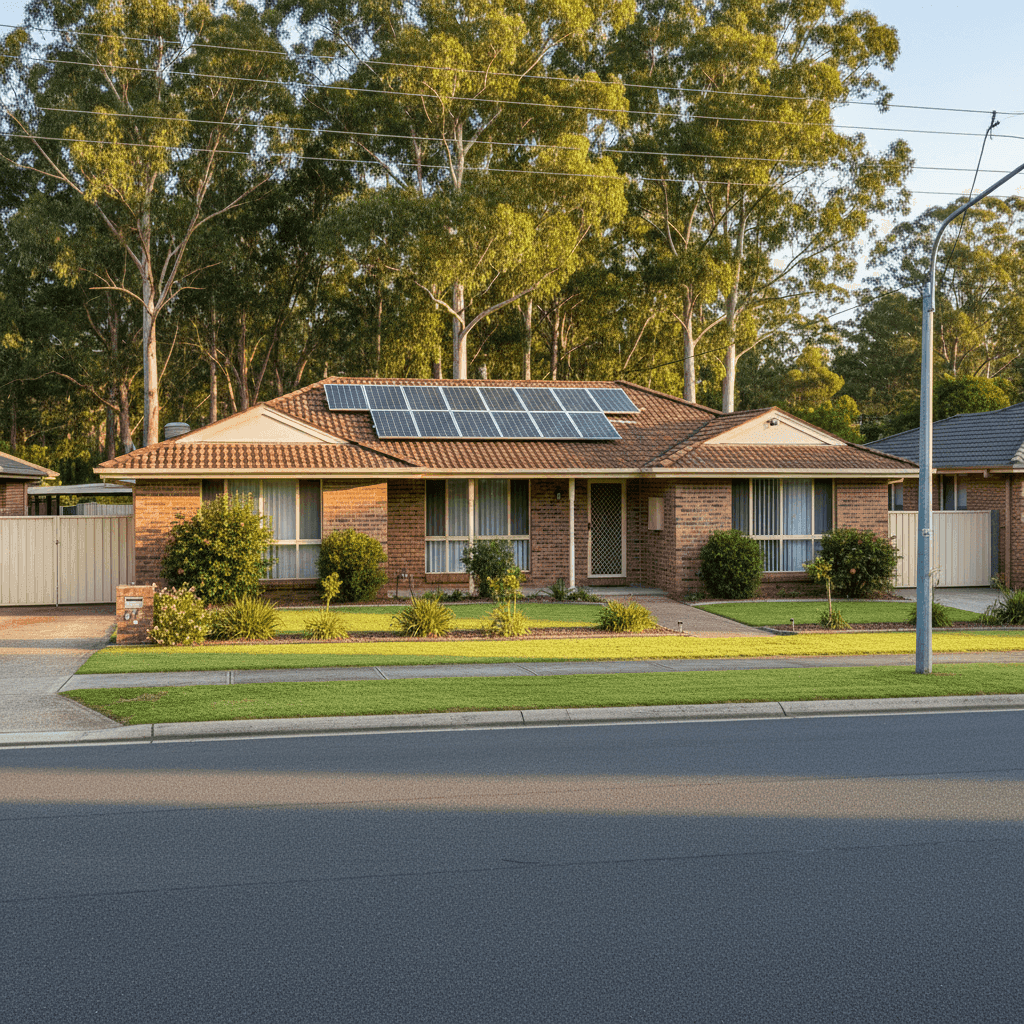
Daisy Hill is a well-established residential suburb in Brisbane's south-east corridor, known for its leafy streets, proximity to Daisy Hill State Forest, and a mix of comfortable family homes. If you own a free standing home here — particularly a brick veneer, four-bedroom property built in the early 2000s — understanding what you should be paying for home and contents insurance is a smart first step to making sure you're not overpaying.
This article breaks down a real insurance quote for a property in Daisy Hill, compares it against local, state, and national benchmarks, and offers practical tips to help you get the best value cover.
---
Is This Quote Fair?
The quote in question comes in at $1,923 per year (or $188/month) for combined home and contents insurance, covering a building sum insured of $600,000 and contents valued at $50,000. The building excess is $2,000 and the contents excess is $1,000.
Our pricing engine has rated this quote as FAIR — Around Average.
What does that mean in practice? It sits comfortably within a reasonable range — not the cheapest available, but well below what many Daisy Hill homeowners are paying. Based on 39 quotes collected for postcode 4127, the suburb's median premium is $2,428/yr, meaning this quote comes in roughly $500 below the local median. That's a meaningful saving over time.
The 25th percentile for the suburb sits at $1,216/yr, so there are cheaper options on the market — but those may reflect lower sums insured, higher excesses, or more limited cover. At the 75th percentile, premiums reach $3,321/yr, so this quote is well clear of the more expensive end of the local market.
In short: this is a solid quote that represents reasonable value, though it's worth shopping around to see whether a lower premium is achievable without sacrificing cover quality.
---
How Daisy Hill Compares
To put this quote into broader context, here's how it stacks up across different geographic benchmarks:
| Benchmark | Average Premium | Median Premium |
|---|---|---|
| Daisy Hill (4127) | $3,919/yr | $2,428/yr |
| Queensland | $9,129/yr | $3,903/yr |
| National | $5,347/yr | $2,764/yr |
| LGA (Brisbane) | $16,277/yr | — |
A few things stand out here. First, the Queensland state average of $9,129/yr is extraordinarily high — a direct reflection of the significant cyclone, flood, and storm risk that affects much of regional and coastal Queensland. Daisy Hill, sitting in Brisbane's south-east and outside designated cyclone risk zones, benefits from a more moderate risk profile, which is why local premiums are considerably lower than the state average.
Second, the LGA average for Brisbane of $16,277/yr looks startling at first glance, but this figure is heavily skewed by high-value properties and flood-affected areas within the broader Brisbane local government area. It's not a useful direct comparison for a standard suburban home in Daisy Hill.
At the national level, the median premium across Australia is $2,764/yr, and this quote sits below that — a positive sign. Meanwhile, the Queensland median of $3,903/yr is notably higher than the national figure, again reflecting the elevated risk environment across much of the state.
For Daisy Hill homeowners, the takeaway is clear: you're in a relatively favourable position compared to many Queensland postcodes, but premiums can still vary significantly depending on your insurer, cover level, and property specifics.
---
Property Features That Affect Your Premium
Every property has a unique combination of characteristics that insurers assess when calculating risk. Here's how the features of this particular home influence the premium:
Brick veneer construction is generally viewed favourably by insurers. It offers good fire resistance and structural durability compared to timber or weatherboard, which can translate to lower building premiums.
Tiled roof is another positive factor. Tiles are considered a more resilient roofing material than Colorbond or corrugated iron in many scenarios, and they're less susceptible to certain types of storm damage — though they can be vulnerable to hail.
Slab foundation is standard for homes of this era in South East Queensland and doesn't typically attract any premium loading. It also means there's no subfloor space, which reduces some risks associated with older homes on stumps or piers.
Tiled flooring throughout the home is a practical and low-risk feature from an insurer's perspective — tiles are durable, not susceptible to water damage in the same way timber or carpet can be, and relatively inexpensive to repair or replace.
Solar panels are worth noting. While they add value to your property, solar panels can also add a small amount of complexity to your insurance. It's important to confirm with your insurer that your panels are explicitly covered under your building policy, as some policies treat them as optional extras or have specific sub-limits.
No pool and no ducted climate control keeps the risk profile straightforward. Pools introduce liability considerations and additional maintenance risk, while ducted systems can be expensive to repair or replace. The absence of both helps keep the premium manageable.
The 214 sqm building size and standard fittings quality are both consistent with a well-maintained family home without high-end finishes — another factor that keeps rebuild cost estimates, and therefore premiums, grounded.
---
Tips for Homeowners in Daisy Hill
1. Review your sum insured regularly A $600,000 building sum insured is substantial, but construction costs have risen sharply in recent years. Make sure your sum insured reflects current rebuild costs — not just market value. Underinsurance is one of the most common and costly mistakes homeowners make. Use a building cost calculator or ask your insurer to help you verify the figure.
2. Confirm your solar panels are covered As mentioned above, solar panels aren't automatically covered under all building policies. Check your Product Disclosure Statement (PDS) carefully to ensure your system is included, and note any sub-limits that may apply. Given the cost of solar systems, this is worth a quick call to your insurer.
3. Consider your excess carefully This quote carries a $2,000 building excess and $1,000 contents excess. Opting for a higher excess is one of the most effective ways to reduce your annual premium — but only if you're confident you could comfortably cover that amount out of pocket in the event of a claim. Review your financial position and adjust accordingly.
4. Shop the market at renewal time Insurers regularly adjust their pricing models, and loyalty doesn't always pay. Even if you're happy with your current cover, it's worth getting at least two or three comparison quotes before renewing each year. The suburb-level data for Daisy Hill shows a wide spread between the 25th and 75th percentile premiums — which means there's real money to be saved by comparing.
---
Ready to Compare Home Insurance Quotes?
Whether you're a first-time buyer or a long-time Daisy Hill resident, comparing home insurance quotes is one of the easiest ways to ensure you're getting the right cover at a fair price. CoverClub makes it simple — enter your address to get started and see how your current premium stacks up against the market in minutes.