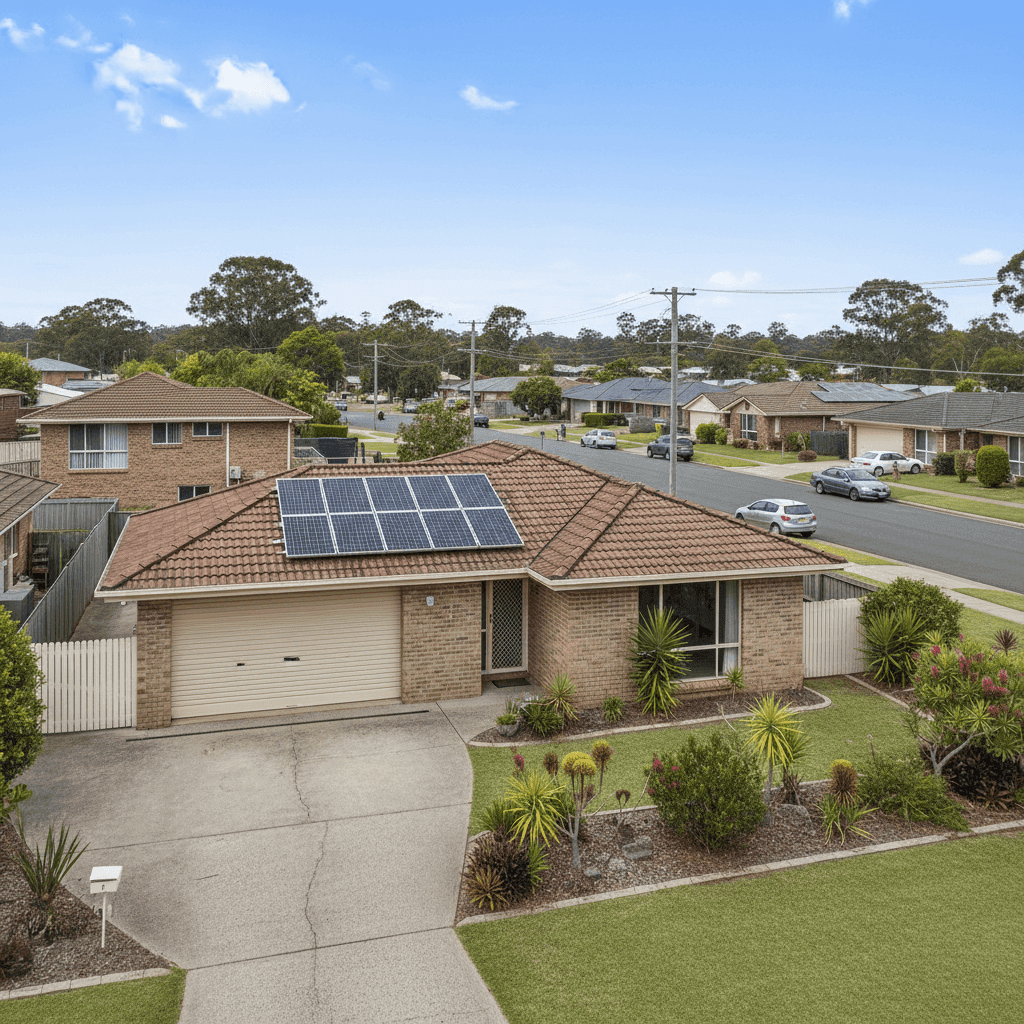
Daisy Hill is a quiet, leafy suburb in Brisbane's south-east corridor — the kind of place where four-bedroom brick homes on slab foundations have been a staple of the streetscape since the 1980s. If you own a free standing home here and you're shopping around for building insurance, understanding what a competitive premium looks like can save you hundreds of dollars a year. This article breaks down a real building-only quote for a property in Daisy Hill (QLD 4127) and puts it in context against local, state, and national benchmarks.
---
Is This Quote Fair?
The quote in question comes in at $1,256 per year (or $129/month) for building-only cover on a four-bedroom, two-bathroom free standing home, with a building excess of $4,000 and a sum insured of $550,000.
Our price rating for this quote is FAIR — Around Average.
That rating reflects a nuanced picture. At first glance, $1,256/year sounds very reasonable — and compared to the broader Queensland and national markets, it genuinely is. However, within Daisy Hill itself, it sits just above the suburb's 25th percentile of $1,216/year, meaning roughly a quarter of quotes in the area come in even cheaper. It's not a standout bargain, but it's also well clear of the suburb's median ($2,428/year) and average ($3,919/year), which are both significantly higher.
In short: this is a solid, competitive quote — not the cheapest available, but comfortably below what most homeowners in the suburb are paying. The elevated $4,000 building excess is likely one of the levers keeping the premium down, so it's worth factoring that into your assessment of overall value.
---
How Daisy Hill Compares
To appreciate just how well-priced this quote is in the broader context, it helps to look at the numbers side by side.
| Benchmark | Premium |
|---|---|
| This quote | $1,256/yr |
| Daisy Hill 25th percentile | $1,216/yr |
| Daisy Hill median | $2,428/yr |
| Daisy Hill average | $3,919/yr |
| Daisy Hill 75th percentile | $3,321/yr |
| QLD state median | $3,903/yr |
| QLD state average | $9,129/yr |
| National median | $2,764/yr |
| National average | $5,347/yr |
| Brisbane LGA average | $16,277/yr |
The figures tell a striking story. Queensland's average home insurance premium of $9,129/year is more than seven times higher than this quote — a reflection of the state's significant exposure to extreme weather events, particularly in flood-prone and cyclone-affected regions. The national average of $5,347/year is similarly dwarfed.
Even within the Brisbane LGA, where the average sits at a staggering $16,277/year, this quote looks exceptionally lean. That LGA average is heavily skewed by high-risk flood zones and premium inner-city properties, so it's not a direct comparison — but it does illustrate that location within the broader city matters enormously.
For Daisy Hill specifically, the suburb's own average of $3,919/year suggests there are homeowners nearby paying three times as much for similar cover. Based on a sample of 39 quotes, the spread is wide, which points to meaningful differences in individual property risk profiles, insurers, and cover levels.
---
Property Features That Affect Your Premium
Several characteristics of this particular property work in its favour from an insurance pricing perspective.
Brick Veneer Construction Brick veneer is one of the more insurer-friendly wall materials in Australia. It offers solid fire resistance and structural durability compared to timber or weatherboard, which typically attract higher premiums. For a home built in 1984, brick veneer also suggests the property has aged reasonably well and is less likely to carry the elevated risk profile of older fibro or asbestos-clad homes.
Concrete Tile Roof Concrete roofing is generally viewed favourably by insurers. It's durable, fire-resistant, and performs well in hail events — a relevant consideration in south-east Queensland, where severe hailstorms are not uncommon. It tends to attract lower premiums than corrugated iron or older Colorbond in some assessments.
Slab Foundation A slab-on-ground foundation is standard for Queensland homes of this era and carries no particular premium penalty. It avoids the additional risk considerations that can come with elevated timber stumps, particularly around termite damage and underfloor flooding.
Solar Panels The presence of solar panels does add a modest layer of complexity to building insurance, as the panels themselves are typically covered under the building policy. Insurers factor in the replacement cost of the system, which can nudge premiums slightly upward. However, the impact is generally minor for a standard residential rooftop installation.
No Pool, No Cyclone Zone The absence of a pool removes a common source of liability and structural risk. More significantly, Daisy Hill sits outside designated cyclone risk areas — a major factor in keeping premiums well below the Queensland state average, which is heavily influenced by far north Queensland properties.
Timber and Laminate Flooring Timber and laminate floors are a mid-range risk from an insurer's perspective. They can be susceptible to water damage, but they're also straightforward to repair or replace. The standard fittings quality throughout the home keeps the rebuild cost estimate grounded, which is reflected in the $550,000 sum insured.
---
Tips for Homeowners in Daisy Hill
1. Review your sum insured regularly Construction costs across Queensland have risen significantly in recent years. A sum insured of $550,000 may be appropriate now, but it's worth reassessing annually to ensure it reflects current rebuild costs — not the figure you set several years ago. Underinsurance is one of the most common and costly mistakes homeowners make.
2. Consider whether your excess is working for you The $4,000 building excess on this policy is on the higher end. While it keeps the annual premium down, it means you'd be out of pocket for $4,000 before your insurer contributes to any claim. If a major storm or fire event is your primary concern, this trade-off may be perfectly sensible. But if you'd struggle to cover that cost at short notice, it may be worth comparing quotes with a lower excess to see how much the premium difference actually is.
3. Don't overlook your solar panels Confirm with your insurer that your solar panel system is explicitly covered under your building policy — including the inverter and mounting hardware. Some policies have sub-limits or exclusions that may leave you underinsured if the system is damaged or stolen.
4. Compare quotes at renewal, not just when you first buy Insurance premiums can shift significantly from year to year, and loyalty doesn't always pay. With the wide spread of premiums seen across Daisy Hill — from $1,216/year at the 25th percentile to $3,321/year at the 75th — it's clear that shopping around makes a real difference.
---
Ready to Compare Home Insurance in Daisy Hill?
Whether you're reviewing an existing policy or buying cover for the first time, CoverClub makes it easy to see how your quote stacks up. Get a home insurance quote today and compare it against real data from your suburb, your state, and across Australia — so you can make a confident, informed decision.