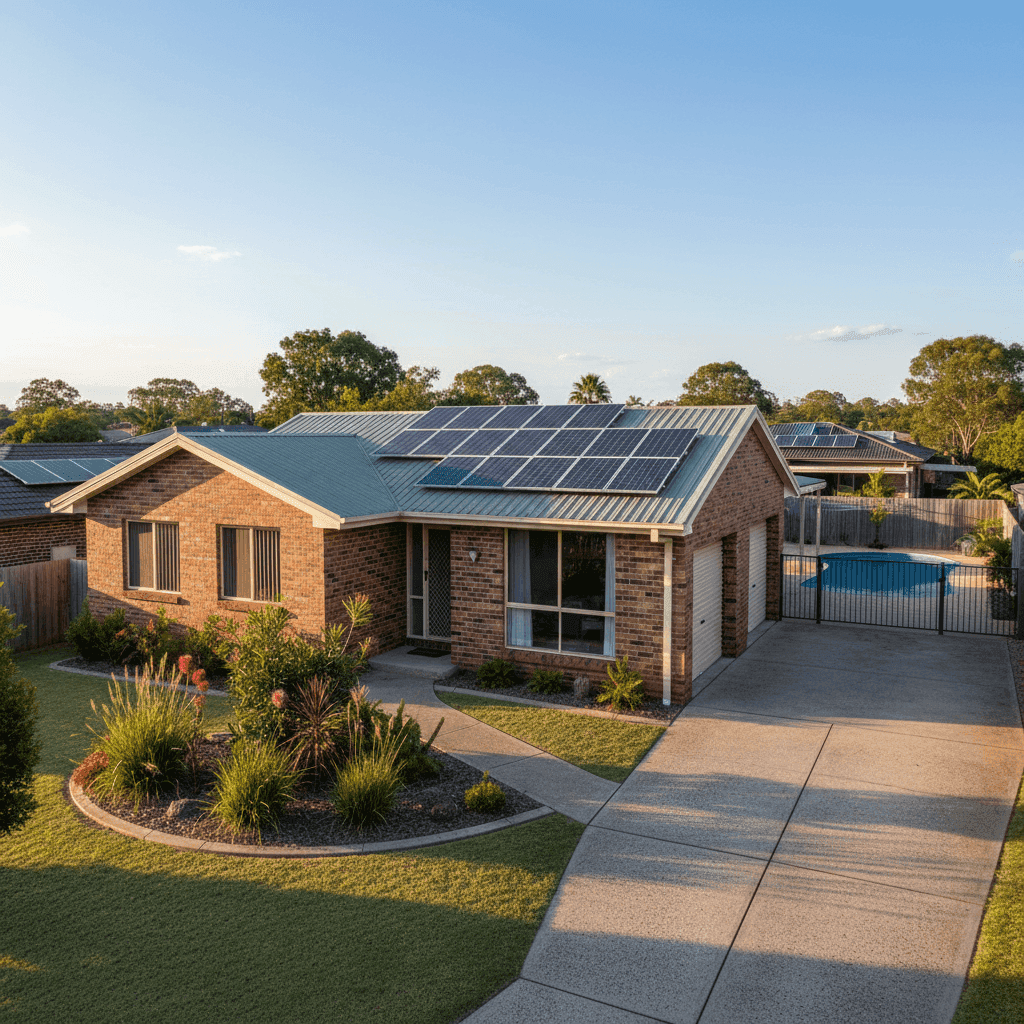
Daisy Hill is a quiet, leafy suburb in Brisbane's south-east corridor — popular with families for its proximity to the Daisy Hill Conservation Park and good local schooling options. It's also a suburb where home insurance premiums can vary enormously, so when a quote comes in well below the local average, it's worth taking a closer look to understand what's driving that price.
This article breaks down a recent building insurance quote for a three-bedroom, free-standing home in Daisy Hill (postcode 4127), comparing it against suburb, state, and national benchmarks to help you decide whether it represents genuine value.
---
Is This Quote Fair?
The quote in question is $1,054 per year (or roughly $97 per month) for building-only cover on a 130 sqm brick veneer home, with a sum insured of $349,000 and a building excess of $3,000.
Our pricing analysis rates this quote as CHEAP — below average for the area. That's a meaningful distinction. "Cheap" doesn't automatically mean inadequate — but it does warrant scrutiny. In this case, the premium sits well below the suburb's 25th percentile of $1,548 per year, meaning it's cheaper than at least three-quarters of comparable quotes gathered in the area.
For context, the suburb average in Daisy Hill sits at $4,083 per year, with a median of $2,570. This quote comes in at roughly 74% below the suburb average — a significant gap that reflects a combination of favourable property characteristics and a competitive insurer pricing the risk aggressively.
The high building excess of $3,000 is one factor that keeps the premium down. A higher excess means the insurer's exposure on smaller claims is reduced, and that saving is passed on through a lower annual premium. Homeowners should weigh this trade-off carefully — if a storm damages your roof or a burst pipe causes internal damage, you'll be out of pocket for the first $3,000 before cover kicks in.
---
How Daisy Hill Compares
To put this quote in proper perspective, here's how it stacks up across different benchmarks:
| Benchmark | Premium |
|---|---|
| This quote | $1,054/yr |
| Daisy Hill 25th percentile | $1,548/yr |
| Daisy Hill median | $2,570/yr |
| Daisy Hill average | $4,083/yr |
| Brisbane LGA average | $4,485/yr |
| QLD state average | $4,547/yr |
| QLD state median | $3,931/yr |
| National average | $2,965/yr |
| National median | $2,716/yr |
(Based on 38 quotes sampled in the Daisy Hill suburb area.)
Queensland consistently records some of the highest home insurance premiums in the country — driven largely by the state's exposure to extreme weather events, including storms, flooding, and hail. The QLD state average of $4,547 per year is well above the national average of $2,965, reflecting that elevated risk profile.
Against that backdrop, a quote of $1,054 is genuinely exceptional — sitting at less than a quarter of the state average. Even accounting for the higher excess and building-only cover (no contents), this is a competitive result.
---
Property Features That Affect Your Premium
Several characteristics of this property work in favour of a lower premium:
Brick Veneer Walls Brick veneer is generally viewed favourably by insurers. It's more resistant to fire and wind damage than timber-framed cladding, and it holds up well in the kind of severe thunderstorms that regularly affect south-east Queensland. This construction type typically attracts lower premiums compared to weatherboard or lightweight cladding alternatives.
Steel / Colorbond Roof Colorbond steel roofing is durable, low-maintenance, and performs well in high-wind events. Unlike older tile roofs, it's less susceptible to hail damage causing individual tile breakage, and it doesn't degrade in the same way over time. Insurers tend to price Colorbond roofs competitively.
Concrete Slab Foundation A slab foundation provides structural stability and is less prone to subsidence or movement compared to older pier-and-beam setups. This reduces the likelihood of costly structural claims, which is reflected in the premium.
No Cyclone Risk Area Daisy Hill falls outside designated cyclone risk zones — a significant factor in Queensland, where properties in northern and coastal regions can attract substantial cyclone loading on their premiums. Being located in the south-east corner of the state removes this risk category entirely.
Swimming Pool The presence of a pool does introduce some liability considerations and can add a modest amount to premiums, but under a building-only policy, the pool structure itself (fencing, pump housing, etc.) may be covered as a permanent fixture — worth confirming with your insurer.
Solar Panels Solar panels are increasingly common on Queensland homes, and most standard building policies will cover them as fixtures attached to the roof. However, it's worth checking whether your policy covers the panels for accidental damage, storm damage, and electrical breakdown — coverage can vary between insurers.
1981 Construction A home built in 1981 is over 40 years old. While this isn't necessarily a red flag, older homes can carry higher risk of ageing electrical wiring, plumbing wear, and building materials that no longer meet modern standards. Some insurers apply age-related loadings; others assess construction type and condition more holistically.
---
Tips for Homeowners in Daisy Hill
1. Review your sum insured regularly At $349,000, the sum insured for this 130 sqm home works out to roughly $2,685 per square metre — a reasonable figure for standard construction, but building costs in Queensland have risen sharply in recent years. It's worth getting an independent building replacement estimate every year or two to ensure you're not underinsured.
2. Understand your excess before you claim A $3,000 building excess is on the higher end of the scale. Before renewing, consider whether you'd prefer a lower excess in exchange for a slightly higher premium — particularly if you're in an area prone to storm damage, where smaller claims are more frequent.
3. Check your solar panel and pool coverage Ask your insurer specifically how solar panels and pool infrastructure are covered. Some policies treat panels as contents rather than building fixtures, which could leave gaps if you only hold building cover. Similarly, confirm whether pool fencing, pumps, and filtration systems are included.
4. Compare at renewal — every year Insurance markets shift constantly. The fact that this quote is rated "cheap" relative to the suburb average is a great outcome, but premiums can change significantly at renewal. Use a comparison tool like CoverClub to benchmark your renewal quote each year rather than simply auto-renewing.
---
Get Your Own Quote
Whether you're insuring a home in Daisy Hill or anywhere else in Australia, comparing quotes is the single most effective way to avoid overpaying. CoverClub makes it easy to see how your premium stacks up against local and national benchmarks — so you always know if you're getting a fair deal.