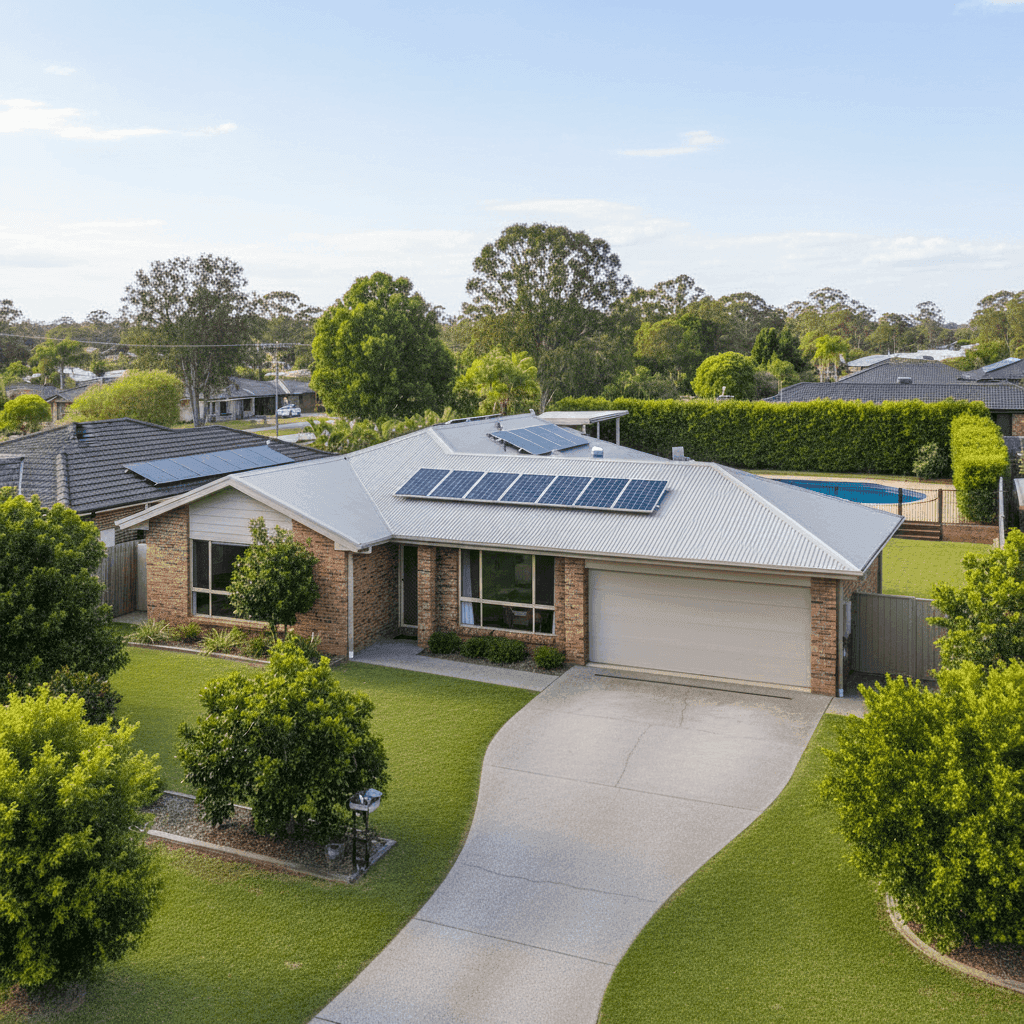
If you own a free standing home in Daisy Hill, QLD 4128, you're probably wondering whether your home insurance premium is competitive — or whether you're quietly overpaying every year. This article breaks down a real home and contents insurance quote for a four-bedroom, three-bathroom brick veneer home in Daisy Hill, comparing it against local, state, and national benchmarks so you can make a genuinely informed decision.
---
Is This Quote Fair?
The quote in question comes in at $4,101 per year (or roughly $393 per month) for combined home and contents cover, with a building sum insured of $980,000 and contents valued at $201,000. Both the building and contents excess are set at $1,000.
Our pricing analysis rates this quote as CHEAP — below average for this type of property and location. That's a meaningful finding. It suggests the homeowner is receiving solid coverage at a price that sits favourably against what most comparable properties are paying across Queensland and nationally. For a property of this size and specification — 244 sqm, built in 1980, with a pool and solar panels — landing below the average benchmark is a genuinely good outcome.
That said, "cheap" doesn't automatically mean "best." It's always worth scrutinising what's actually covered, what the policy exclusions are, and whether the sum insured accurately reflects today's rebuild costs. A below-average premium with inadequate coverage is no bargain at all.
---
How Daisy Hill Compares
Understanding where this quote sits in the broader market helps put the number in real context. Here's how it stacks up:
| Benchmark | Premium |
|---|---|
| This Quote | $4,101/yr |
| LGA (Logan) Average | $4,617/yr |
| QLD State Average | $9,129/yr |
| QLD State Median | $3,903/yr |
| National Average | $5,347/yr |
| National Median | $2,764/yr |
A few things stand out here. The Queensland state average of $9,129/yr is strikingly high — a reflection of the significant weather and climate risks across the state, from cyclones in the north to flooding and severe storms in the south-east. Daisy Hill, sitting in the Logan LGA in Brisbane's south-eastern suburbs, benefits from a more moderate risk profile than many Queensland postcodes.
The LGA (Logan) average of $4,617/yr provides perhaps the most relevant local comparison. At $4,101, this quote comes in $516 below the Logan average — a meaningful saving that compounds year after year. Against the national average of $5,347, the saving is even more pronounced at over $1,200 annually.
It's worth noting that the national median of $2,764 is considerably lower than this quote, which reflects the fact that many properties around Australia carry lower rebuild values, fewer features, or lower contents cover. When you account for the $980,000 building sum insured and $201,000 in contents, the per-dollar-of-coverage rate here is quite competitive.
For more localised pricing data specific to this postcode, visit the Daisy Hill suburb stats page.
---
Property Features That Affect Your Premium
Several characteristics of this particular property have a direct bearing on what insurers charge — and understanding them helps explain both the price and the coverage considerations.
Brick Veneer Walls & Colorbond Roof Brick veneer construction is generally viewed favourably by insurers. It offers solid fire resistance and structural durability, which can translate to lower premiums compared to weatherboard or fibre cement homes. The steel Colorbond roof is similarly well-regarded — it's lightweight, resistant to corrosion, and performs well in storm conditions, all of which reduce risk in the eyes of underwriters.
Slab Foundation A concrete slab foundation is standard for Queensland homes of this era and is considered a stable, low-risk base. It eliminates the concerns associated with subfloor moisture and pest damage that can affect homes on stumps or piers.
Timber and Laminate Flooring While aesthetically appealing and common in Queensland homes, timber and laminate flooring can be more susceptible to water damage than tile. Insurers may factor this in when assessing contents and building risks, particularly given Queensland's storm season.
Swimming Pool A pool increases the replacement value of the property and introduces some liability considerations. It adds to the overall sum insured and is a feature that can push premiums upward — though in this case the overall quote remains competitive.
Solar Panels Solar panel systems are increasingly common on Queensland rooftops, but they do add to the building's insured value and can be a point of complexity during claims (particularly after hail events). Ensuring your policy explicitly covers solar panels — including inverters — is essential.
Construction Year: 1980 Homes built in 1980 are now over four decades old. While well-maintained brick veneer homes age gracefully, older properties can present higher risk around electrical wiring, plumbing, and roofing. Some insurers apply age loadings; others don't. It's worth confirming your policy doesn't have exclusions related to the age of the building's services.
---
Tips for Homeowners in Daisy Hill
1. Review Your Building Sum Insured Regularly Construction costs have risen sharply in recent years. A sum insured of $980,000 for a 244 sqm home in Logan may be appropriate today, but it should be reassessed annually. Underinsurance is one of the most common — and costly — mistakes homeowners make. Use a building cost calculator or speak with a quantity surveyor if you're unsure.
2. Confirm Solar Panel and Pool Coverage Not all standard home insurance policies automatically cover solar panel systems or pool equipment as part of the building. Check your Product Disclosure Statement (PDS) carefully and ask your insurer directly. The same applies to pool pumps, filters, and heating systems.
3. Take Advantage of Queensland's Lower Cyclone Risk in This Region Daisy Hill is not classified as a cyclone risk area, which is a notable premium advantage over properties further north in Queensland. When comparing quotes, make sure this is correctly captured in your policy details — some online quote tools default to broader risk zones that may not accurately reflect your actual location.
4. Compare Quotes Before Renewal Loyalty doesn't always pay in home insurance. Insurers frequently offer their most competitive rates to new customers. With this quote already rated as below average, there may still be room to find comparable or better cover at a lower price — or to confirm you're already on a strong deal. Either way, it pays to check.
---
Ready to Compare?
Whether you're a first-time buyer in Daisy Hill or a long-term homeowner due for renewal, comparing quotes is one of the simplest ways to protect both your home and your budget. [Get a home insurance quote at CoverClub](https://coverclub.com.au/?focus=address) and see how your current premium stacks up against the market in minutes — no obligation, no jargon.