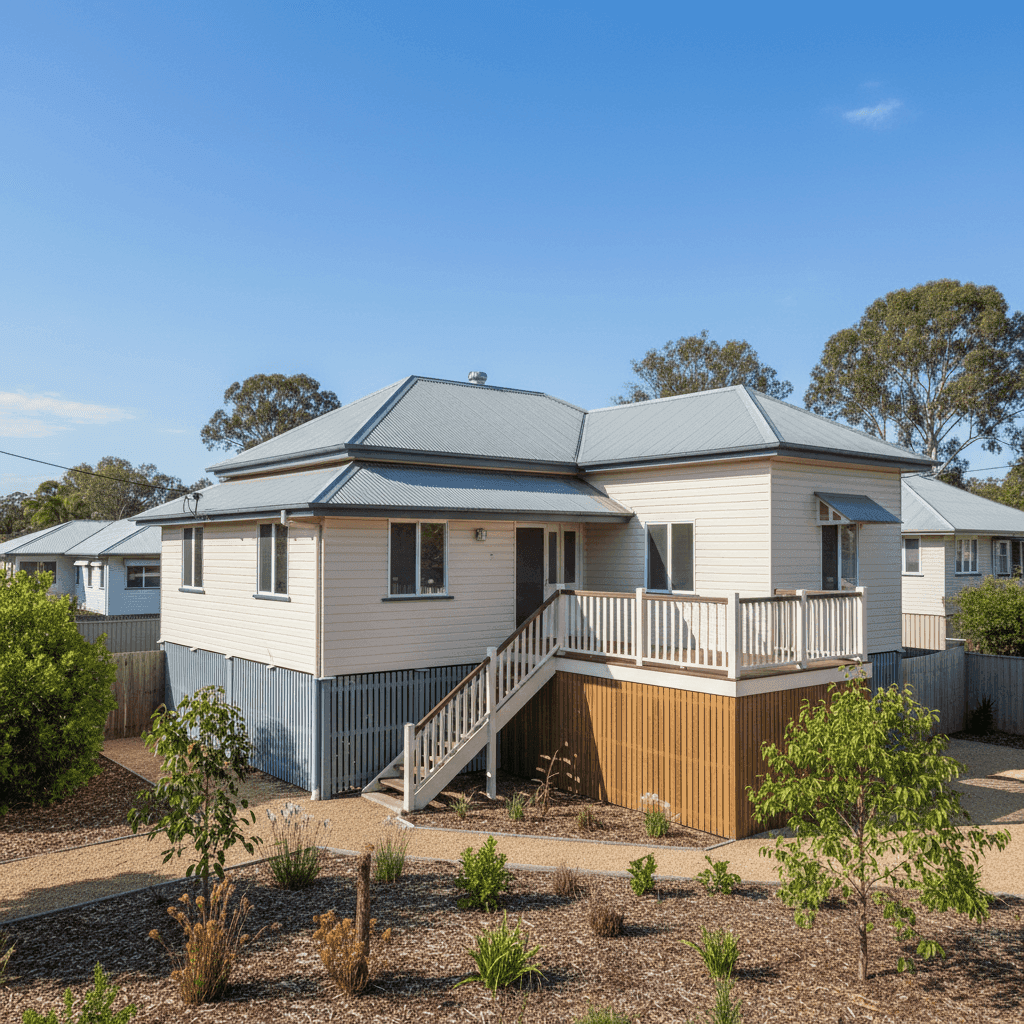
Dalby is a regional hub in Queensland's Darling Downs, known for its agricultural heartland and tight-knit community. If you own a free standing home in the area — particularly an older weatherboard property on stumps — understanding what you should be paying for building insurance is an important part of protecting one of your biggest assets. This article breaks down a real building-only insurance quote for a 2-bedroom home in Dalby (QLD 4405) and puts the numbers in context.
---
Is This Quote Fair?
The quote in question comes in at $3,283 per year (or $315/month) for building-only cover on a 105 sqm free standing home, with a building sum insured of $334,000 and a $2,000 excess.
Our price rating for this quote is FAIR — Around Average, and the data backs that up. Based on 102 quotes collected for the Dalby area, the suburb median sits at $3,373/yr — meaning this quote is just below the midpoint for comparable properties in the postcode. That's a reasonable result, though it's worth noting that a quarter of Dalby homeowners are paying $2,543/yr or less, so there's definitely room to shop around if your circumstances allow.
At $3,283/yr, this quote is neither a standout bargain nor cause for alarm. It lands comfortably within the middle band of what Dalby homeowners are paying, making it a solid baseline to benchmark against when comparing insurers.
---
How Dalby Compares
To really understand whether this quote represents value, it helps to zoom out and look at the broader picture.
| Benchmark | Premium |
|---|---|
| This quote | $3,283/yr |
| Dalby suburb median | $3,373/yr |
| Dalby suburb average | $4,280/yr |
| LGA average (South Burnett) | $2,940/yr |
| QLD state median | $3,903/yr |
| QLD state average | $9,129/yr |
| National median | $2,764/yr |
| National average | $5,347/yr |
A few things stand out here. The QLD state average of $9,129/yr is dramatically higher than what Dalby homeowners are paying — this is largely driven by high-risk coastal and cyclone-prone areas in North Queensland, which pull the state average up significantly. Dalby, sitting inland on the Darling Downs, does not fall within a designated cyclone risk zone, which is a meaningful factor in keeping premiums more manageable.
Compared to the national median of $2,764/yr, this quote is somewhat higher — but that's consistent with Queensland's generally elevated insurance costs relative to states like Victoria or South Australia. The Darling Downs region does carry flood and storm risk, particularly during La Niña weather patterns, which insurers price into their premiums.
The LGA average for South Burnett ($2,940/yr) is notably lower than the Dalby suburb average, suggesting that Dalby itself may carry slightly higher risk characteristics within the broader region. It's also worth keeping in mind that LGA-level averages can include a wide mix of property types and cover levels.
You can explore the full breakdown of Dalby insurance statistics here.
---
Property Features That Affect Your Premium
Several characteristics of this particular property have a direct bearing on the premium quoted. Understanding these factors can help you make sense of your own quote — or identify areas where you might reduce your costs.
Weatherboard Timber Walls
Weatherboard construction is common in older Queensland homes, but it's considered higher risk by insurers compared to brick or rendered masonry. Timber is more susceptible to fire, termite damage, and general wear over time, which typically translates to a higher premium loading. Some insurers also apply specific conditions or exclusions to weatherboard homes, so it's worth reading your Product Disclosure Statement carefully.
Construction Year: 1959
At over 65 years old, this home is well into "older dwelling" territory. Insurers factor in the age of a property because older homes may have ageing electrical wiring, plumbing, and structural components that increase the likelihood of a claim. Some insurers may require a building inspection or apply age-related loadings for properties of this vintage.
Steel/Colorbond Roof
On a more positive note, a steel Colorbond roof is generally viewed favourably by insurers. It's durable, fire-resistant, and holds up well in hail and storm events — all of which are relevant in South East Queensland. This is likely helping to offset some of the premium loading from the timber walls and property age.
Stumped Foundation
Homes on stumps (also called pier foundations) are a classic feature of Queensland architecture. While this style offers excellent ventilation and is well-suited to the climate, it can be a consideration for insurers in flood-prone areas, as the elevated design may reduce flood damage risk. That said, stumped homes can also be more vulnerable to certain structural issues over time.
Building Size and Sum Insured
At 105 sqm with a sum insured of $334,000, the rebuild cost per square metre works out to roughly $3,181/sqm. This is broadly in line with current construction cost estimates for Queensland, though it's always worth having your sum insured reviewed periodically — particularly given the significant rise in building costs over recent years.
---
Tips for Homeowners in Dalby
1. Review your sum insured annually Building costs across Australia have risen sharply since 2020. If your sum insured hasn't been updated to reflect current construction costs, you could be underinsured — meaning you'd face a shortfall if you needed to make a total loss claim. Use a building cost calculator or speak with a quantity surveyor to validate your figure.
2. Shop around — the spread is wide The gap between the 25th percentile ($2,543/yr) and 75th percentile ($4,888/yr) in Dalby is substantial. That $2,345 difference shows just how much premiums can vary between insurers for similar properties. Comparing multiple quotes is one of the most effective ways to reduce your annual cost.
3. Consider your excess carefully This quote carries a $2,000 building excess. Opting for a higher excess can reduce your premium, but make sure it's an amount you could comfortably cover in the event of a claim. Conversely, if cash flow is a concern, a lower excess with a slightly higher premium may be worth it for peace of mind.
4. Maintain your weatherboard exterior Insurers can decline claims or reduce payouts if damage is attributed to lack of maintenance. Keeping your weatherboard walls painted, sealed, and free from rot or termite activity is not only good home ownership practice — it protects your ability to claim when you need to.
---
Compare Your Options with CoverClub
Whether you're renewing your existing policy or shopping for the first time, it pays to know where your quote stands. CoverClub makes it easy to compare building insurance options for homes across Queensland and beyond. Get a quote today at CoverClub and see how your premium stacks up against real data from homeowners in your area.