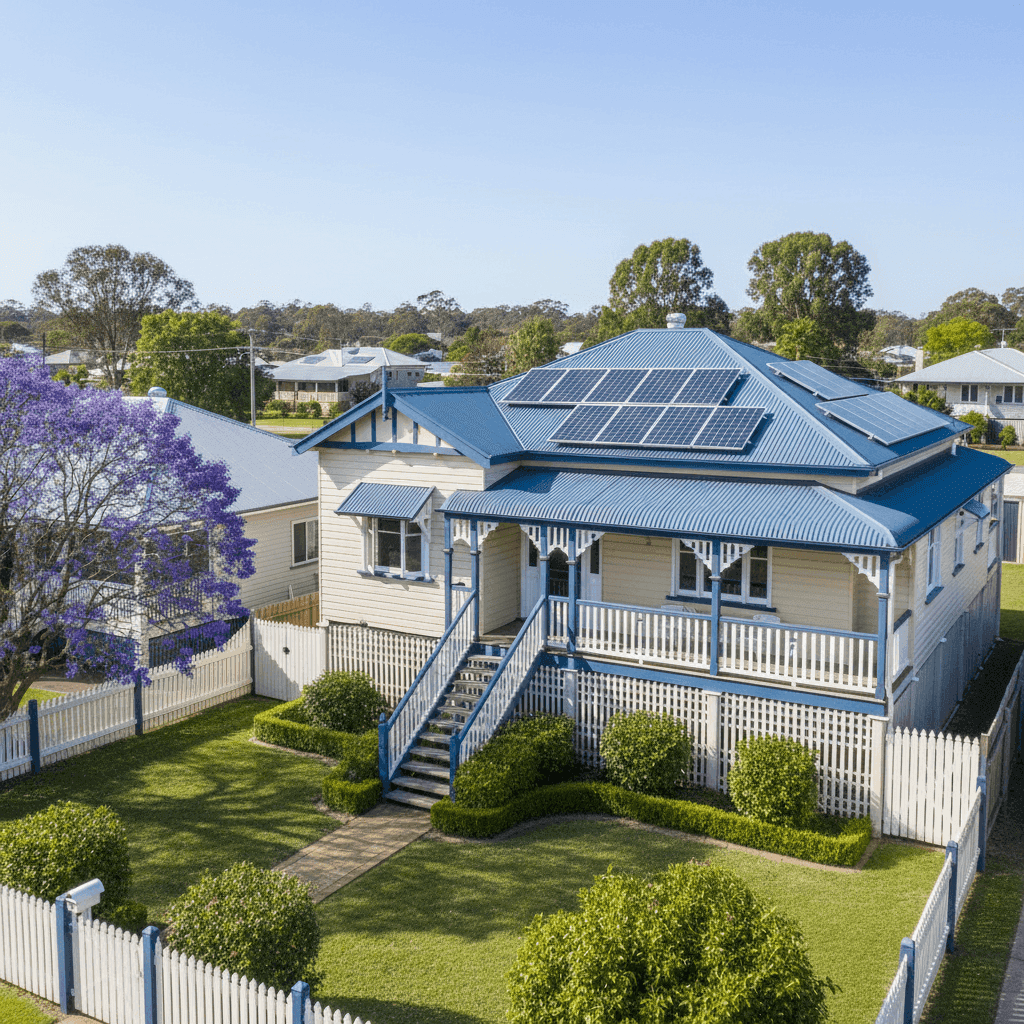
If you own a free standing home in Dalby, QLD 4405, you've probably noticed that home insurance premiums can vary enormously depending on who you ask — and what your property looks like. This article breaks down a real home and contents insurance quote for a three-bedroom, one-bathroom weatherboard home in Dalby, comparing it against suburb, state, and national benchmarks to help you understand whether you're paying a fair price.
---
Is This Quote Fair?
The quote in question comes in at $3,194 per year (or $306 per month) for combined home and contents cover, with a building sum insured of $436,000 and contents valued at $40,000. The building excess sits at $5,000 and the contents excess at $2,000.
Our price rating for this quote is FAIR — Around Average.
That assessment is backed up by the numbers. The suburb median premium in Dalby is $3,373 per year, meaning this quote lands comfortably below the median — a solid result. It also sits within the interquartile range for the area (between $2,543 and $4,888), which tells us it's well within the normal spread of what Dalby homeowners are paying.
So while there's certainly room to find cheaper cover (the 25th percentile sits at $2,543), this quote isn't overpriced. For a home with the characteristics described below, it represents a reasonable market rate.
---
How Dalby Compares
To put this quote in proper context, it helps to zoom out and look at the broader picture. Here's how Dalby stacks up against Queensland and the rest of the country:
| Benchmark | Average Premium | Median Premium |
|---|---|---|
| Dalby (4405) | $4,280/yr | $3,373/yr |
| Queensland | $9,129/yr | $3,903/yr |
| National | $5,347/yr | $2,764/yr |
A few things stand out here. Queensland's average premium of $9,129 is dramatically higher than the median of $3,903 — a sign that a relatively small number of very high-risk properties (think coastal cyclone zones and flood-prone areas) are dragging the average up significantly. Dalby, sitting inland on the Darling Downs, largely avoids those extreme risk categories, which is reflected in its more moderate premium range.
Interestingly, the national median of $2,764 is actually lower than Dalby's median of $3,373. This suggests that while Dalby isn't among Australia's most expensive markets, it does carry slightly elevated risk compared to the typical Australian suburb — likely due to factors like storm exposure, older housing stock, and regional supply chain costs for repairs.
It's also worth noting that the LGA average for South Burnett is $2,940 per year — notably lower than Dalby's suburb average of $4,280. This could reflect differences in property age, construction types, or flood mapping across the broader region.
You can explore more localised data on the Dalby suburb insurance stats page, or compare across all of Queensland and the national picture.
---
Property Features That Affect Your Premium
Every property is different, and insurers weigh up a range of characteristics when calculating your premium. Here's how the features of this particular home factor in:
Age of Construction (1901)
This is one of the most significant premium drivers. A home built in 1901 is well over a century old, and insurers treat older dwellings with caution — and for good reason. Ageing electrical wiring, plumbing, and structural elements all increase the likelihood of a claim. Expect this to be a notable contributor to the premium.
Weatherboard Timber Walls
Weatherboard wood is a classic Australian construction material, particularly common in Queensland's older homes. While it has charm and character, it's more susceptible to fire, termite damage, and general wear than brick or rendered masonry. Insurers typically price weatherboard homes slightly higher to reflect this elevated risk profile.
Steel / Colorbond Roof
On the positive side, a Colorbond steel roof is generally viewed favourably by insurers. It's durable, low-maintenance, and performs well in storms compared to older materials like terracotta tiles or corrugated iron in poor condition. This may help moderate the premium somewhat.
Stump Foundation
Homes on stumps are common in Queensland and can be both a blessing and a challenge. They allow airflow beneath the home (great for the climate) but stumps can deteriorate over time, particularly older timber stumps. Insurers may factor this into their risk assessment.
Timber / Laminate Flooring
Timber and laminate floors can be costly to repair or replace following water damage or flooding, which may influence the contents and building premium slightly.
Solar Panels
The presence of solar panels adds to the insured value of the property and may marginally increase the premium, as panels represent an additional asset that would need to be repaired or replaced in the event of storm or hail damage.
Ducted Climate Control
A ducted climate control system is another high-value fixture that insurers take into account. These systems can be expensive to repair or replace, particularly in a regional area where specialist tradespeople may need to travel.
---
Tips for Homeowners in Dalby
Whether you're reviewing an existing policy or shopping around for the first time, here are some practical steps to make sure you're getting the best value:
- Review your sum insured carefully. A building sum insured of $436,000 for a 130 sqm weatherboard home should reflect the full cost of rebuilding — not the market value of the land. Use a building cost calculator to check this figure annually, as construction costs have risen sharply in recent years.
- Consider your excess strategically. This quote carries a $5,000 building excess, which is on the higher end. A higher excess generally lowers your premium, but make sure you could comfortably cover that amount out of pocket if you needed to make a claim. If cash flow is a concern, a lower excess with a slightly higher premium might be the smarter trade-off.
- Maintain your home proactively. Older homes like this one benefit enormously from regular maintenance — inspecting stumps, checking the roof for rust or loose sheets, and keeping gutters clear. Some insurers may reduce premiums or avoid disputes at claim time if there's evidence of good upkeep.
- Shop around at renewal time. The insurance market in Dalby has a wide spread — from $2,543 at the 25th percentile to $4,888 at the 75th percentile. That's a difference of over $2,300 per year for comparable properties. Loyalty doesn't always pay in insurance, so it's worth comparing quotes annually.
---
Compare Your Home Insurance Today
Whether this quote matches your own situation or you're just starting to explore your options, CoverClub makes it easy to see how your premium stacks up. We aggregate real quote data from across Australia so you can make a genuinely informed decision — not just take an insurer's word for it.
Get a home insurance quote and compare your options at CoverClub →