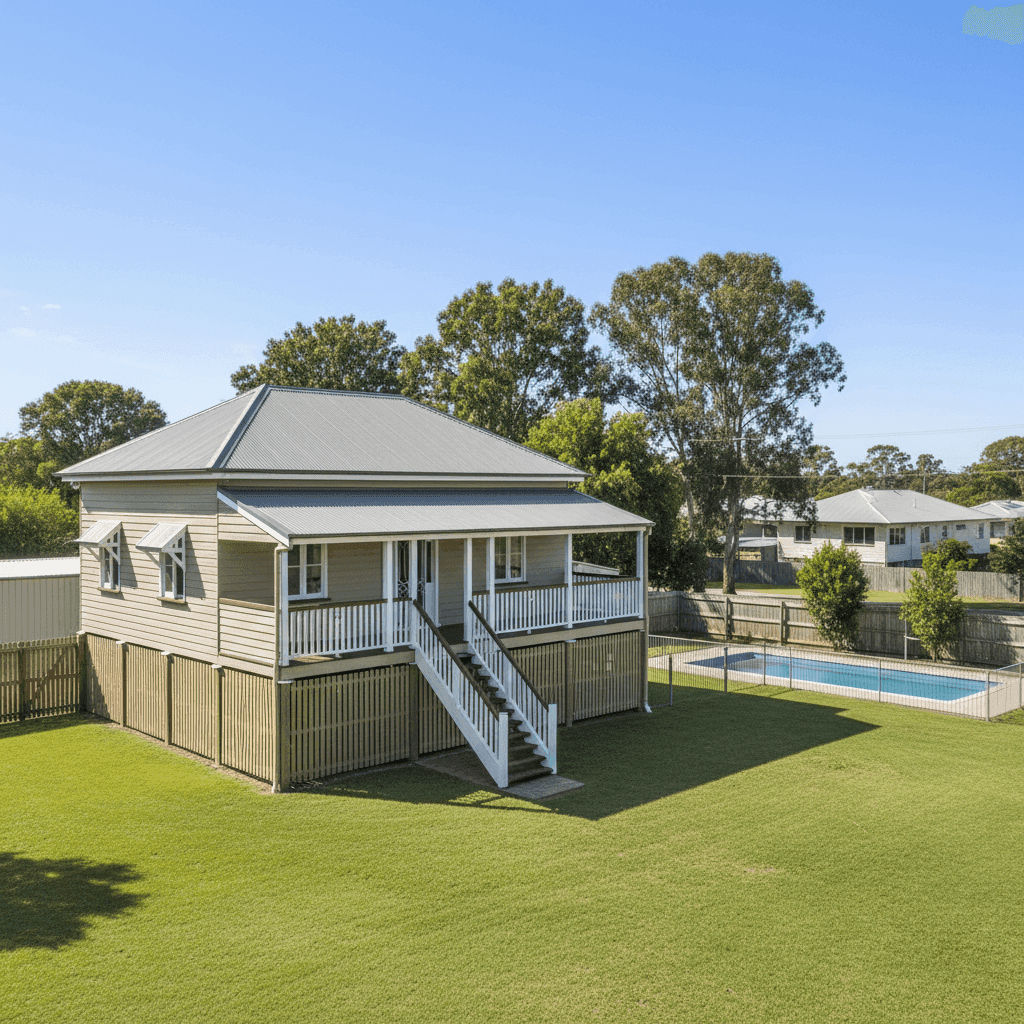
If you own a free standing home in Dalby, QLD 4405, you're probably curious whether the premium you're paying is competitive — or whether you're leaving money on the table. This article breaks down a real home and contents insurance quote for a four-bedroom, two-bathroom weatherboard home in Dalby, comparing it against local, state, and national benchmarks to help you make a more informed decision.
---
Is This Quote Fair?
The quoted annual premium of $2,718 per year (or $266 per month) has been rated Fair — Around Average for this property and location. That rating takes into account the specific characteristics of the home and the going rates across Dalby's insurance market.
Based on data from 102 quotes collected for the Dalby area, the suburb's average premium sits at $4,280 per year, with a median of $3,373. This particular quote lands below both figures — and actually falls near the 25th percentile of $2,543, meaning it's cheaper than roughly three-quarters of comparable quotes in the suburb.
So while the "Fair" rating might sound middling, the numbers tell a more encouraging story: this is a below-median quote for Dalby. The "Around Average" descriptor reflects the broader context of the cover level and property features rather than suggesting you're overpaying.
---
How Dalby Compares
Understanding where Dalby sits relative to the rest of Queensland — and Australia — is key to putting any quote in perspective.
| Benchmark | Average Premium | Median Premium |
|---|---|---|
| Dalby (4405) | $4,280/yr | $3,373/yr |
| LGA (South Burnett) | $2,940/yr | — |
| Queensland | $9,129/yr | $3,903/yr |
| National | $5,347/yr | $2,764/yr |
A few things stand out here. Queensland's average premium of $9,129 is eye-watering compared to the national average of $5,347 — a reflection of the state's exposure to extreme weather events, including flooding, hail, and severe storms. However, the Queensland median of $3,903 is far more moderate, suggesting that a small number of very high-risk properties are pulling the state average upward significantly.
Dalby's suburb average of $4,280 sits above the Queensland median but well below the state average, which is broadly consistent with an inland regional town that faces flood and storm risk but is outside the most cyclone-exposed coastal zones. Nationally, Dalby's median of $3,373 is above the national median of $2,764, which is unsurprising given Queensland's elevated risk profile overall.
The quote in question — at $2,718 — beats the Dalby suburb median, the LGA average, the state median, and sits only marginally above the national median. For a home insured at $550,000 for the building and $80,000 for contents, that represents solid value.
---
Property Features That Affect Your Premium
Several characteristics of this home directly influence the cost of cover. Understanding them helps explain both the premium level and any potential for future adjustments.
Weatherboard Timber Walls
Weatherboard timber construction is one of the more significant rating factors for insurers. Timber is considered a higher fire risk than brick veneer or full brick, and it can be more susceptible to damage from moisture and pests over time. This typically pushes premiums higher compared to masonry-built homes of similar size.
Steel / Colorbond Roof
Colorbond steel roofing is generally viewed favourably by insurers. It's durable, resistant to ember attack (important in bush fire-prone regions), and holds up well against hail compared to terracotta or concrete tiles. This is likely a moderating factor on the premium.
Elevated on Stumps (At Least 1 Metre)
Being elevated by at least one metre on stumps is a meaningful flood-mitigation feature. Dalby has a documented history of flooding — particularly from Myall Creek — and insurers take floor height seriously when assessing flood risk. This elevation may be contributing to a more competitive premium than a slab-on-ground home of the same size would attract.
Swimming Pool
The presence of a pool adds a modest amount to the premium, primarily due to liability considerations and the cost of repair or replacement if damaged. It's a relatively minor factor but worth noting.
Ducted Climate Control
Ducted air conditioning systems increase the insured value of the home's fixtures and fittings. If the system needs replacing after a covered event, it's a significant cost — so its inclusion in the sum insured is important to get right.
Building Size and Age
At 214 sqm and built in 2006, this is a mid-sized, relatively modern home. Homes from this era generally comply with updated building codes, which can mean better structural resilience. The $550,000 sum insured works out to roughly $2,570 per sqm — broadly reasonable for a regional Queensland home with standard fittings, though it's worth periodically reviewing this figure as construction costs continue to rise.
---
Tips for Homeowners in Dalby
Whether you're reviewing an existing policy or shopping for a new one, here are four practical steps worth taking.
1. Review your sum insured annually. Construction costs in regional Queensland have increased substantially in recent years. If your building sum insured hasn't been updated to reflect current rebuild costs, you could be underinsured — meaning you'd face a shortfall in the event of a total loss. Use a building cost calculator or speak with a local builder to sense-check your coverage.
2. Document your flood mitigation features. If your home is elevated on stumps, make sure your insurer is aware of the exact floor height. Some insurers will offer better terms for homes that demonstrably sit above flood levels. Providing photos and council flood maps can support your case.
3. Consider your excess settings. Both the building and contents excess on this policy are set at $1,000. Opting for a higher voluntary excess can reduce your annual premium — useful if you're confident you won't need to make smaller claims. Conversely, a lower excess gives more protection for minor events, so it's a trade-off worth thinking through.
4. Compare at renewal time. Insurance markets shift. The quote that was competitive last year may not be the best available this year — and vice versa. Dalby's suburb average of $4,280 suggests there's meaningful variation in what insurers are charging for similar homes. Shopping around at renewal is one of the simplest ways to avoid overpaying.
---
Compare Your Home Insurance Quote
Whether this quote is the right fit depends on more than just price — policy inclusions, claim handling, and flood definitions all matter enormously in a town like Dalby. The best way to know if you're getting a fair deal is to compare multiple quotes side by side.
Get a home insurance quote at CoverClub and see how your property stacks up against current market rates. You can also explore detailed premium data for Dalby and the surrounding area to better understand what homeowners nearby are paying.