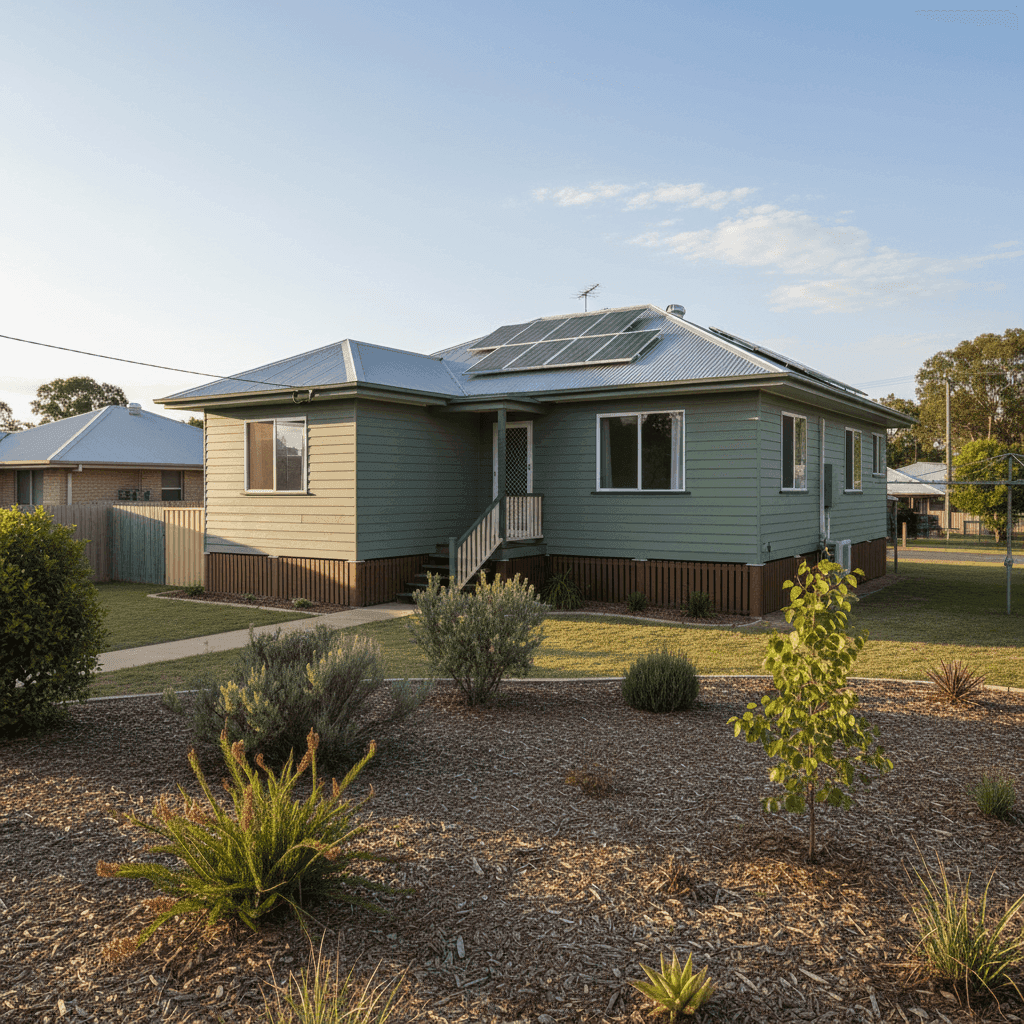
If you own a free standing home in Damascus, QLD 4671, you might be wondering whether your home insurance premium is reasonable — or whether you're paying too much. This article breaks down a real home and contents insurance quote for a three-bedroom, one-bathroom weatherboard property in Damascus, comparing it against local, state, and national benchmarks so you can make a more informed decision at renewal time.
---
Is This Quote Fair?
The short answer: yes — and then some. This quote came in at $2,452 per year (or $228 per month), which CoverClub rates as CHEAP — meaning it sits well below the average for the Damascus area.
To put that into perspective, the suburb average premium for Damascus is $3,494/yr, and the suburb median sits at $3,522/yr. Even the 25th percentile — meaning 75% of comparable quotes are higher — lands at $2,811/yr. This quote undercuts even that lower benchmark, suggesting the insurer has priced this property very competitively.
For a home insured at $620,000 for the building and $100,000 for contents, a combined annual premium under $2,500 represents solid value. The building excess of $1,000 and contents excess of $500 are standard and reasonable for this level of cover.
---
How Damascus Compares
Understanding where Damascus sits in the broader insurance landscape helps put any quote into context. Here's how the numbers stack up:
| Benchmark | Annual Premium |
|---|---|
| This Quote | $2,452 |
| Damascus Suburb Average | $3,494 |
| Damascus Suburb Median | $3,522 |
| North Burnett LGA Average | $3,499 |
| QLD State Median | $3,903 |
| QLD State Average | $9,129 |
| National Median | $2,764 |
| National Average | $5,347 |
A few things stand out here. First, Queensland's state average of $9,129/yr is strikingly high compared to the national average of $5,347/yr — a reflection of the elevated risk that cyclones, flooding, and severe storms pose across much of the Sunshine State. However, the QLD state median of $3,903/yr is far more representative of what most Queenslanders actually pay, since averages can be skewed by extremely high-risk coastal or flood-prone properties.
Damascus itself, sitting within the North Burnett LGA, appears to be a relatively affordable area to insure — the suburb average of $3,494/yr is actually below both the QLD and national averages. This suggests the region doesn't carry the same extreme risk loading as coastal or cyclone-prone parts of Queensland.
You can explore more detailed pricing data on the Damascus suburb insurance stats page, or compare it against the broader Queensland insurance landscape and national benchmarks.
---
Property Features That Affect Your Premium
Every home is different, and insurers weigh up a range of property characteristics when calculating your premium. Here's how the key features of this Damascus property are likely influencing the cost:
Weatherboard Timber Walls
Weatherboard construction is common in older Queensland homes and is generally considered a moderate risk by insurers. Timber can be more susceptible to fire and termite damage than brick or rendered masonry, which can push premiums slightly higher. That said, it's a well-understood construction type and widely insured across regional Queensland.
Steel/Colorbond Roof
A Colorbond steel roof is viewed favourably by most insurers. It's durable, low-maintenance, and performs well in high-wind events — all of which can help keep premiums down compared to older roofing materials like terracotta tiles or corrugated iron.
Stump Foundation
Homes built on stumps are common in Queensland, particularly in areas with reactive soils or flood-prone land. Insurers are familiar with this construction style, though it can occasionally attract slightly higher premiums due to the potential for subsidence or underfloor damage. It's worth ensuring your policy explicitly covers structural issues related to the foundation.
Solar Panels
This property has solar panels, which adds some value to the insured asset. Panels can be damaged by hail, storms, or fire, and it's important to confirm whether they're covered under the building sum insured or require a separate item. At $620,000, the building sum insured should comfortably accommodate the panels, but always check the policy wording.
Built in 1995
A home built in 1995 is approaching 30 years old. While it's not considered heritage or high-risk from an age perspective, older homes may have ageing electrical systems, plumbing, or roofing that could increase the likelihood of a claim. Some insurers factor in construction year when calculating risk.
Vinyl Flooring & Standard Fittings
Vinyl flooring and standard-grade fittings are practical and cost-effective to replace, which generally works in your favour when it comes to contents and building claims. High-end finishes and premium appliances can significantly increase replacement costs and, by extension, your premium.
---
Tips for Homeowners in Damascus
Whether you're reviewing an existing policy or shopping around for the first time, here are a few practical steps Damascus homeowners can take to get the best value from their home insurance:
- Review your sum insured annually. Building costs have risen sharply across regional Queensland in recent years. Make sure your $620,000 building sum insured still reflects the actual cost to rebuild — not just the market value of the property. Underinsurance is one of the most common and costly mistakes homeowners make.
- Confirm solar panel coverage. Ask your insurer explicitly whether your solar panels are included under the building definition and what events are covered (e.g., storm, hail, fire). Some policies treat them as standard fixtures; others require you to list them separately.
- Check your flood and storm cover. While Damascus is not classified as a cyclone risk area, inland Queensland can still experience significant rainfall events and flash flooding. Review your policy's definitions of "flood" versus "storm surge" versus "rainwater runoff" — these distinctions matter enormously at claim time.
- Consider your excess carefully. This policy carries a $1,000 building excess and $500 contents excess. Opting for a higher excess can reduce your annual premium, but make sure you have that amount readily accessible if you need to make a claim. Strike a balance that suits your financial situation.
---
Compare Home Insurance Quotes in Damascus
This quote is a strong result — but insurance markets move, and the best deal today may not be the best deal at your next renewal. The only way to know you're getting genuine value is to compare multiple quotes side by side.
Get a home insurance quote through CoverClub and see how your property stacks up against the competition. It takes just a few minutes, and you could save hundreds of dollars a year.