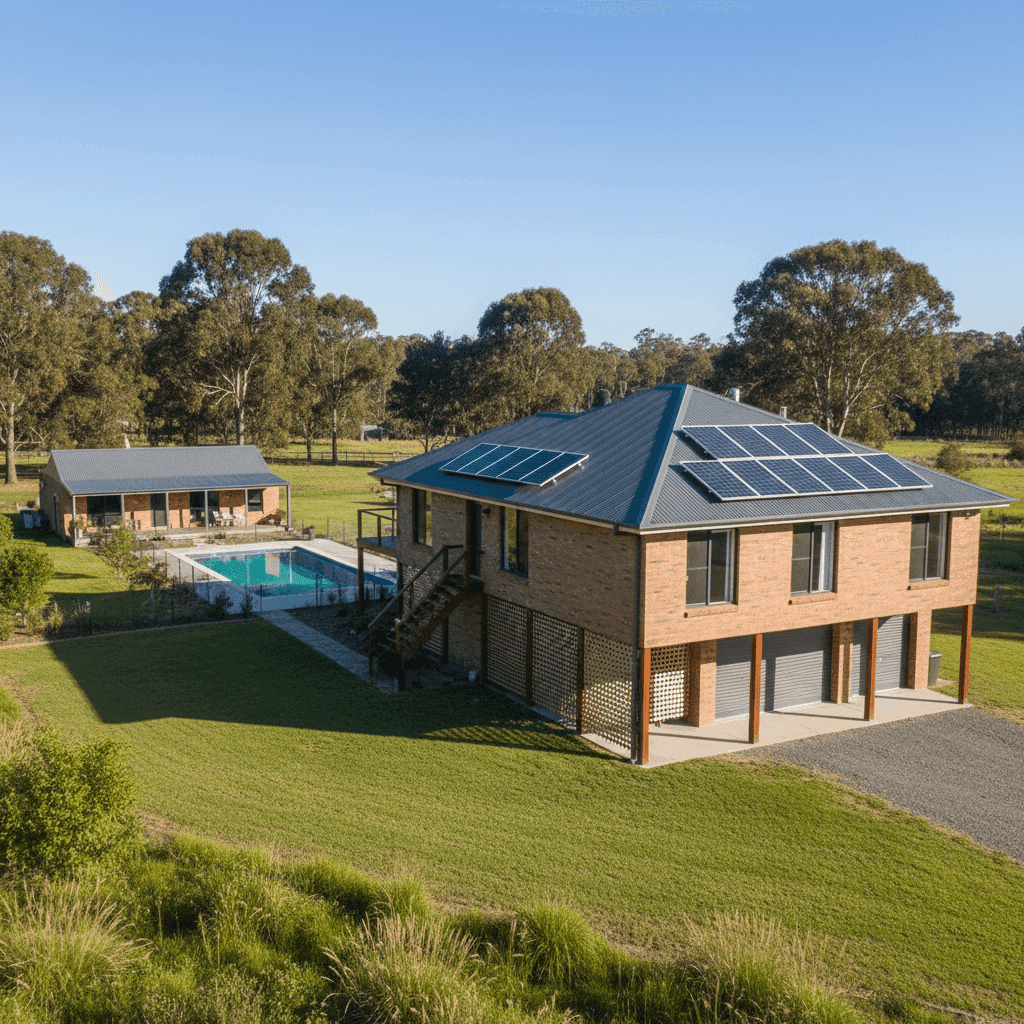
If you own a free standing home in Darnum, VIC 3822, you're likely curious about what home insurance should cost — and whether the quote sitting in your inbox is actually worth accepting. Nestled in the Baw Baw Shire of Gippsland, Darnum is a quiet rural township where heritage properties, acreage lifestyle blocks, and working farms sit side by side. That character comes with its own set of insurance considerations. In this article, we break down a real home and contents insurance quote for a 3-bedroom, 2-bathroom free standing home in Darnum, and put the numbers in context so you can make a more informed decision.
---
Is This Quote Fair?
The annual premium on this quote comes in at $2,210 per year (or $227/month), covering a building sum insured of $651,000 and contents valued at $99,000. Our analysis rates this quote as CHEAP — below the suburb average — which is genuinely good news for the homeowner.
To put it plainly: this quote is priced well below what most comparable Darnum properties are paying. The suburb average sits at $3,009/year, and the median is even higher at $3,109/year. That means this homeowner is saving roughly $800–$900 per year compared to their neighbours on a typical policy. Even against the suburb's 25th percentile — meaning the cheapest quarter of quotes — this policy at $2,210 still comes in below the $2,331 threshold.
The building excess is set at $3,000, with a separate contents excess of $1,000. The higher building excess is one factor that helps keep the premium down, so it's worth considering whether you'd be comfortable covering the first $3,000 of any building claim out of pocket. For many homeowners with solid financial buffers, that's a reasonable trade-off for meaningful annual savings.
---
How Darnum Compares
Understanding where Darnum sits relative to broader benchmarks gives important context for any quote. Here's how the numbers stack up:
| Benchmark | Annual Premium |
|---|---|
| This Quote | $2,210 |
| Darnum Suburb Average | $3,009 |
| Darnum Suburb Median | $3,109 |
| Darnum 25th Percentile | $2,331 |
| Baw Baw LGA Average | $2,647 |
| VIC State Average | $3,000 |
| VIC State Median | $2,718 |
| National Average | $5,347 |
| National Median | $2,764 |
This quote beats every single benchmark in the table — a rare outcome. Compared to the VIC state average of $3,000/year, this homeowner is saving $790 annually. Against the national average of $5,347/year, the savings look even more dramatic — though it's worth noting the national figure is heavily influenced by high-risk areas like Far North Queensland and flood-prone coastal zones.
Locally, the Baw Baw LGA average of $2,647/year is a useful reference point, as it reflects properties with broadly similar risk profiles across the shire. This quote still comes in $437 below that benchmark. You can explore the full Darnum suburb insurance stats here to see how your own property might sit within the local range.
It's worth noting that the suburb sample size for Darnum is 15 quotes, which is a relatively small dataset. Averages can shift as more data comes in, so treat these figures as a useful guide rather than a definitive benchmark.
---
Property Features That Affect Your Premium
Several characteristics of this particular property have a meaningful influence on how insurers price the risk.
Double brick construction is generally viewed favourably by insurers. Brick walls offer excellent fire resistance and structural durability compared to weatherboard or clad exteriors, which can translate to lower premiums. For a home built in 1890, double brick construction is actually a significant asset — it signals a solidly built heritage property rather than one with potentially risky older materials.
Steel/Colorbond roofing is another plus. Modern Colorbond roofs are lightweight, fire-resistant, and highly durable in Australian conditions. Insurers tend to price these more favourably than older tile or iron roofing, particularly in areas exposed to wind and storm events.
The stump foundation (elevated by less than 1 metre) is worth noting. Homes on stumps can be more exposed to underfloor damage, pest ingress, and movement over time — particularly in older properties. However, a slight elevation can also reduce flood and moisture risk in lower-lying rural areas, which may partially offset that concern.
Timber and laminate flooring in a heritage home is common, but can be more costly to repair or replace than concrete slab flooring, which is a factor insurers consider when assessing contents and building risk.
The presence of a swimming pool, solar panels, and a granny flat all add complexity to the risk profile. Pools increase liability exposure and require specific coverage under most policies. Solar panels represent a significant asset on the roof that needs to be accounted for in the building sum insured. The granny flat — whether used for guests, family, or as a rental — may require separate or additional coverage depending on the policy terms. It's essential to confirm with your insurer that the granny flat's structure and any contents within it are explicitly covered.
At 139 sqm of building area with a sum insured of $651,000, the implied rebuild cost per square metre works out to approximately $4,683/sqm — which is broadly in line with current construction costs for a heritage double brick home, especially factoring in the complexity of restoring period features.
---
Tips for Homeowners in Darnum
1. Review your granny flat coverage carefully Many standard home insurance policies don't automatically cover a secondary dwelling on the same property. Check your Product Disclosure Statement (PDS) to confirm whether the granny flat's structure and any contents inside are included — or whether you need an endorsement or separate policy.
2. Confirm your solar panels are covered Solar panel systems can be worth $10,000–$20,000 or more. Some policies cover them as part of the building, others treat them as contents, and some exclude storm or accidental damage. Ask your insurer directly how your panels are covered and whether the inverter is included.
3. Reassess your building sum insured for heritage costs Rebuilding a double brick home constructed in 1890 is not the same as rebuilding a modern home. Heritage properties often require specialist tradespeople, period-appropriate materials, and council approvals that significantly increase rebuild costs. Make sure your sum insured reflects this reality — underinsurance is one of the most common and costly mistakes homeowners make.
4. Consider whether your excess settings still suit you The $3,000 building excess on this policy is on the higher end. While it helps keep the annual premium down, it means you'd be out of pocket for the first $3,000 of any building claim. If your financial situation changes, it's worth revisiting whether a lower excess — at a slightly higher premium — might offer better peace of mind.
---
Compare and Save with CoverClub
Whether you're renewing your existing policy or shopping around for the first time, comparing quotes is the single most effective way to make sure you're not overpaying. The Darnum market shows a wide spread — from $2,331 at the 25th percentile to $3,435 at the 75th — meaning the insurer you choose can make a significant difference to your annual costs.
Get a home insurance quote for your Darnum property at CoverClub and see how your premium stacks up against the local market in minutes.