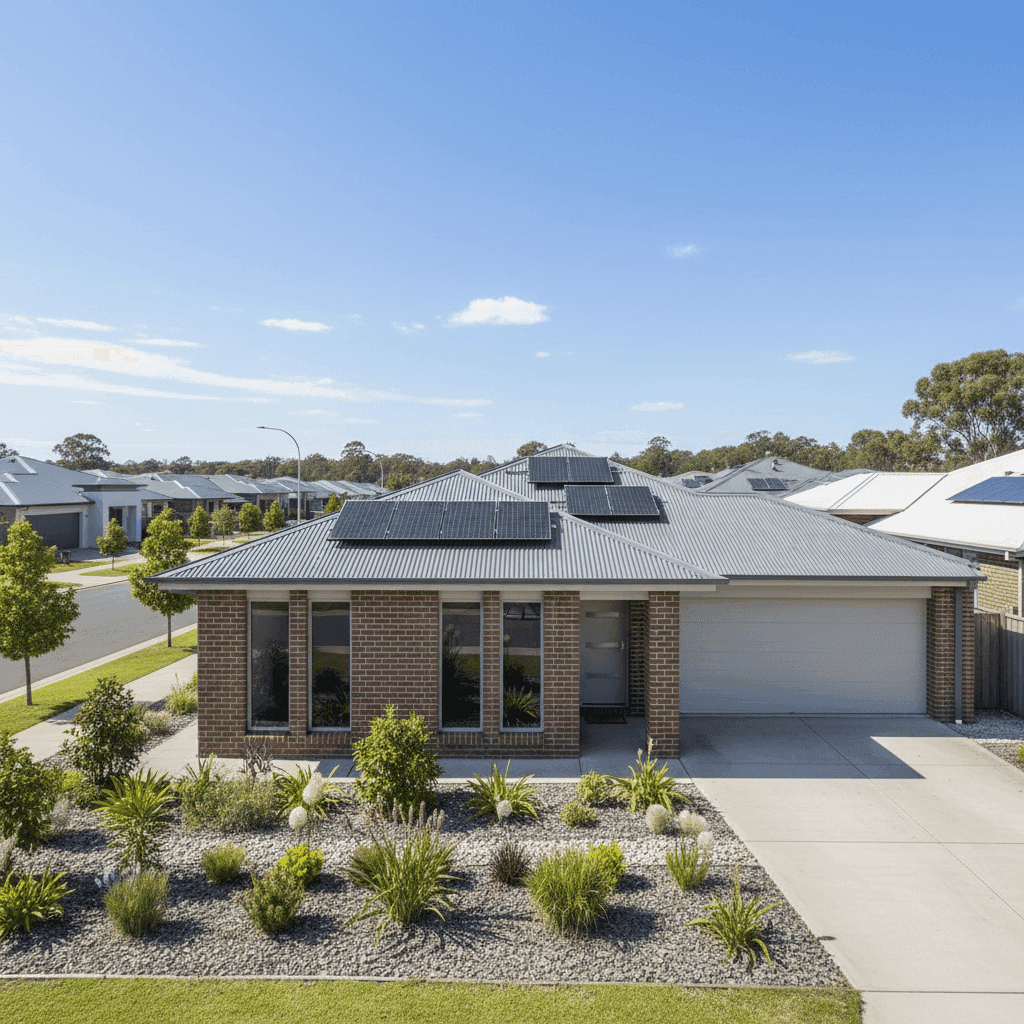
If you own a free standing home in Darra, QLD 4076, you've probably wondered whether you're paying a fair price for home insurance — or leaving money on the table. This article breaks down a real home and contents insurance quote for a five-bedroom brick veneer property in Darra, comparing it against suburb, state, and national benchmarks so you can make a more informed decision at renewal time.
---
Is This Quote Fair?
The quote in question comes in at $1,711 per year (or roughly $164 per month) for combined home and contents cover. The building is insured for $640,000 and contents for $80,000, with a $2,000 excess on both.
Our price rating for this quote is FAIR — Around Average.
That assessment holds up when you look at the numbers. The suburb average premium in Darra sits at $2,242 per year, meaning this quote is comfortably $531 below the local average — a meaningful saving. It also falls below the suburb median of $2,215. However, it does sit above the 25th percentile of $1,467, which tells us there are cheaper options available in the area for those willing to shop around.
In short: this isn't the cheapest quote you could find in Darra, but it's well below what many local homeowners are paying. For a five-bedroom home with a $640,000 building sum insured and solar panels included, it represents solid value.
---
How Darra Compares
To put this quote in proper context, it helps to zoom out and look at the broader insurance landscape across Queensland and Australia.
| Benchmark | Average Premium | Median Premium |
|---|---|---|
| Darra (4076) | $2,242/yr | $2,215/yr |
| Queensland | $9,129/yr | $3,903/yr |
| National | $5,347/yr | $2,764/yr |
| Brisbane LGA | $16,277/yr | — |
The Queensland state average of $9,129 per year looks alarming at first glance, but it's heavily skewed by high-risk regions — think Far North Queensland, cyclone-prone coastal areas, and flood-affected communities. The QLD state median of $3,903 is a more reliable middle-ground figure, and even that is more than double what this Darra homeowner is paying.
The national average of $5,347 tells a similar story — Australia-wide premiums are being pulled upward by extreme weather risk zones. Darra, sitting in Brisbane's south-western suburbs, benefits from a relatively benign risk profile by Queensland standards.
Perhaps most striking is the Brisbane LGA average of $16,277 per year. This figure is significantly influenced by properties in high-flood-risk pockets of Brisbane, particularly those affected by the 2011 and 2022 flood events. Darra's position and the specific property characteristics here appear to keep this quote well insulated from those extremes.
You can explore the full Darra suburb insurance statistics to see how the local market is trending.
---
Property Features That Affect Your Premium
Insurance underwriters assess dozens of variables when pricing a policy. Here's how the key features of this particular property likely influence the premium:
Brick Veneer Walls Brick veneer is generally viewed favourably by insurers. It offers strong resistance to fire and moderate resilience in severe weather events, which can translate to lower premiums compared to timber or clad construction.
Steel / Colorbond Roof Colorbond roofing is a popular choice across Queensland for good reason — it's durable, lightweight, and performs well in high winds. Insurers typically rate it positively, particularly compared to older terracotta or concrete tile roofs that are heavier and more susceptible to storm damage.
Slab Foundation A concrete slab foundation is considered low-risk by most insurers. Unlike raised timber floors, slabs don't carry the same vulnerability to subfloor moisture, termite ingress, or flood inundation in many scenarios.
Built in 2016 A relatively modern build year works in the homeowner's favour. Newer homes are constructed to more recent building codes, which include improved cyclone and storm resistance standards — even outside designated cyclone zones.
Solar Panels Solar panels are an increasingly common feature, and most insurers will cover them under a standard home policy — but it's worth confirming this explicitly. The panels are attached to the structure, so they're typically covered under the building sum insured rather than contents.
Tile Flooring Tiled flooring is practical and durable, and from an insurance perspective, it's generally straightforward to replace after a covered event. It doesn't significantly inflate the cost of reinstatement.
No Pool, No Ducted Climate Control The absence of a pool removes a liability exposure that can push premiums upward. Ducted systems, when present, can be expensive to repair or replace, so their absence keeps the contents and building replacement estimates more modest.
Standard Fittings Standard-grade fittings keep the overall rebuild cost more predictable. High-end or bespoke finishes can significantly increase the sum insured required — and the premium that follows.
---
Tips for Homeowners in Darra
1. Review your sum insured annually Construction costs have risen sharply across South East Queensland over the past few years. A building sum insured of $640,000 for a 130 sqm home may be appropriate today, but it's worth recalculating your estimated rebuild cost each year — especially as labour and materials costs fluctuate. Underinsurance is one of the most common and costly mistakes homeowners make.
2. Confirm solar panel coverage in your policy documents Don't assume your solar system is automatically covered. Check your Product Disclosure Statement (PDS) to confirm panels are included under the building definition, and verify the coverage extends to inverters and associated equipment.
3. Shop around at every renewal This quote rates as fair, but the 25th percentile for Darra sits at $1,467 per year — around $244 less than this premium. That gap is worth investigating. Insurers regularly adjust their pricing models, and loyalty doesn't always pay. Compare quotes for your Darra property to see what else is available in the market.
4. Consider your excess carefully A $2,000 excess on both building and contents is on the higher side. While a higher excess typically reduces your annual premium, it also means a larger out-of-pocket cost if you need to make a claim. Make sure this level is genuinely affordable if the unexpected happens — particularly given Queensland's exposure to storm and hail events.
---
Compare Your Own Quote
Whether you're renewing soon or just curious about where your current premium sits, CoverClub makes it easy to benchmark your home insurance against real market data. Get a quote and compare — it takes just a few minutes and could save you hundreds each year.