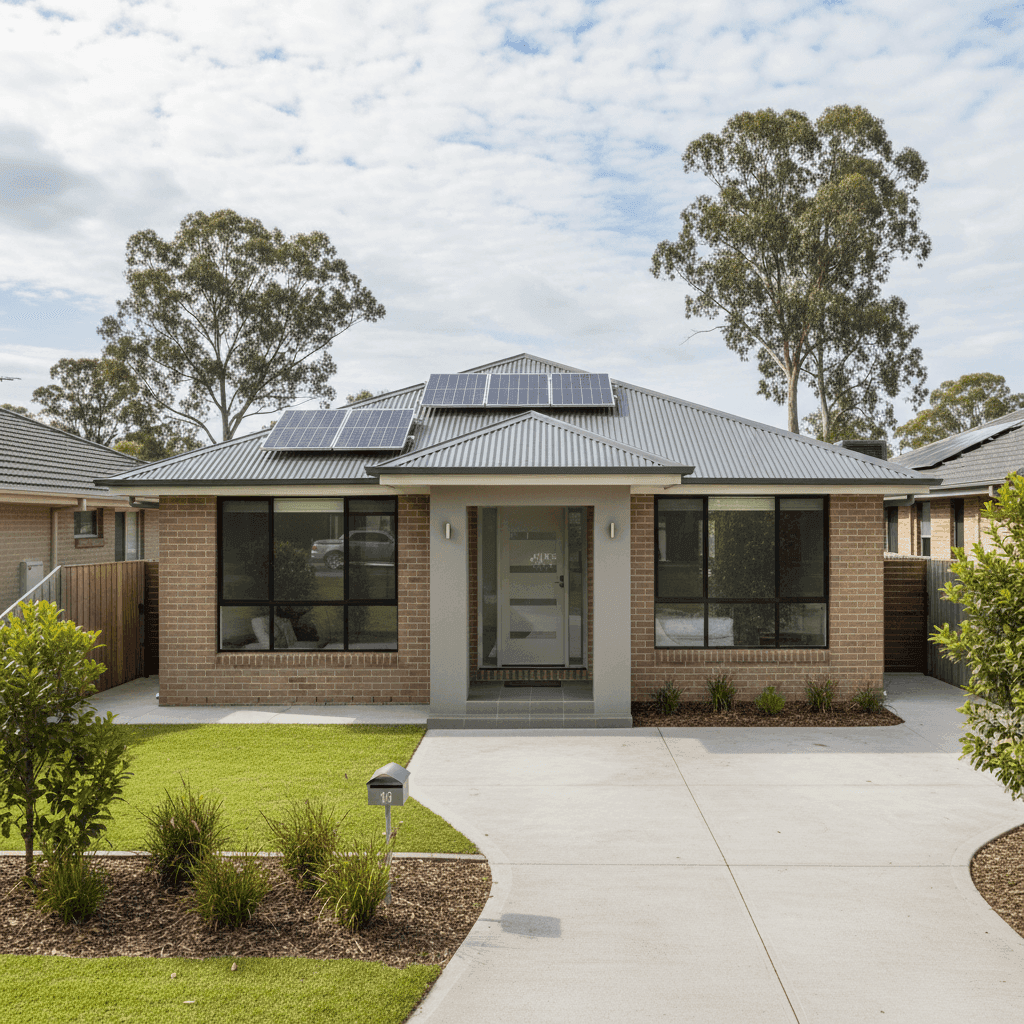
Darra is a quiet, established suburb sitting about 13 kilometres south-west of Brisbane's CBD, popular with families looking for solid value without straying too far from the city. If you own a free standing home here, you're probably curious about what a fair home insurance premium actually looks like — and whether you're paying too much. This article breaks down a real home and contents insurance quote for a five-bedroom, three-bathroom free standing home in Darra (QLD 4076), rated cheap against local, state, and national benchmarks.
---
Is This Quote Fair?
The short answer: yes — and then some. The annual premium on this quote comes in at $1,627 per year (or roughly $159 per month), covering both the building (insured for $700,000) and contents (insured for $120,000). That's a strong result by any measure.
Our price rating system flagged this quote as CHEAP, meaning it sits meaningfully below average for the area. To put that in perspective, the suburb average for comparable properties in Darra is $2,251 per year, and the median sits at $2,229. This quote beats even the 25th percentile — the cheapest quarter of quotes in the suburb — which sits at $2,138/yr. In other words, this premium is genuinely competitive, not just marginally so.
For homeowners paying at or above the suburb average, there's a real opportunity to save. A difference of over $600 per year compared to the local average is nothing to dismiss — that's money that could go toward a better excess, additional cover, or simply back in your pocket.
---
How Darra Compares
To fully appreciate this result, it helps to zoom out and look at the broader picture. You can explore full pricing data on the Darra suburb stats page, but here's a quick snapshot:
| Benchmark | Annual Premium |
|---|---|
| This Quote | $1,627 |
| Darra Suburb Average | $2,251 |
| Darra Suburb Median | $2,229 |
| Brisbane LGA Average | $4,485 |
| QLD State Average | $4,547 |
| QLD State Median | $3,931 |
| National Average | $2,965 |
| National Median | $2,716 |
The figures tell a clear story. Queensland is one of the most expensive states in the country for home insurance — the QLD state average of $4,547 per year is dramatically higher than the national average of $2,965. This is largely driven by the state's exposure to extreme weather events: cyclones in the north, flooding across the south-east, and hailstorms that can cause widespread damage in a matter of minutes.
Darra itself sits within the Brisbane LGA, where the average premium is $4,485 — almost three times what this particular quote came in at. While the suburb-level sample size here is relatively small (six quotes), the consistency across suburb, LGA, and state averages makes the comparison meaningful. This quote is a genuine outlier in the best possible way.
---
Property Features That Affect Your Premium
Insurance pricing isn't arbitrary — it's driven by the specific characteristics of your property. Several features of this home work in its favour:
Brick veneer construction is viewed favourably by insurers. Brick veneer walls offer solid fire resistance and durability compared to lightweight cladding or weatherboard, which can reduce the risk profile of the property and, in turn, the premium.
Steel/Colorbond roofing is another tick in the right column. Colorbond is lightweight, resistant to corrosion, and performs well in high-wind conditions. It's a common choice in Queensland and is generally well-regarded by underwriters.
Concrete slab foundation provides structural stability and is less susceptible to subsidence or termite-related damage than some other foundation types — both of which matter to insurers assessing long-term risk.
Tile flooring throughout the home is a practical, low-maintenance choice that doesn't carry the same water damage risk as timber or carpet in certain scenarios.
Built in 2016, the home is relatively modern. Newer builds typically comply with more recent building codes, which often means better structural resilience, improved fire safety standards, and more robust weatherproofing — all of which can positively influence pricing.
Solar panels are worth noting. While they add value to the property, homeowners should confirm that their policy explicitly covers solar panels — both the panels themselves and any damage they might cause to the roof during a storm. Many standard policies include this, but it's worth verifying.
One feature that's absent here is also worth mentioning: no pool. Pools can add liability exposure and slightly increase premiums, so not having one keeps things simpler.
---
Tips for Homeowners in Darra
1. Check your solar panel coverage explicitly. Solar panels are a significant asset, and storm or hail damage to panels can be costly to repair or replace. When reviewing your policy, ask your insurer whether panels are covered under the building sum insured, and whether any damage caused by dislodged panels is also included.
2. Review your sum insured annually. Building costs in South-East Queensland have risen considerably over the past few years. A $700,000 building sum insured may be appropriate now, but it's worth reassessing each year to ensure it reflects current rebuild costs — not just the market value of your home. Underinsurance is one of the most common and costly mistakes homeowners make.
3. Consider your excess structure carefully. This quote carries a $2,000 building excess and a $1,000 contents excess. A higher excess generally means a lower premium, but you'll want to make sure those amounts are genuinely manageable if you ever need to make a claim. If cash flow is a concern, a lower excess (with a slightly higher premium) might offer better peace of mind.
4. Don't set and forget. Even a great premium today can become uncompetitive at renewal. Insurers often apply automatic increases at renewal time, and loyal customers don't always get the best deal. Make a habit of comparing quotes each year — it only takes a few minutes and can save you hundreds.
---
Ready to See What You Could Pay?
Whether you're a first-time homeowner in Darra or you've been with the same insurer for years, it pays to know your options. CoverClub makes it easy to compare home and contents insurance quotes from multiple providers in one place — so you can see exactly where you stand.
Get a home insurance quote for your Darra property today and find out if you're getting a deal as good as this one — or if there's room to do better.