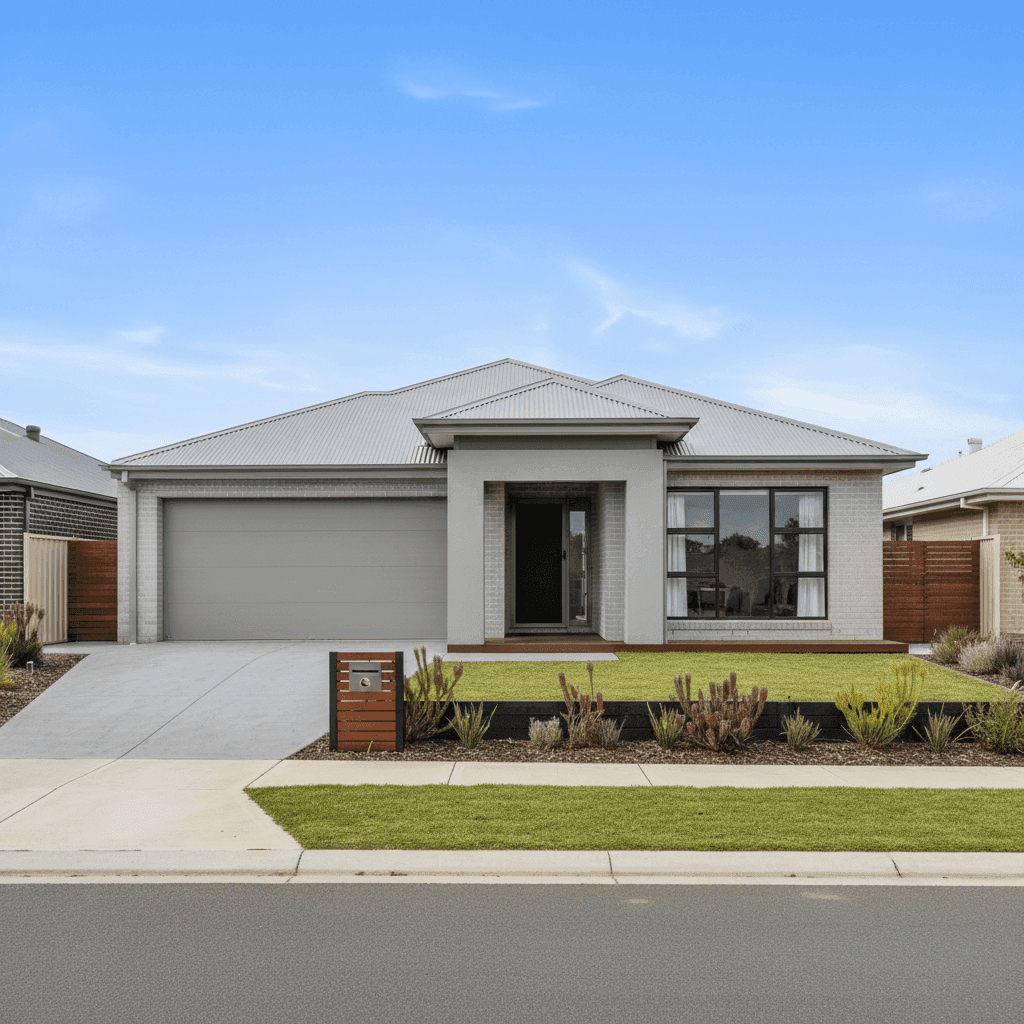
If you own a free standing home in Dayton, WA 6055, you're probably curious about what a fair home insurance premium looks like — and whether the quote sitting in your inbox is worth accepting. This article breaks down a real building insurance quote for a three-bedroom, double brick home in Dayton, comparing it against suburb, state, and national benchmarks so you can make a genuinely informed decision.
---
Is This Quote Fair?
The quote in question comes in at $1,078 per year (or roughly $103/month) for building-only cover on a free standing home with a sum insured of $500,000 and a $1,000 excess.
Our price rating for this quote is FAIR — Around Average, and the data backs that up. At $1,078/yr, this premium sits:
- Below the Dayton suburb average of $1,272/yr
- Below the suburb median of $1,313/yr
- Just above the suburb's 25th percentile of $1,048/yr
In practical terms, this quote is better than what most Dayton homeowners are paying, but it's not quite in the cheapest tier either. You're getting a reasonable deal — not a bargain, but certainly not being overcharged. Based on 35 quotes sampled in the suburb, roughly 75% of Dayton homeowners pay more than $1,048/yr, and the top quarter pay upwards of $1,524/yr. At $1,078, this quote lands comfortably in the lower-middle range.
---
How Dayton Compares
One of the most striking things about this quote is how well Dayton stacks up against broader benchmarks. Take a look:
| Benchmark | Premium |
|---|---|
| This Quote | $1,078/yr |
| Dayton Suburb Average | $1,272/yr |
| Dayton Suburb Median | $1,313/yr |
| LGA (Mundaring) Average | $2,563/yr |
| WA State Average | $2,811/yr |
| WA State Median | $2,127/yr |
| National Average | $5,347/yr |
| National Median | $2,764/yr |
The contrast is quite remarkable. This quote is less than half the WA state average and less than a quarter of the national average. Even compared to the broader Mundaring LGA average of $2,563/yr, Dayton homeowners are paying significantly less.
This tells us a few important things. Dayton, as a suburb, benefits from relatively low insurance risk compared to much of Western Australia and the rest of the country. The absence of cyclone risk (unlike many northern WA regions), combined with the area's suburban characteristics, keeps premiums well below what homeowners in higher-risk postcodes face.
You can explore more data for this postcode on the Dayton suburb insurance stats page, compare it to the WA state overview, or see where it sits on the national insurance landscape.
---
Property Features That Affect Your Premium
Every insurer prices a property differently, but certain features consistently influence what you pay. Here's how the characteristics of this particular home factor in:
Double Brick External Walls
Double brick is widely regarded as one of the most insurable wall types in Australia. It's fire-resistant, structurally robust, and holds up well against wind and impact. Insurers typically reward double brick construction with lower premiums compared to timber-framed or clad alternatives.
Steel / Colorbond Roof
Colorbond steel roofing is another tick in the right box. It's durable, low-maintenance, resistant to ember attack, and performs well in storms. Unlike older terracotta or concrete tiles, Colorbond is less prone to cracking or displacement — which translates to fewer claims and lower premiums.
Slab Foundation
A concrete slab foundation is standard for modern construction and is generally viewed favourably by insurers. It reduces the risk of subsidence-related claims and offers solid structural integrity.
Timber / Laminate Flooring
While flooring type has a moderate effect on premiums, timber and laminate floors can be a consideration in water damage scenarios. That said, this factor is unlikely to be a significant driver of the overall premium.
New Construction (2026)
A brand-new home is a significant advantage when it comes to insurance pricing. Modern builds must comply with current Australian building standards, which include improved fire safety, structural integrity, and weather resistance requirements. Insurers price new homes more favourably because the risk of hidden defects or ageing materials is essentially zero.
Ducted Climate Control
The presence of ducted climate control adds some value to the sum insured, as it represents a meaningful fixed asset within the building. It's already factored into the $500,000 sum insured, which is appropriate for a well-appointed new build.
No Pool, No Solar Panels
The absence of a pool and solar panels simplifies the risk profile. Pools can introduce liability considerations, and solar panel systems — while increasingly common — add complexity to roof-related claims. Neither applies here, keeping the premium cleaner.
---
Tips for Homeowners in Dayton
Whether you're reviewing this quote or shopping around for the first time, here are four practical steps to make sure you're getting the best value:
- Don't underinsure your new build. With a 2026 construction, building costs are at record highs. Make sure your $500,000 sum insured reflects the full cost of rebuilding — not just the market value. Use a building calculator or ask your insurer to confirm the figure is adequate.
- Review your excess strategically. A $1,000 excess is fairly standard, but increasing it (say, to $2,500) can meaningfully reduce your annual premium. If you have a solid emergency fund and the home is new and low-risk, a higher excess may be a smart trade-off.
- Compare at least three quotes before renewing. Even a "fair" premium can be beaten. Insurers price risk differently, and a new build in Dayton with double brick construction and Colorbond roofing is an attractive risk — meaning you may find even more competitive offers elsewhere.
- Consider adding contents cover in future. This quote covers the building only. As you furnish and settle into a new home, the value of your contents can add up quickly. Getting a combined building and contents policy — or a separate contents policy — ensures you're not left out of pocket if belongings are damaged or stolen.
---
Compare Home Insurance Quotes in Dayton
Getting one quote is a starting point — but it's rarely the whole picture. CoverClub makes it easy to compare building and contents insurance options for homes across Australia, with transparent pricing data and suburb-level insights. Whether you're a first-time buyer in Dayton or reviewing your existing cover, get a personalised quote at CoverClub and see how your premium stacks up.