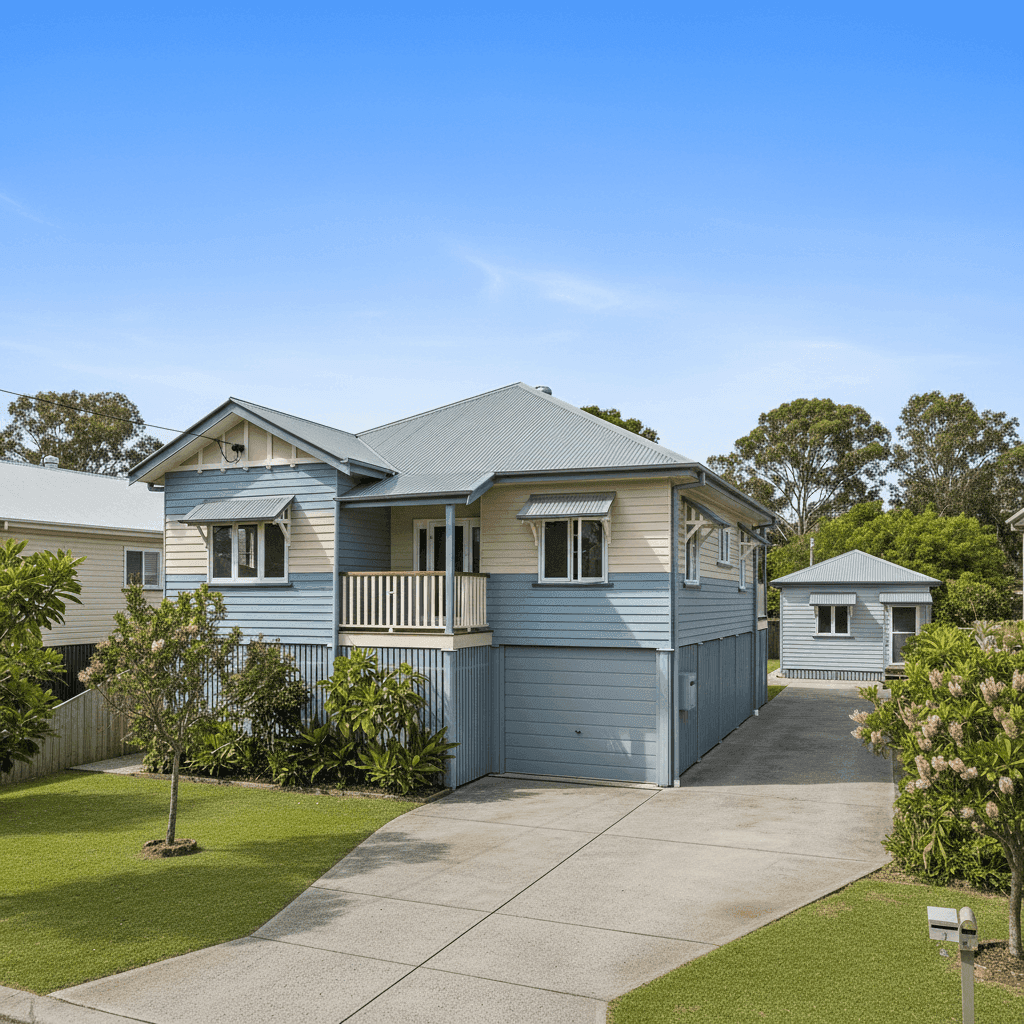
If you own a free standing home in Deagon, QLD 4017, you've probably noticed that home insurance premiums can vary wildly depending on who you ask — and what your property looks like. This article breaks down a real home and contents insurance quote for a four-bedroom, three-bathroom weatherboard home in Deagon, helping you understand whether the price stacks up and what factors are driving the cost.
---
Is This Quote Fair?
The annual premium for this property came in at $2,856 per year (or $279/month), covering a building sum insured of $670,000 and contents valued at $90,000, each with a $500 excess.
Based on our pricing data, this quote is rated Expensive — above the suburb average. Here's what that means in context:
- The suburb average for Deagon is $2,349/yr, and the median sits at $2,411/yr
- This quote lands above the 75th percentile for the suburb ($2,689/yr), meaning it's pricier than at least three-quarters of comparable quotes we've seen in the area
- The gap between this quote and the suburb median is roughly $445/yr — not insignificant over a five-year period, where you'd be paying over $2,200 more than the typical Deagon homeowner
That said, "expensive" doesn't necessarily mean "wrong." The building sum insured of $670,000 is a substantial figure for a 235 sqm home, and the inclusion of a granny flat adds replacement cost complexity that many standard policies price carefully. If the sum insured accurately reflects your rebuild cost, the premium may be justified — but it's still worth shopping around.
---
How Deagon Compares
To put this quote in perspective, it helps to zoom out and look at the broader insurance landscape. You can explore the full data on our Deagon suburb stats page, the QLD state overview, and national insurance statistics.
| Benchmark | Average Premium | Median Premium |
|---|---|---|
| Deagon (4017) | $2,349/yr | $2,411/yr |
| Queensland | $9,129/yr | $3,903/yr |
| Australia (National) | $5,347/yr | $2,764/yr |
| Brisbane LGA | $16,277/yr | — |
A few things stand out here. Queensland's average premium of $9,129/yr looks alarming at first glance, but the median of $3,903/yr tells a more honest story — the average is being pulled upward by high-risk cyclone and flood zones in North Queensland and coastal areas. Deagon, sitting in Brisbane's northern suburbs, doesn't carry that same extreme risk profile, which is why local premiums are considerably lower.
Compared to the national median of $2,764/yr, this quote is slightly above average — but Deagon itself is actually a relatively affordable suburb to insure compared to much of Queensland. Homeowners here are in a better position than many parts of the state.
---
Property Features That Affect Your Premium
Several characteristics of this property directly influence how insurers calculate risk and set premiums.
Weatherboard Timber Walls
Weatherboard construction is common in Queensland, but timber-framed external walls are generally considered higher risk than brick veneer or double brick. Timber is more susceptible to fire spread and can be costlier to repair or replace, which typically pushes premiums up compared to masonry homes of a similar size.
Steel/Colorbond Roof
On the positive side, a Colorbond steel roof is viewed favourably by most insurers. It's durable, resistant to fire embers, and performs well in storms — all of which can help moderate your premium compared to older tile or terracotta roofs.
Slab Foundation & Slight Elevation
This home sits on a concrete slab and is elevated by less than one metre. While the elevation is minimal, it does offer a small degree of flood protection compared to a ground-level slab. Insurers in Brisbane are increasingly attentive to flood exposure, so even modest elevation can make a difference.
Timber/Laminate Flooring
Timber and laminate floors are more expensive to repair or replace after a water damage event than tiles or carpet. This is a subtle but real factor in how insurers assess contents and building claims.
Ducted Climate Control
A ducted air conditioning system adds meaningful value to the building sum insured. These systems are expensive to repair or replace — often $10,000–$25,000 or more — and insurers factor this into their pricing.
Granny Flat
The presence of a granny flat on the property is a notable coverage consideration. A secondary dwelling adds to the overall rebuild cost and introduces additional liability exposure. It's critical to confirm with your insurer that the granny flat is explicitly covered under your policy, as some standard policies exclude or limit coverage for secondary structures without a specific endorsement.
No Pool, No Solar Panels
The absence of a pool and solar panels simplifies the risk profile slightly. Both features can add to premiums — pools through liability risk, and solar panels through the cost of replacement and roof penetration risks.
---
Tips for Homeowners in Deagon
1. Review Your Building Sum Insured Carefully
At $670,000, the building sum insured is the largest driver of this premium. Make sure this figure reflects your actual rebuild cost — not the market value of the property. Overcovering can mean you're paying more than necessary, while undercovering leaves you exposed. Use a quantity surveyor or an online rebuild cost calculator to validate the figure.
2. Confirm Granny Flat Coverage Explicitly
Don't assume your granny flat is covered. Contact your insurer and ask specifically whether the secondary dwelling is included in the building sum insured and whether it's covered for the same perils as the main home. If it's rented out, you may need a separate landlord policy.
3. Compare at Least Three Quotes
This quote sits above the 75th percentile for Deagon — which is a clear signal to shop around. Premiums for the same property can vary by hundreds of dollars between insurers. Get a comparison quote at CoverClub to see what other providers are offering for your address.
4. Consider a Higher Excess to Reduce Your Premium
Both the building and contents excess on this policy sit at $500. Increasing your excess to $1,000 or $2,000 can meaningfully reduce your annual premium — often by 10–20%. This strategy works well if you have sufficient savings to cover a larger out-of-pocket cost in the event of a claim.
---
Ready to Find a Better Rate?
Whether you're renewing your policy or buying for the first time, comparing quotes is the single most effective way to make sure you're not overpaying. CoverClub makes it easy to see how your premium stacks up and find competitive options for your specific property.