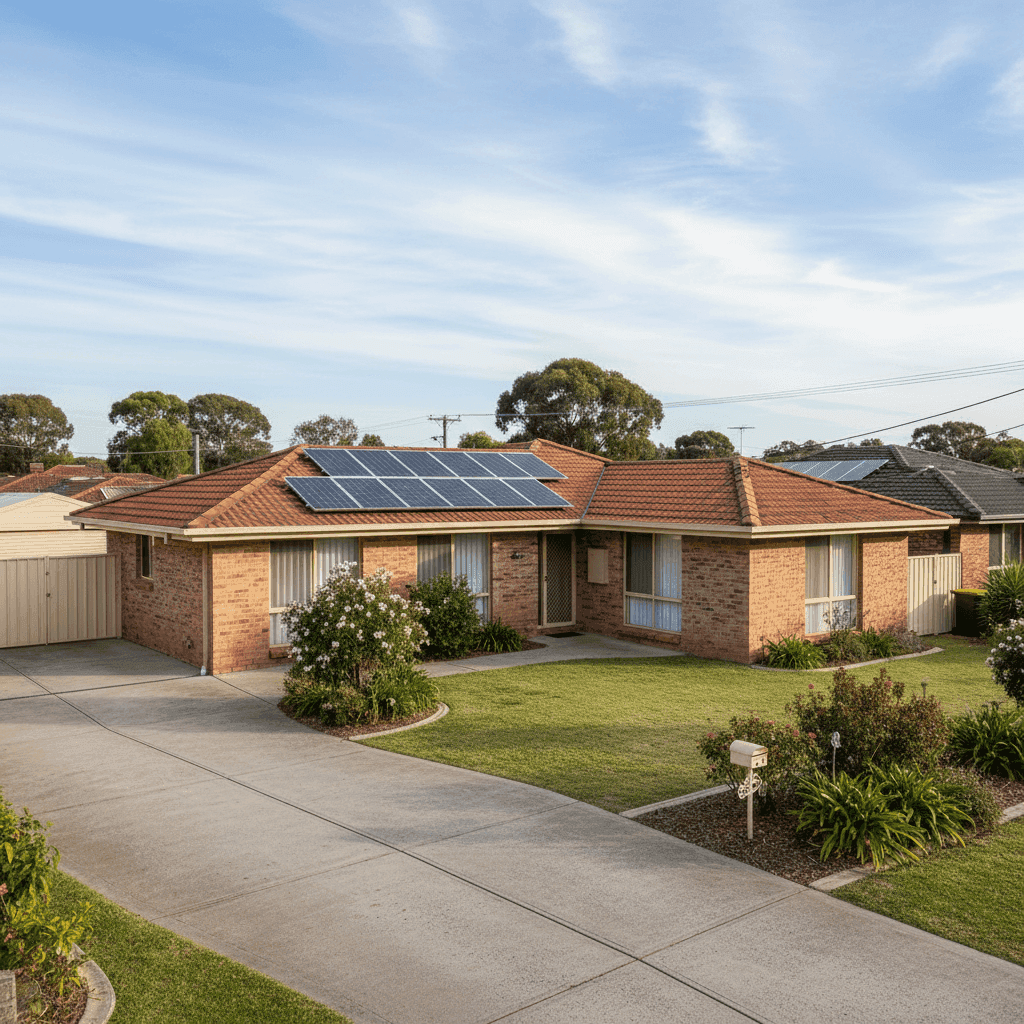
If you own a free standing home in Dean Park, NSW 2761, you're probably curious about what a fair home insurance premium looks like — and whether the quote sitting in your inbox is worth acting on. This article breaks down a real building insurance quote for a three-bedroom, brick veneer home in Dean Park, comparing it against suburb, state, and national benchmarks to help you make a confident, informed decision.
---
Is This Quote Fair?
The short answer: yes — and then some.
This quote came in at $929 per year (or about $88 per month) for building-only cover on a 214 sqm free standing home insured for $478,000. CoverClub's pricing engine rates this as CHEAP — meaning it sits meaningfully below the average for comparable properties in the area.
To put that in perspective, the suburb average premium for Dean Park is $1,270 per year, and the median sits at $1,266. That means this quote is roughly $341 cheaper than the typical price paid by homeowners in the same postcode — a saving of around 27%. Even the cheapest quartile of quotes in the suburb (the 25th percentile) comes in at $1,114 per year, so this quote is genuinely competitive, not just marginally so.
For a homeowner on a budget, or anyone looking to keep outgoings lean without sacrificing solid building cover, this is a strong result.
---
How Dean Park Compares
Understanding where Dean Park sits in the broader insurance landscape is useful context — especially when you're trying to gauge whether your suburb carries any inherent risk loading.
| Benchmark | Annual Premium |
|---|---|
| This Quote | $929 |
| Dean Park Suburb Average | $1,270 |
| Dean Park Suburb Median | $1,266 |
| Blacktown LGA Average | $2,135 |
| NSW State Average | $3,801 |
| NSW State Median | $3,410 |
| National Average | $2,965 |
| National Median | $2,716 |
The contrast is striking. Dean Park's suburb average of $1,270 is already well below the NSW state average of $3,801 — a sign that the postcode is considered relatively low-risk by insurers. Compared to the national average of $2,965, Dean Park homeowners are paying less than half, on average.
Even within the Blacktown LGA, where the average premium sits at $2,135, Dean Park appears to benefit from more favourable risk characteristics — whether that's lower flood exposure, reduced storm frequency, or the general profile of the housing stock in the area.
You can explore the full breakdown of premiums for this postcode on the Dean Park suburb stats page.
> Note: The suburb sample size for this analysis is 7 quotes, so while the data is directionally useful, a larger sample would give even greater confidence in these averages.
---
Property Features That Affect Your Premium
Several characteristics of this particular property work in the homeowner's favour when it comes to pricing.
Brick veneer construction is viewed positively by most Australian insurers. It offers solid fire resistance and structural durability compared to lightweight cladding options, which can translate to lower premiums. Combined with a tiled roof — another material insurers generally favour for its longevity and weather resistance — the property presents a relatively low-risk profile from a construction standpoint.
The home was built in 1984, which places it in a generation of Australian housing that used robust materials but predates some of the more complex modern building systems. Insurers sometimes apply age-related loadings for older homes, but 1984-era brick veneer homes are generally well-regarded.
Stump foundations are worth noting. While stumps are common in older Australian homes and are perfectly acceptable to insurers, they can occasionally attract scrutiny — particularly around subsidence or pest damage risk. It's worth confirming that your policy covers these scenarios, or at least understanding the exclusions.
The 214 sqm building size is a key driver of the sum insured ($478,000), and getting this figure right is critical. Over-insuring wastes money; under-insuring can leave you seriously out of pocket after a claim. A qualified quantity surveyor can help verify your rebuild cost estimate.
On the positive side, solar panels are present on this property. While they add some replacement cost to the building sum insured, many modern policies include solar panels as part of standard building cover — so it's worth confirming this is the case with your insurer rather than assuming.
There's no pool and no ducted climate control, both of which simplify the risk profile and keep the premium lean. The property is also outside a cyclone risk zone, which is a significant factor — cyclone-prone areas in northern Australia can attract very substantial premium loadings.
---
Tips for Homeowners in Dean Park
1. Review your sum insured annually Construction costs in NSW have risen considerably in recent years. The $478,000 sum insured on this quote may be accurate today, but it's worth reassessing each year at renewal. Use a building cost calculator or consult a quantity surveyor to make sure you're not underinsured.
2. Confirm solar panel coverage With solar panels on the roof, check your policy's product disclosure statement (PDS) carefully. Most standard building policies cover fixed solar systems, but some have sub-limits or specific exclusions for inverters or battery storage. Don't assume — ask your insurer directly.
3. Consider the excess trade-off This quote carries a $2,000 building excess. A higher excess generally reduces your premium, but it means more out-of-pocket cost if you need to make a claim. Think about what you could comfortably afford to pay in a worst-case scenario, and adjust accordingly when comparing quotes.
4. Shop around at renewal time Even with a below-average premium like this one, it pays to compare at renewal. Insurers regularly reprice their books, and loyalty doesn't always translate to savings. Running a fresh comparison annually takes minutes and could save hundreds of dollars.
---
Compare Your Own Quote
Whether you're buying, renewing, or just curious about what you should be paying, CoverClub makes it easy to benchmark your home insurance against real market data. Get a quote and compare in minutes — no jargon, no pressure, just clear pricing information to help you decide with confidence.