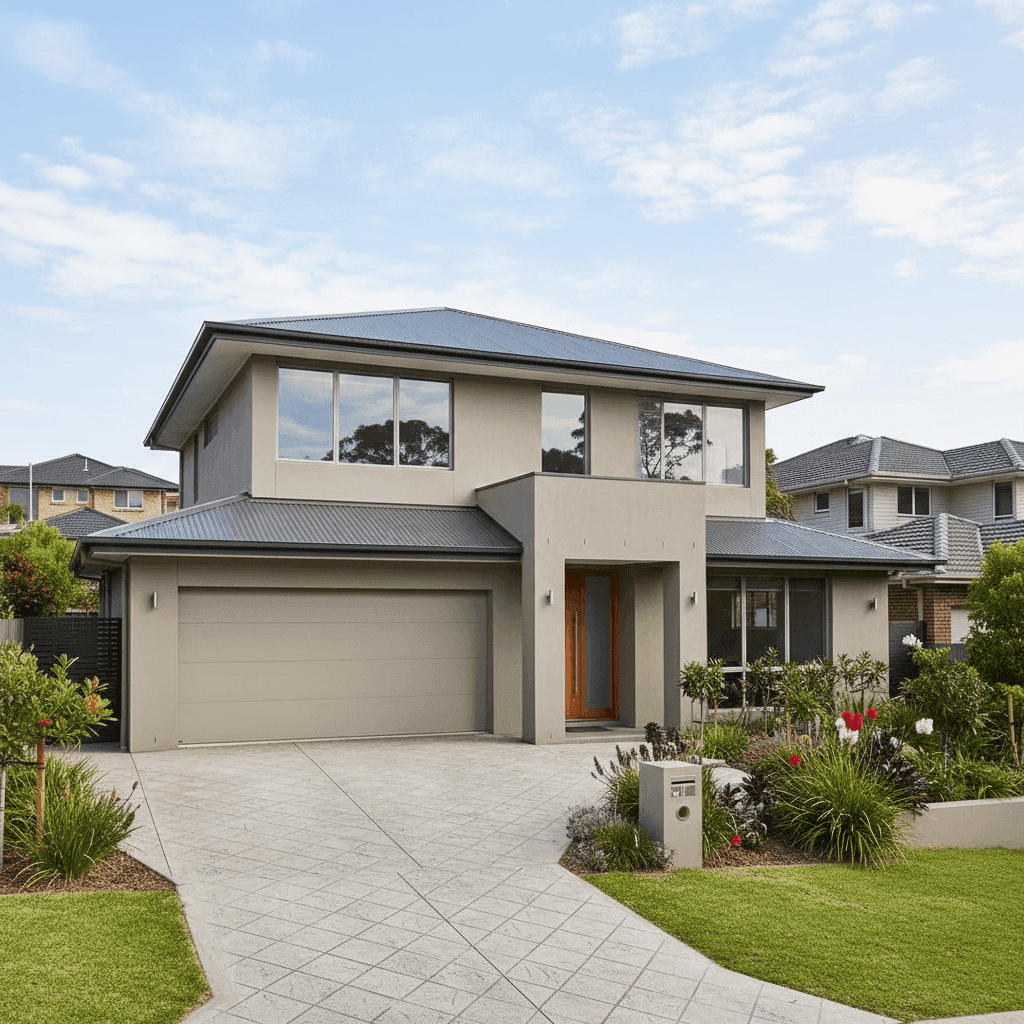
Dee Why is one of the Northern Beaches' most sought-after suburbs — a coastal community that balances relaxed beach living with easy access to Sydney's CBD. But owning a sizeable free standing home here comes with real costs, and home insurance is one of the bigger ones. This article breaks down a recent home and contents insurance quote for a five-bedroom property in Dee Why (NSW 2099), compares it against local and national benchmarks, and helps you decide whether you're getting a fair deal.
---
Is This Quote Fair?
The quote in question sits at $4,849 per year (or $465 per month) for combined home and contents cover, with a $2,000 excess applying to both building and contents claims. Our price rating for this quote is Expensive — above average for the suburb.
To put that in perspective: the suburb average for Dee Why is $4,262 per year, and the median sits at $3,308. That means this quote is roughly 14% above the local average and nearly 47% above the local median. For most households, that gap is significant enough to warrant shopping around.
That said, context matters. This is a large, well-appointed property — 315 sqm of living space, five bedrooms, three bathrooms, above-average fittings, and a $2,000,000 building sum insured. The contents are insured for $200,000. When you're covering a home of this scale and value, premiums will naturally sit higher than those of a typical three-bedroom unit or smaller dwelling. The question isn't just whether this quote is expensive in absolute terms, but whether it's competitive for what's being covered.
---
How Dee Why Compares
Understanding where your premium sits relative to broader benchmarks is one of the most useful things you can do as a homeowner. Here's how this quote stacks up:
| Benchmark | Premium |
|---|---|
| This quote | $4,849/yr |
| Dee Why suburb average | $4,262/yr |
| Dee Why suburb median | $3,308/yr |
| Dee Why 25th percentile | $2,293/yr |
| Dee Why 75th percentile | $4,789/yr |
| Northern Beaches LGA average | $3,266/yr |
| NSW state average | $9,528/yr |
| NSW state median | $3,770/yr |
| National average | $5,347/yr |
| National median | $2,764/yr |
A few things stand out here. First, the NSW state average of $9,528 per year is extraordinarily high — this is heavily skewed by flood-prone and cyclone-affected regions across regional New South Wales, where premiums can be eye-watering. Dee Why, by contrast, is a coastal metro suburb with relatively contained risk, which explains why local premiums are far more moderate.
Second, compared to the national average of $5,347, this quote actually comes in below that figure — which offers a different lens on affordability. Nationally, $4,849 is not unusual for a large, high-value home.
Third, this quote sits just above the suburb's 75th percentile of $4,789, meaning it's in the top quarter of premiums paid locally. For a property of this size and sum insured, that's understandable — but it still signals room to compare.
---
Property Features That Affect Your Premium
Several characteristics of this property have a meaningful influence on what insurers charge.
Concrete external walls are generally viewed favourably by insurers. Concrete is highly resistant to fire and impact, and performs well in storm conditions — all of which reduces the likelihood and severity of claims. Compared to timber-framed homes, concrete construction often attracts more competitive premiums.
Steel/Colorbond roofing is another positive signal. Colorbond is durable, lightweight, and resistant to corrosion — a particularly important trait in a coastal suburb like Dee Why where salt air can accelerate wear on lesser materials. Insurers tend to price Colorbond roofs more favourably than older tile or terracotta options.
Slab foundation reduces the risk of subsidence and pest-related structural damage, both of which can generate costly claims. Combined with tile flooring, which is resilient and easy to repair, the property's construction profile is solid from an underwriting perspective.
Above-average fittings do push premiums higher. Kitchens with stone benchtops, premium appliances, designer bathrooms, and high-end fixtures cost significantly more to repair or replace — and insurers price accordingly. If your home has been fitted out to a high standard, that's reflected in your premium.
Ducted climate control is another factor. These systems are expensive to repair or replace, and are typically included in building cover. A fully ducted system in a 315 sqm home adds meaningful replacement value.
Building size is perhaps the most straightforward driver: at 315 sqm, this is a large home. More floor area means more materials, more labour, and higher rebuild costs — all of which flow through to the building sum insured of $2,000,000 and, ultimately, the premium.
---
Tips for Homeowners in Dee Why
1. Review your sum insured carefully. A $2,000,000 building sum insured is substantial. While it's critical to be adequately covered, over-insuring can unnecessarily inflate your premium. Use a building cost calculator or engage a quantity surveyor to confirm your home's rebuild cost — not its market value — is accurately reflected in your policy.
2. Compare at least three quotes before renewing. The gap between the 25th percentile ($2,293) and 75th percentile ($4,789) in Dee Why is enormous. That spread tells you insurers price this suburb very differently. Loyalty rarely pays — using a comparison platform like CoverClub at renewal time is one of the simplest ways to avoid overpaying.
3. Consider your excess strategically. This quote carries a $2,000 excess on both building and contents. Opting for a higher excess can meaningfully reduce your annual premium. If you have the financial buffer to absorb a larger out-of-pocket cost in the event of a claim, raising your excess is worth exploring.
4. Bundle building and contents cover. This quote already combines building and contents — a smart move. Most insurers offer discounts for bundling, and managing a single policy simplifies claims. If you're currently holding separate policies with different providers, consolidating could save you money.
---
Ready to Compare?
Whether this quote looks reasonable or overpriced for your situation, the best way to know for certain is to compare. At CoverClub, you can benchmark your home insurance premium against real quotes from across Dee Why and the Northern Beaches — giving you the data you need to negotiate with your current insurer or switch with confidence. It takes just a few minutes, and the savings can be substantial.
Explore Dee Why suburb insurance data or browse NSW state-wide statistics to see how your area compares.