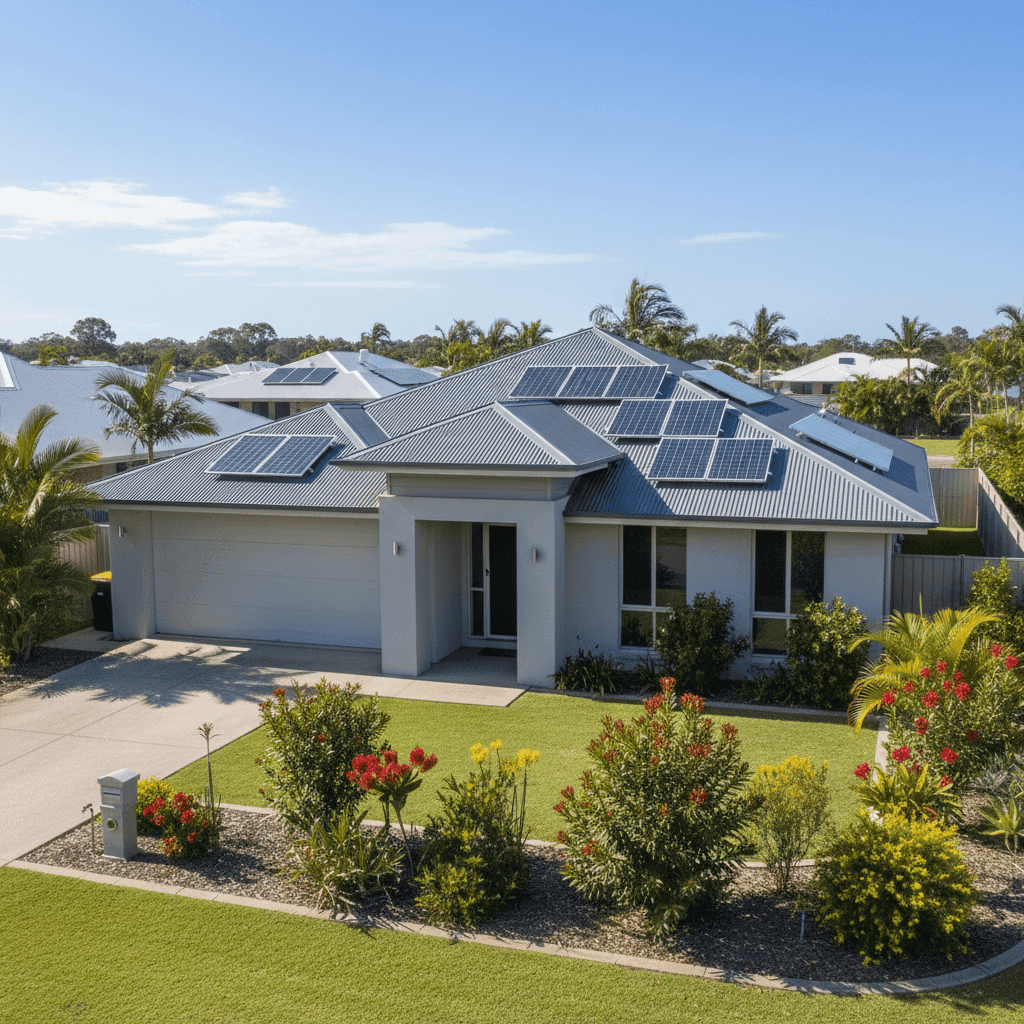
If you own a free standing home in Deeragun, QLD 4818, you already know that insuring a property in North Queensland comes with its own set of considerations — not least of which is the region's exposure to cyclones. This article breaks down a real home and contents insurance quote for a four-bedroom, two-bathroom property in Deeragun, rated at 214 sqm of living space, and puts the numbers into context so you can make a more informed decision about your own cover.
---
Is This Quote Fair?
The quote in question sits at $4,377 per year (or $399/month) for combined home and contents insurance, covering a building sum insured of $697,000 and contents valued at $50,000. The building excess is $2,000 and the contents excess is $1,000.
Our pricing engine has rated this quote as FAIR — Around Average, and the data backs that up. Based on 37 quotes collected for the Deeragun area, the suburb average sits at $3,877/year and the median at $3,780/year. This quote lands slightly above both of those benchmarks, but comfortably within the middle of the market — the 75th percentile for the suburb is $4,718/year, meaning roughly a quarter of homeowners in the area are paying even more.
In short: this isn't a bargain, but it's also far from the top of the range. For a property of this size and risk profile in a cyclone-designated zone, "around average" is a reasonable outcome.
---
How Deeragun Compares to the Rest of Queensland and Australia
To fully appreciate where this quote sits, it helps to zoom out and look at the broader picture.
| Benchmark | Average Premium | Median Premium |
|---|---|---|
| Deeragun (suburb) | $3,877/yr | $3,780/yr |
| Townsville LGA | $7,340/yr | — |
| Queensland (state) | $9,129/yr | $3,903/yr |
| National | $5,347/yr | $2,764/yr |
A few things stand out here. The Queensland state average of $9,129/year looks alarming at first glance, but the median of $3,903 tells a more nuanced story — there's a significant skew caused by high-risk coastal and cyclone-prone areas driving up the mean. Deeragun's suburb average of $3,877 is actually very close to the state median, suggesting the local market is reasonably well-calibrated.
At the national level, the average of $5,347 is higher than this quote, though the national median of $2,764 reflects the fact that many Australian homeowners in lower-risk areas pay considerably less. Comparing yourself to the national median when you're in a cyclone risk zone is a bit like comparing your car insurance to someone who drives 5,000 km a year — the risk profiles are simply different.
The Townsville LGA average of $7,340/year is particularly telling. Deeragun sits within the Townsville local government area, yet this quote comes in well below the LGA average — another signal that the pricing here is reasonable relative to the broader region.
---
Property Features That Affect Your Premium
Several characteristics of this property play a meaningful role in how insurers price the risk.
Cyclone risk designation is the single biggest factor for any North Queensland property. Insurers apply significant loadings for homes in cyclone-affected areas, and Deeragun is firmly in that category. This is unavoidable, but it's worth understanding that it's baked into virtually every quote you'll receive in this postcode.
Concrete external walls are generally viewed favourably by insurers. Concrete construction offers strong resistance to wind, impact, and fire compared to timber weatherboard, which can translate to more competitive premiums. In a cyclone zone, this is a particularly valuable attribute.
Steel/Colorbond roofing is another positive signal. Colorbond is widely regarded as one of the more resilient roofing materials in Australian conditions — it handles wind, rain, and heat well, and is less susceptible to the kind of damage that can lead to large claims during severe weather events.
Slab foundation and tile flooring round out a construction profile that insurers tend to view as low-to-moderate risk. Slab homes don't have the underfloor vulnerability of raised or timber-framed foundations, and tiles are durable and easy to remediate after water ingress.
Solar panels add a modest layer of complexity to a policy. Panels are typically covered as a fixture of the building, but it's worth confirming with your insurer exactly what's included — particularly around storm or hail damage, which is relevant in this region.
Building size of 214 sqm and a sum insured of $697,000 reflects a solid mid-to-upper range property. The sum insured is the most critical figure to get right — underinsurance is a significant risk in Australia, particularly as construction costs have risen sharply in recent years.
---
Tips for Homeowners in Deeragun
1. Review your sum insured annually. Construction costs in Queensland have increased substantially over the past few years. A rebuild cost estimate that was accurate in 2020 may no longer reflect today's reality. Use a building calculator or ask your insurer to reassess — being underinsured can leave you significantly out of pocket after a major claim.
2. Understand your cyclone excess. Many policies in North Queensland include a separate, higher excess that applies specifically to cyclone-related claims. This is different from your standard building excess. Make sure you know what your cyclone excess is before you need to make a claim — it can sometimes be several thousand dollars.
3. Check your solar panel coverage. With solar panels installed, confirm in writing whether your policy covers damage to the panels themselves (not just the roof beneath them), including storm, hail, and electrical surge. Coverage varies significantly between insurers.
4. Compare quotes before your renewal date. The insurance market in North Queensland is competitive but volatile. Premiums can shift meaningfully from year to year, and loyalty doesn't always pay. Set a reminder to compare at least 30 days before your renewal — that gives you time to switch without a gap in cover.
---
Ready to Compare Quotes for Your Deeragun Home?
Whether you're reviewing an existing policy or shopping for the first time, having the right data makes all the difference. CoverClub aggregates real quote data from across Australia so you can see exactly where your premium sits relative to your neighbours and the broader market.
Get a home insurance quote for your Deeragun property and find out if you're paying a fair price — or if there's a better deal waiting for you.