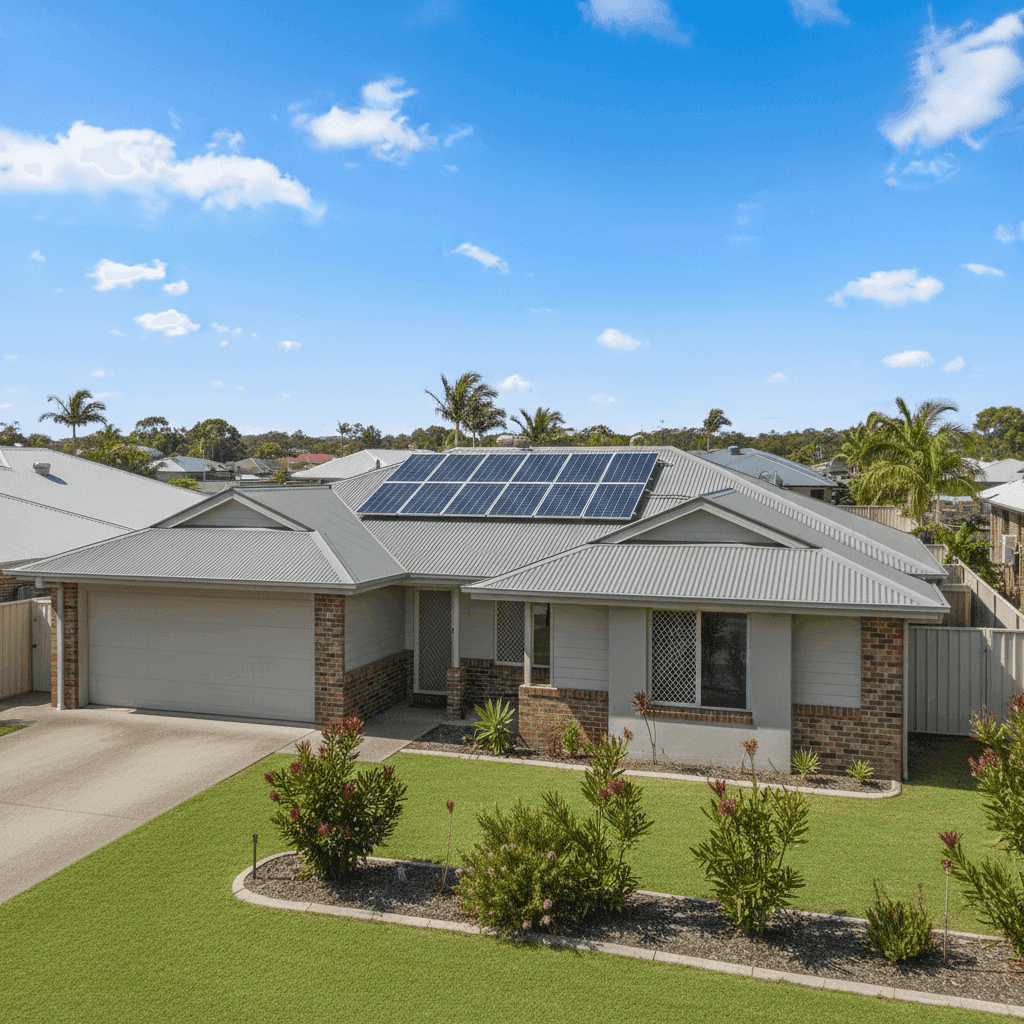
If you own a free standing home in Deeragun, QLD 4818, you've probably noticed that home insurance doesn't come cheap. Sitting in Townsville's northern suburbs, Deeragun is a well-established residential area — but its location in a cyclone risk zone means insurers price policies here with a very different lens than most parts of Australia. In this article, we break down a real home and contents insurance quote for a four-bedroom property in the suburb, compare it against local, state, and national benchmarks, and share practical tips to help you get better value on your cover.
---
Is This Quote Fair?
The quote in question comes in at $4,309 per year (or $421/month) for a four-bedroom, two-bathroom free standing home, with a building sum insured of $697,000 and contents cover of $50,000. The building excess is $2,000 and the contents excess is $1,000.
Our price rating for this quote is FAIR — Around Average. That's a reasonable outcome for a property in this part of Queensland, and here's why that matters: "average" in Deeragun is considerably higher than what most Australians pay. So while the quote isn't a bargain, it's also not out of line with what the local market looks like.
For a homeowner paying monthly, $421 is a meaningful household expense — but given the cyclone exposure and the relatively high building sum insured, this premium reflects a realistic assessment of risk rather than a red flag.
---
How Deeragun Compares
To put this quote in context, let's look at the numbers across different levels. You can explore the full data on the Deeragun suburb stats page, the Queensland state overview, and national insurance statistics.
| Benchmark | Average Premium | Median Premium |
|---|---|---|
| Deeragun (suburb) | $4,619/yr | $3,820/yr |
| Queensland (state) | $4,547/yr | $3,931/yr |
| National | $2,965/yr | $2,716/yr |
| Townsville LGA | $7,258/yr | — |
A few things stand out here:
- The quote of $4,309 sits below the Deeragun suburb average of $4,619, which is a positive sign. It's also below the suburb's 75th percentile of $5,641, meaning a meaningful portion of local homeowners are paying more.
- Compared to the suburb median of $3,820, the quote is somewhat above the midpoint — but medians can be skewed by smaller or lower-value properties, so the comparison isn't always apples-to-apples.
- Queensland as a whole averages $4,547/yr, so this property is tracking slightly below the state average — a reasonable result.
- The national average of $2,965/yr highlights just how significantly North Queensland premiums diverge from the rest of the country. This isn't unusual; cyclone-exposed coastal regions across QLD, WA, and NT consistently attract some of Australia's highest home insurance costs.
- The Townsville LGA average of $7,258/yr is particularly striking. This quote, at $4,309, is well below the broader LGA average — which suggests the property's construction features may be working in the homeowner's favour.
(Based on a sample of 29 quotes in the Deeragun suburb.)
---
Property Features That Affect Your Premium
Several characteristics of this property have a direct bearing on what insurers charge. Here's how each one plays into the pricing:
Cyclone Risk Area
This is the single biggest factor. Deeragun falls within a designated cyclone risk zone, which triggers specific loading on premiums across virtually all insurers. The Insurance Council of Australia recognises North Queensland as one of the highest-risk regions in the country for extreme weather events, and premiums reflect that reality.
Concrete External Walls
Concrete construction is generally viewed favourably by insurers in cyclone-prone areas. It's more resistant to wind damage than timber-framed weatherboard homes, and this likely contributes to the quote sitting below the Townsville LGA average. If your home were timber-framed, you'd likely be looking at a higher premium.
Steel / Colorbond Roof
Colorbond roofing is a common and practical choice in Queensland's climate. It performs well in high-wind conditions and is less susceptible to some of the damage modes that affect older tile roofs. Insurers generally regard it as a lower-risk roofing material in cyclone zones.
Slab Foundation & Tile Flooring
A concrete slab foundation is standard for Queensland homes of this era and is considered structurally sound. Tile flooring is durable and low-maintenance — and from an insurance perspective, it's less susceptible to water and moisture damage than carpet or timber floors.
Solar Panels
The property has solar panels installed. It's worth noting that not all standard home insurance policies automatically cover solar panels as part of the building — some treat them as an optional add-on or separate item. Homeowners should confirm with their insurer exactly how solar panels are covered under their policy, and whether the sum insured adequately accounts for their replacement value.
1992 Construction
At over 30 years old, the home predates some modern building codes but is still well within the range that most insurers cover without significant age-related loading. It's worth keeping on top of maintenance, as older homes can attract scrutiny around roof condition and plumbing.
---
Tips for Homeowners in Deeragun
1. Check Your Cyclone Excess Separately
Many policies in cyclone-declared zones include a separate cyclone excess that's distinct from your standard building or contents excess. This can be a percentage of your sum insured (e.g. 1–2%) rather than a flat dollar amount — meaning on a $697,000 building, your cyclone excess could be $7,000–$14,000. Read your PDS carefully and make sure you understand what you'd actually pay in a claim scenario.
2. Confirm Solar Panel Coverage
As mentioned above, solar panels can fall into a grey area in home insurance policies. Ask your insurer directly: are the panels included in the building sum insured? Are they covered for storm and hail damage? Is there any exclusion for mechanical or electrical breakdown? Getting clarity now avoids nasty surprises at claim time.
3. Review Your Building Sum Insured Annually
Construction costs in Queensland have risen sharply in recent years. A sum insured of $697,000 for a 214 sqm concrete home may be appropriate today, but it's worth recalculating your replacement cost each year — especially as labour and materials costs fluctuate. Underinsurance is a real risk, and in a total loss scenario, the gap between your sum insured and actual rebuild cost falls on you.
4. Compare Quotes Before Renewal
The spread of premiums in Deeragun is wide — from around $3,234 at the 25th percentile to $5,641 at the 75th percentile. That's a difference of over $2,400 per year for broadly similar properties. Shopping around at renewal time (rather than auto-renewing) is one of the most effective ways to make sure you're not overpaying. Even a FAIR-rated quote can potentially be improved with the right comparison.
---
Ready to Compare?
Whether you're reviewing your current policy or shopping for cover for the first time, comparing quotes is the smartest move you can make as a homeowner in Deeragun. Premiums vary significantly between insurers — even for the same property — and a few minutes of research can translate into hundreds of dollars in annual savings. Get a home insurance quote at CoverClub and see how your current premium stacks up.