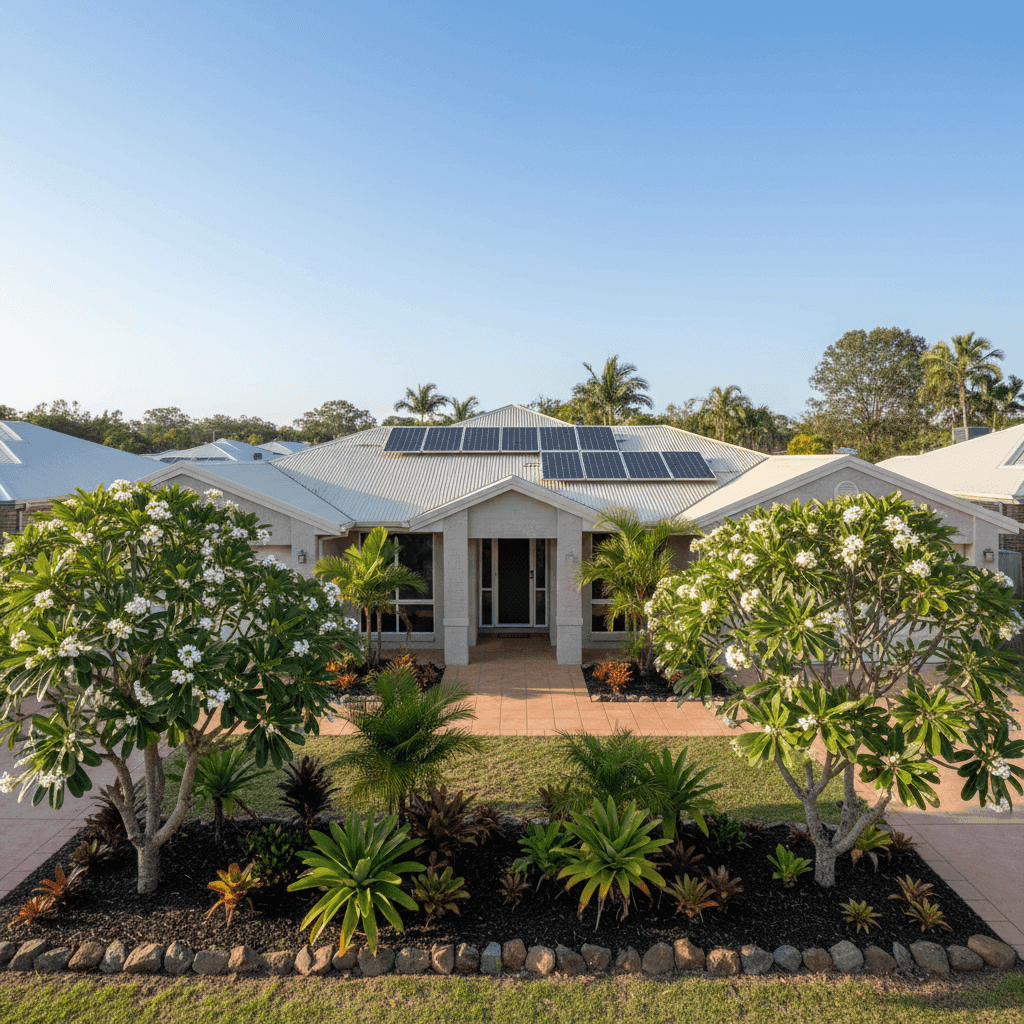
If you own a free standing home in Deeragun, QLD 4818, you already know that insurance isn't cheap in this part of North Queensland. Sitting in the northern suburbs of Townsville, Deeragun is a well-established residential area where the combination of cyclone exposure, tropical weather, and the age of local housing stock all play a role in how insurers price risk. This article breaks down a recent home and contents insurance quote for a four-bedroom, two-bathroom property in the suburb — and puts that number in context against local, state, and national benchmarks.
---
Is This Quote Fair?
The quote in question comes in at $6,024 per year (or $577/month) for combined home and contents cover, with a building sum insured of $531,000 and contents valued at $91,000. Both the building and contents excess sit at $1,000.
Our price rating for this quote is Expensive — Above Average.
To understand why, it helps to look at what other homeowners in Deeragun are paying. Based on quote data collected for the 4818 postcode, the suburb average premium is $3,877/year and the median sits at $3,780/year. This quote lands well above both figures — and even clears the 75th percentile of $4,718/year by a considerable margin.
That said, context matters. The sum insured here ($531,000 for building alone) is on the higher end, and the contents cover adds another $91,000 to the exposure. Higher insured values naturally push premiums up. But even accounting for that, a premium of $6,024 warrants a closer look — and potentially a comparison shop.
---
How Deeragun Compares
Here's how this quote stacks up across different comparison points:
| Benchmark | Premium |
|---|---|
| This Quote | $6,024/yr |
| Deeragun Suburb Average | $3,877/yr |
| Deeragun Suburb Median | $3,780/yr |
| Deeragun 25th Percentile | $2,743/yr |
| Deeragun 75th Percentile | $4,718/yr |
| Townsville LGA Average | $7,340/yr |
| QLD State Average | $9,129/yr |
| QLD State Median | $3,903/yr |
| National Average | $5,347/yr |
| National Median | $2,764/yr |
A few things stand out here. First, the Queensland state average of $9,129/year is dramatically higher than the state median of $3,903/year — a sign that a relatively small number of very expensive policies (often in high-cyclone-risk coastal areas) are pulling the average up significantly. This quote, at $6,024, sits below the QLD average but well above the QLD median.
Compared to national figures, this quote is above the national average of $5,347/year and more than double the national median of $2,764/year. That's not unusual for cyclone-prone North Queensland, but it does reinforce that homeowners in this region face a structurally higher cost of insurance than most Australians.
The Townsville LGA average of $7,340/year provides perhaps the most relevant regional context — and by that measure, this quote is actually below average for the broader area.
---
Property Features That Affect Your Premium
Several characteristics of this property have a direct bearing on what insurers charge:
Cyclone Risk Zone
This is the single biggest premium driver for homes in Deeragun. The suburb falls within a designated cyclone risk area, and insurers price this accordingly. Cyclone cover typically includes not just wind damage but storm surge, flying debris, and the cascading water damage that follows. This risk factor alone can add thousands of dollars to an annual premium compared to properties in southern states.
Construction Year (1965)
At 60 years old, this home is considered older stock by insurer standards. Older properties can carry higher risk due to ageing plumbing, wiring, and structural components — all of which increase the likelihood of a claim. Some insurers apply age-related loadings to properties built before the 1980s.
Concrete Walls & Steel/Colorbond Roof
On the positive side, concrete external walls are among the most resilient construction types for cyclone and storm resistance. Combined with a steel Colorbond roof — which performs well in high-wind events when properly installed and maintained — this construction profile may attract more favourable terms from some insurers compared to, say, timber-framed homes with tiled roofs.
Slab Foundation & Tile Flooring
A concrete slab foundation is generally viewed positively by insurers, as it reduces the risk of subsidence and pest-related structural damage. Tile flooring is similarly low-risk from a contents and water damage perspective.
Solar Panels & Ducted Climate Control
Solar panels add replacement value to the property and can be a source of claims if damaged in a storm or hail event. It's important to confirm with your insurer that solar panels are explicitly covered under your building policy. Ducted air conditioning is a significant fixed asset and should be factored into your building sum insured — it's often overlooked and can lead to underinsurance.
Building Size (235 sqm)
At 235 square metres, this is a reasonably sized home. Rebuild costs in North Queensland are elevated due to the need for cyclone-rated construction standards, so the $531,000 building sum insured reflects the genuine cost of rebuilding to current code — not just the market value of the property.
---
Tips for Homeowners in Deeragun
1. Compare quotes from multiple insurers The gap between the 25th percentile ($2,743/year) and this quote ($6,024/year) in the same suburb is substantial. Different insurers model cyclone risk differently, and shopping around can uncover meaningful savings. Use CoverClub to compare quotes side by side without the legwork.
2. Review your sum insured carefully Underinsurance is a serious risk in cyclone-prone areas — but overinsurance means you're paying more premium than necessary. Get a current building replacement cost estimate (not market value) to make sure your $531,000 sum insured is accurate. Don't forget to include fixed assets like ducted air conditioning and solar panels.
3. Check your cyclone-specific policy conditions Not all policies treat cyclone damage the same way. Some have separate cyclone excesses (often higher than the standard excess), waiting periods, or exclusions around pre-existing damage. Read the Product Disclosure Statement carefully, or ask your insurer directly.
4. Maintain your roof and gutters Insurers can reduce or deny claims where damage is attributed to poor maintenance rather than the weather event itself. In a cyclone zone, keeping your Colorbond roof in good condition — checking fixings, flashing, and gutters annually — is both a safety measure and a policy compliance issue.
---
Ready to Find a Better Rate?
If this quote feels high, you're not alone. Many homeowners in Deeragun are paying more than they need to simply because they haven't compared recently. CoverClub makes it easy to see what multiple insurers would charge for your property — in minutes, not hours. Get a home insurance quote today and see how much you could save. You can also explore detailed insurance stats for Deeragun and the 4818 postcode to better understand what your neighbours are paying.