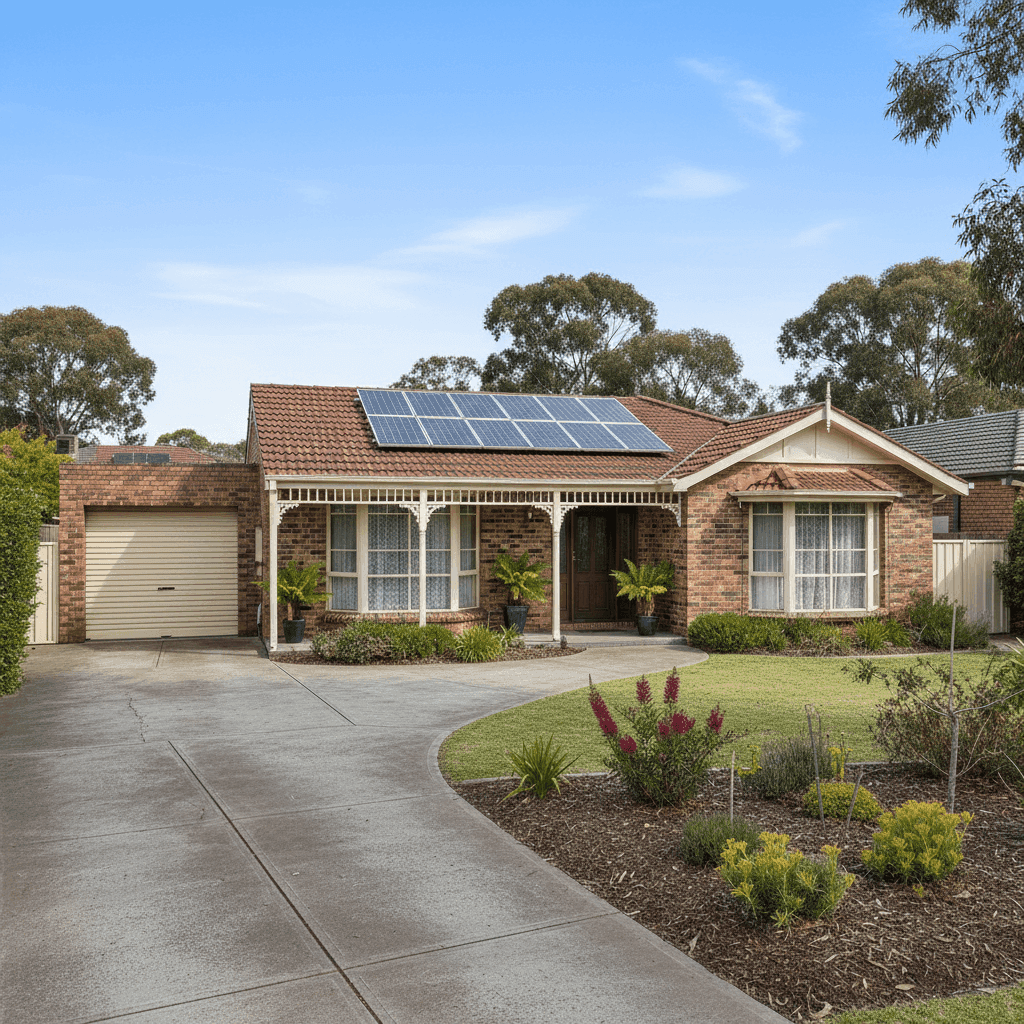
If you own a free standing home in Delahey, VIC 3037, you've probably wondered whether you're paying too much — or too little — for your home insurance. This article breaks down a real home and contents insurance quote for a 3-bedroom, 2-bathroom brick veneer home in this western Melbourne suburb, and puts it in context against local, state, and national benchmarks.
---
Is This Quote Fair?
The annual premium for this property came in at $1,407 per year (or roughly $135 per month), covering both building (sum insured: $525,000) and contents ($65,000), each with a $1,000 excess.
Our price rating for this quote is FAIR — Around Average, which means it's sitting comfortably within the typical range for the area. It's not a bargain-basement price, but it's not cause for concern either. For a home of this size and specification in Delahey, paying around $1,400 annually is a reasonable outcome.
To put it plainly: this quote is $91 below the suburb average of $1,498/yr and $56 below the suburb median of $1,463/yr. That's a modest but meaningful saving compared to what many neighbours are paying. It also falls well within the interquartile range for the suburb — between the 25th percentile ($1,222/yr) and the 75th percentile ($1,745/yr) — which confirms this is a genuinely typical price for the area.
---
How Delahey Compares
One of the most striking takeaways from this data is just how affordable home insurance in Delahey is compared to broader benchmarks. Here's how the numbers stack up:
| Benchmark | Average Premium | Median Premium |
|---|---|---|
| Delahey (suburb) | $1,498/yr | $1,463/yr |
| LGA (Brimbank) | $1,707/yr | — |
| Victoria (state) | $3,000/yr | $2,718/yr |
| Australia (national) | $5,347/yr | $2,764/yr |
This quote of $1,407/yr sits 53% below the Victorian state average and a remarkable 74% below the national average. Even against the broader Brimbank LGA average of $1,707/yr, this property is coming in $300 cheaper.
The national average of $5,347/yr is heavily skewed by high-risk regions — think cyclone-prone Far North Queensland, flood-affected river towns, and bushfire corridors — so the median figure of $2,764/yr is a more honest national comparison point. Even so, Delahey's suburb median of $1,463/yr is nearly half that figure, highlighting that this part of Melbourne's west is relatively affordable to insure.
You can explore more local data on the Delahey suburb insurance stats page, or zoom out to see Victoria-wide insurance trends and national home insurance statistics.
> Note: The suburb sample size here is 35 quotes, which provides a reasonable basis for comparison, though a larger dataset would give even greater confidence in these figures.
---
Property Features That Affect Your Premium
Every home is different, and insurers price risk based on a range of structural and locational factors. Here's how the key features of this particular property likely influence its premium:
Brick Veneer Construction
Brick veneer is one of the most common wall types in Australian suburban homes built from the 1980s onwards, and insurers generally view it favourably. It offers solid fire resistance and durability, which can help keep premiums in check compared to timber-framed or weatherboard homes.
Tiled Roof
Terracotta or concrete tile roofs are considered a relatively low-risk roofing material. They're durable, fire-resistant, and widely understood by assessors — all of which supports a competitive premium.
Slab Foundation
A concrete slab foundation is standard for homes of this era and is generally considered stable and low-maintenance from an insurance perspective. It reduces the risk of subsidence-related claims compared to older pier-and-beam foundations.
Built in 1995
At around 30 years old, this home is mature but not aged. Homes from this era typically have modern-enough electrical and plumbing systems to avoid the surcharges sometimes applied to older properties, while also being fully depreciated in terms of construction — meaning the sum insured reflects replacement cost rather than any premium for novelty.
Solar Panels
This property has solar panels, which are worth noting. Most home insurance policies cover rooftop solar as part of the building, but it's worth confirming this with your insurer. Damage to solar systems from storms, hail, or electrical faults can be costly to repair, so ensuring they're explicitly included in your building cover is important.
Ducted Climate Control
Ducted heating and cooling systems are a significant fixed asset. Like solar panels, they're typically covered under building insurance, but verifying the replacement cost is factored into your sum insured is a smart move.
Timber and Laminate Flooring
Flooring type can influence contents and building claims. Timber and laminate floors can be susceptible to water damage, so reviewing your policy's water damage provisions — particularly for escape of liquid events — is worthwhile.
No Pool, No Cyclone Risk
The absence of a pool removes a common liability and structural risk factor. And being located in metropolitan Melbourne, this property sits well outside any cyclone-designated risk zones, which is a significant factor in keeping premiums lower than many parts of Australia.
---
Tips for Homeowners in Delahey
Whether you're reviewing your current policy or shopping around for the first time, here are some practical steps to make sure you're getting the best value:
- Check your sum insured annually. Building costs have risen significantly in recent years due to labour and materials inflation. A sum insured of $525,000 for a 139 sqm home may be appropriate today, but it's worth recalculating using a building cost estimator each year to avoid being underinsured.
- Confirm solar panels and ducted systems are covered. Ask your insurer explicitly whether your solar panels and ducted climate control system are included under building cover, and whether there are any sub-limits or exclusions that might apply.
- Review your contents sum insured. A $65,000 contents value is on the lower end for a 3-bedroom home. Walk through each room and consider whether your furniture, appliances, clothing, and electronics would truly cost that much to replace at today's prices.
- Compare quotes before renewal. Insurers don't always reward loyalty — in fact, many reserve their best pricing for new customers. Running a comparison before your policy renews each year takes only a few minutes and could save you hundreds of dollars.
---
Ready to Compare?
Whether this quote looks like a good deal or you think you could do better, the only way to know for certain is to compare. At CoverClub, you can quickly see how quotes from multiple insurers stack up for your specific property — so you can make a confident, informed decision rather than just accepting whatever your current insurer sends at renewal time.