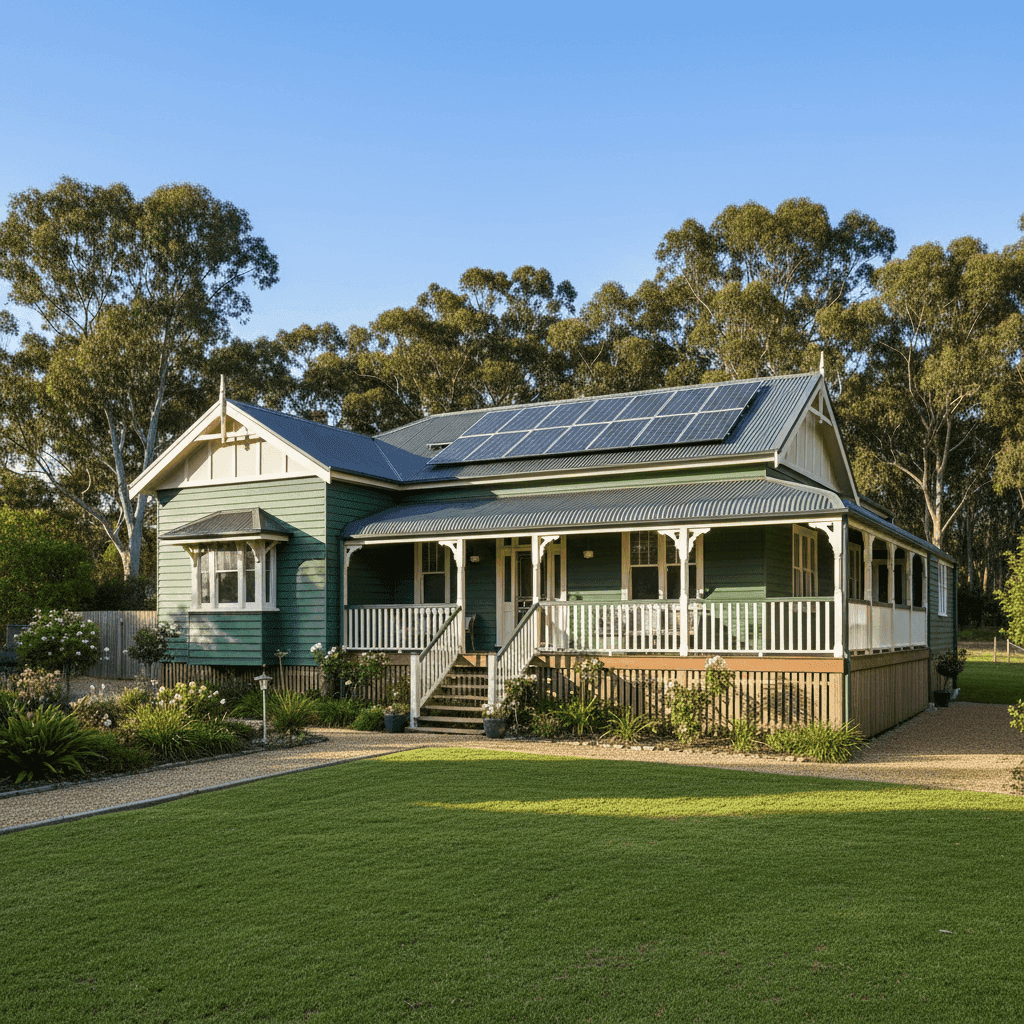
If you own a free standing home in Devon Meadows, VIC 3977, you've probably noticed that home insurance premiums can vary quite a bit depending on your property's characteristics and who you're insuring with. This article breaks down a real home and contents insurance quote for a 3-bedroom weatherboard home in the area — analysing whether it's a fair price, how it stacks up against local and national benchmarks, and what property features are likely driving the cost.
---
Is This Quote Fair?
The quote in question comes in at $2,803 per year (or $262 per month) for combined home and contents cover, with a building sum insured of $781,000 and contents valued at $91,000. The building excess is $5,000 and the contents excess is $2,000.
Our pricing engine rates this quote as Fair — Around Average, which is a reasonable outcome for a property with this profile. It's not the cheapest cover available in the suburb, but it's well within the normal range and sits comfortably below the suburb average of $2,983 per year. Homeowners who've been with the same insurer for several years without shopping around may actually be paying significantly more than this for comparable cover.
A "Fair" rating means this quote is competitive without being a standout bargain. There may be room to do better — particularly if the policyholder is willing to adjust excess levels, bundle policies, or explore insurers that look more favourably on the specific features of this property.
---
How Devon Meadows Compares
To put this quote in proper context, here's how it sits against Devon Meadows suburb data, Victorian state averages, and national benchmarks:
| Benchmark | Average Premium | Median Premium |
|---|---|---|
| Devon Meadows (3977) | $2,983/yr | $2,730/yr |
| Frankston LGA | $3,283/yr | — |
| Victoria (VIC) | $3,000/yr | $2,718/yr |
| National | $5,347/yr | $2,764/yr |
A few things stand out here. First, this quote of $2,803 sits below both the suburb average and the Victorian state average, which is a positive sign. It also falls within the interquartile range for Devon Meadows — between the 25th percentile of $2,153 and the 75th percentile of $3,685 — meaning it's squarely in the middle of the market for this area.
The national average of $5,347 looks dramatically higher, but this figure is heavily skewed by high-risk regions such as cyclone-prone areas in Queensland and Northern Australia. The national median of $2,764 is a much more useful comparison point, and this quote sits just $39 above it — essentially on par with the typical Australian homeowner's premium.
It's also worth noting that the Frankston LGA average of $3,283 is notably higher than the Devon Meadows suburb average, suggesting that Devon Meadows is one of the more affordably insured pockets within the local government area. With only 24 quotes in the suburb sample, there's some natural variability in these figures, but the trend is consistent.
---
Property Features That Affect Your Premium
Several characteristics of this property are likely influencing the premium — some pushing it higher, others helping to keep it in check.
Heritage Overlay
This property carries a heritage overlay, which is a meaningful factor for insurers. Heritage-listed or overlaid homes can be more expensive to repair or rebuild because they may require specialised materials, heritage-compliant tradespeople, or council approval for certain works. Insurers factor this into their risk assessment, and it can contribute to a higher sum insured and, in turn, a higher premium.
Weatherboard Construction
Weatherboard timber walls are one of the more common construction types in older Victorian suburbs, but they do carry a higher fire risk compared to brick or rendered masonry. Insurers typically apply a loading for timber-framed or weatherboard homes, particularly those built before modern building codes were introduced.
Construction Year (1985) and Stumped Foundation
Built in 1985, this home predates several key updates to Australian building standards. Combined with a stump foundation, which is common in elevated homes across Victoria, this can mean higher replacement costs if significant structural work is ever required. The elevated-by-less-than-1m classification is relatively low risk from a flood perspective, but stumped homes can be more vulnerable to certain weather events.
Solar Panels
The presence of solar panels adds value to the property and is reflected in the sum insured. Some insurers include solar panels under building cover automatically; others treat them as an optional add-on. It's important to confirm with your insurer that solar panels are explicitly covered under the policy.
Ducted Climate Control
Ducted climate control is a higher-value fixture that contributes to the overall building sum insured. It's a common feature in modern or renovated homes and is worth ensuring is properly itemised in your policy documentation.
No Pool, No Cyclone Risk
The absence of a pool removes a common liability concern for insurers, and the property's location outside any designated cyclone risk zone is another premium-friendly factor.
---
Tips for Homeowners in Devon Meadows
1. Review Your Building Sum Insured Carefully
At $781,000, the building sum insured for this property is substantial. For a heritage overlay property with weatherboard construction, this figure needs to account for the premium cost of heritage-compliant rebuilding. Use a building cost calculator or speak with a quantity surveyor to confirm your sum insured is accurate — being underinsured can be just as costly as overpaying on premiums.
2. Shop Around at Renewal Time
The difference between the 25th and 75th percentile premiums in Devon Meadows is over $1,500 per year. That's a significant spread, and it means the insurer you're with can make a real difference to your annual outgoings. Use a comparison platform like CoverClub to benchmark your renewal quote before you accept it.
3. Understand Your Heritage Overlay Obligations
If your property has a heritage overlay, check whether your insurer has specific clauses relating to heritage reinstatement. Some policies will cover like-for-like heritage materials; others default to standard modern materials. Understanding this distinction before you need to make a claim could save you significant stress and out-of-pocket costs.
4. Consider Your Excess Strategy
This policy carries a relatively high building excess of $5,000. While a higher excess typically reduces your premium, it's worth modelling the trade-off. If lowering the excess to $2,000 or $3,000 only adds a modest amount to your annual premium, it may be worth the additional security — particularly for an older home where maintenance claims are more likely.
---
Compare Your Quote Today
Whether you're reviewing an existing policy or shopping for cover on a new property, it pays to see what the market looks like. Get a home insurance quote through CoverClub and instantly compare your options against suburb, state, and national benchmarks — so you always know where you stand.