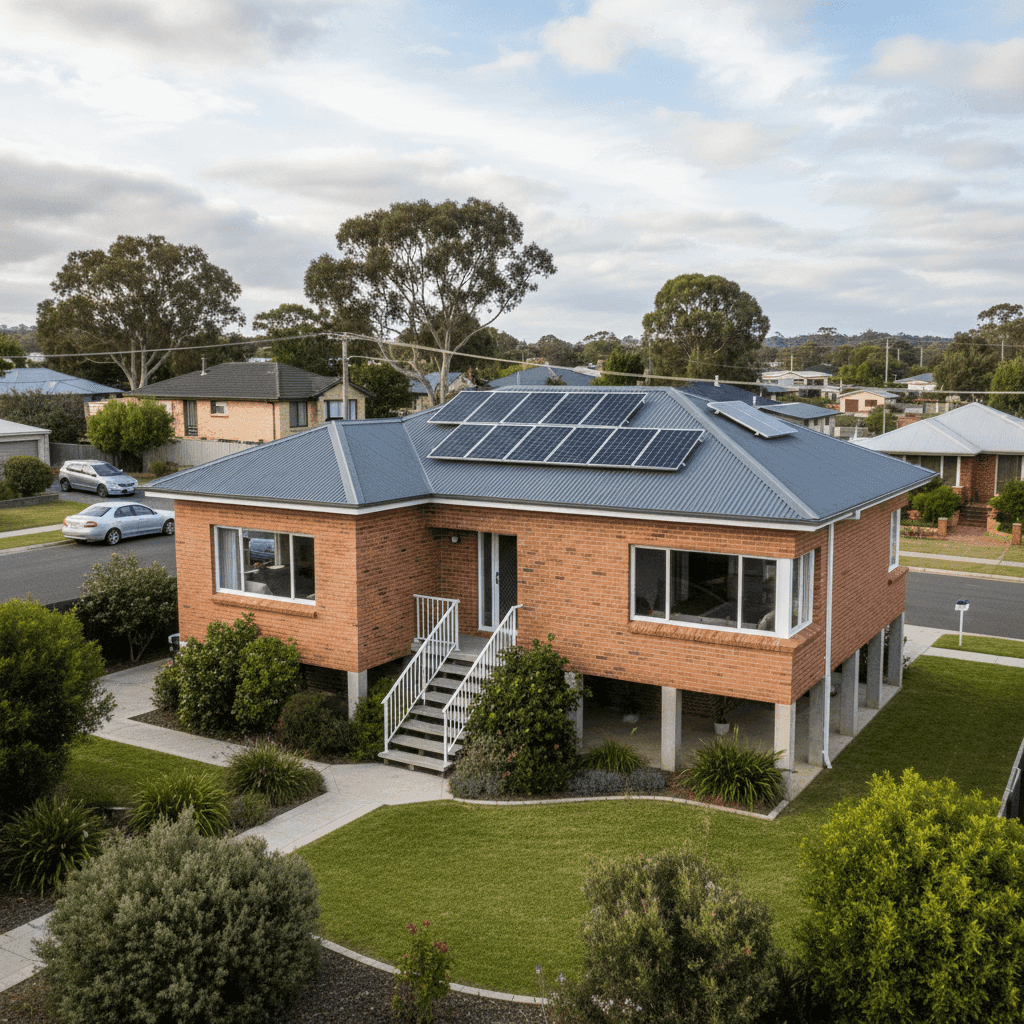
Devonport is one of Tasmania's most liveable regional cities — a coastal hub on the Mersey River with a strong mix of established housing stock and growing infrastructure. For owners of free standing homes in the area, understanding what drives your home insurance premium can make a real difference to your household budget. This article breaks down a recent home and contents insurance quote for a 3-bedroom property in Devonport (postcode 7310), compares it against local, state and national benchmarks, and offers practical tips to help you get the best value cover.
---
Is This Quote Fair?
The quote in question comes in at $1,142 per year (or $112/month) for combined home and contents cover, with a building sum insured of $984,000 and contents valued at $65,000. Both the building and contents excess are set at $2,000.
Our pricing analysis rates this quote as Fair — Around Average. That's a reasonable outcome, but it's worth unpacking what "average" actually means in context.
Within Devonport's postcode 7310, the suburb average premium sits at $1,330/year, with a median of $1,336/year. This quote comes in $188 below the suburb average — a meaningful saving that puts it closer to the lower half of the local pricing range. The 25th percentile for the suburb is $858/year, while the 75th percentile reaches $1,737/year, so there's quite a spread depending on property characteristics and insurer.
In short: this is a competitive result for Devonport, though not at the very bottom of the market. Homeowners with similar properties may be able to push further toward that 25th percentile with the right insurer and a few strategic adjustments.
---
How Devonport Compares
One of the most striking takeaways from this quote is just how affordable Devonport is relative to broader benchmarks.
| Benchmark | Average Premium | Median Premium |
|---|---|---|
| Devonport (7310) | $1,330/yr | $1,336/yr |
| LGA: Latrobe (Tas.) | $2,263/yr | — |
| Tasmania | $2,458/yr | $2,272/yr |
| National | $2,965/yr | $2,716/yr |
The numbers tell a clear story. Devonport's suburb average of $1,330/year is roughly half the national average of $2,965/year — and sits well below even the broader Tasmanian average of $2,458/year. Even compared to the LGA average for Latrobe (Tas.) at $2,263/year, Devonport homeowners are paying significantly less.
This relative affordability reflects several factors: Tasmania's generally lower risk profile compared to Queensland or northern WA (no cyclone exposure), Devonport's established urban environment, and the relative stability of the local housing market. For homeowners moving from interstate, this can come as a pleasant surprise.
That said, it's worth noting that the suburb sample size here is 21 quotes — a reasonable dataset, but not enormous. Premiums can shift as more data comes in, so it pays to compare regularly.
---
Property Features That Affect Your Premium
Every home is different, and insurers weigh up a range of property characteristics when calculating your premium. Here's how the key features of this particular property play out:
Brick Veneer Walls Brick veneer is generally viewed favourably by insurers. It offers solid fire resistance and structural durability, which can help keep premiums lower compared to timber-clad or fibre cement homes.
Steel/Colorbond Roof A Colorbond roof is another positive signal for insurers. It's lightweight, resistant to corrosion, and performs well in high-wind conditions. Compared to older terracotta or asbestos cement roofing, it typically attracts lower premiums.
Stump Foundation & Elevated Design This home sits elevated on stumps by at least one metre. While elevation can provide some protection against surface water flooding, it also introduces considerations around subfloor maintenance and structural access. Some insurers price this neutrally; others may factor in the additional complexity of repairs.
Timber/Laminate Flooring Timber and laminate floors are a common feature in older Tasmanian homes. They're generally straightforward to insure, though they can be more susceptible to water damage than tiles, which is worth keeping in mind for your contents cover.
Construction Year: 1970 A home built in 1970 is now over 50 years old. Older properties can attract slightly higher premiums due to the potential for ageing wiring, plumbing, and roofing materials — though a well-maintained home often bucks this trend.
Solar Panels Solar panels are included in this property's profile. Most home insurance policies cover rooftop solar as part of the building sum insured, but it's worth confirming this with your insurer, particularly for damage caused by storms or falling debris.
Ducted Climate Control Ducted heating and cooling systems add value to a home and are typically covered under building insurance. Their inclusion is reflected in the building sum insured and contributes to the overall replacement cost calculation.
No Pool, No Cyclone Risk The absence of a pool removes a common liability exposure, while Devonport's non-cyclone classification means the property avoids one of the biggest premium drivers seen in northern Australia.
---
Tips for Homeowners in Devonport
1. Review your building sum insured regularly At $984,000, this home carries a substantial building sum insured. Construction costs have risen sharply in recent years, and underinsurance remains one of the most common and costly mistakes homeowners make. Use a building replacement cost calculator annually to ensure your cover keeps pace.
2. Consider raising your excess to reduce your premium Both the building and contents excess on this policy are set at $2,000. If you have the financial buffer to absorb a higher out-of-pocket cost in the event of a claim, increasing your excess can meaningfully reduce your annual premium. Just make sure the saving is worth the trade-off.
3. Ask about discounts for security features Even without a pool or high-risk features, insurers often reward homes with deadbolts, security screens, alarm systems, or monitored security. If you've recently upgraded your home's security, let your insurer know — it could translate to a lower premium.
4. Compare quotes at renewal time Loyalty doesn't always pay in insurance. Premiums can creep up at renewal without any change in your risk profile. With Devonport sitting well below state and national averages, there's a competitive market to tap into — so it's worth shopping around every 12 months to make sure you're still getting a fair deal.
---
Ready to Compare?
Whether you're a long-term Devonport resident or new to the area, getting the right home and contents cover at the right price starts with comparison. At CoverClub, you can get a quote in minutes and see how your premium stacks up against what others in your suburb are paying. With Devonport already one of the more affordable postcodes in Tasmania, a little research could go a long way toward securing even better value.