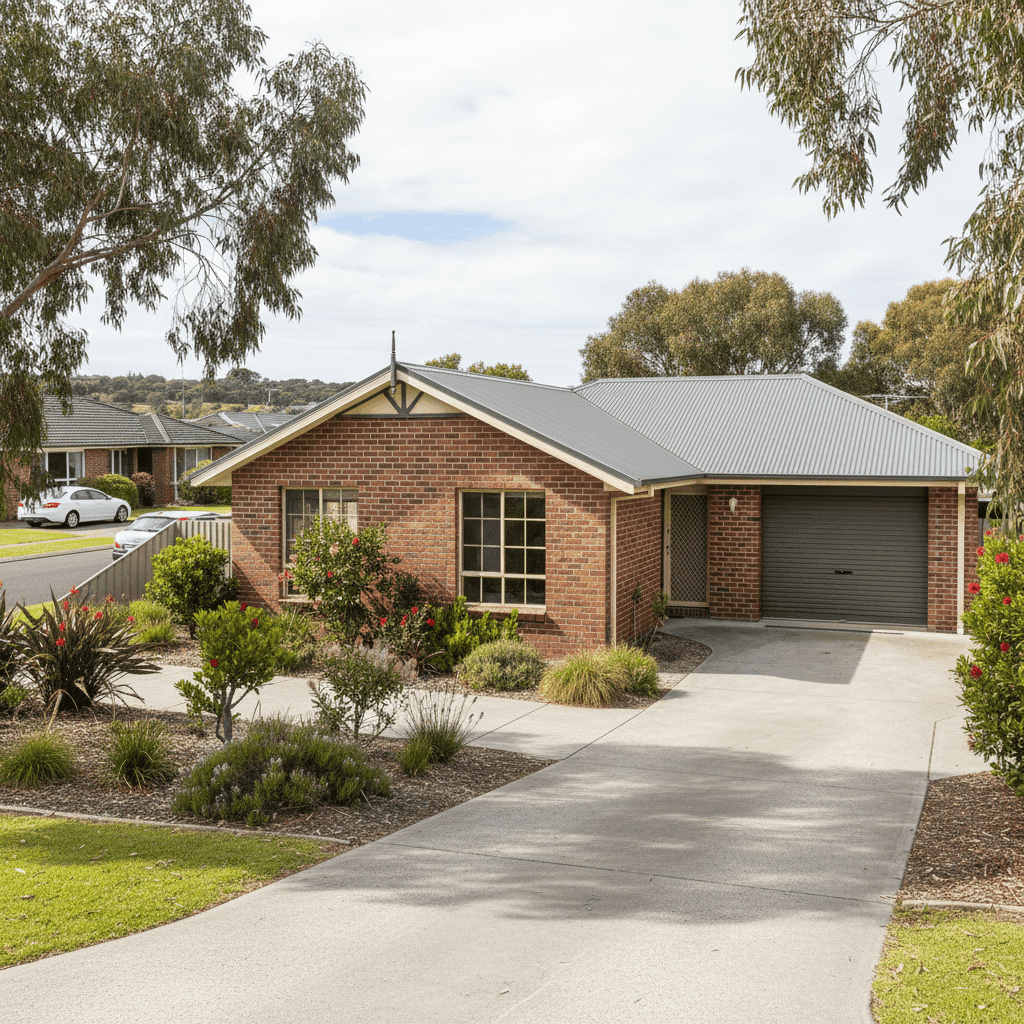
If you own a free standing home in Devonport, Tasmania, you've probably wondered whether your home insurance premium is competitive — or whether you're quietly paying more than you should. This article breaks down a real home and contents insurance quote for a 3-bedroom brick veneer property in the 7310 postcode, comparing it against suburb, state, and national benchmarks to help you make a more informed decision.
---
Is This Quote Fair?
The annual premium for this property came in at $1,619 per year (or approximately $155 per month), covering both building (insured at $442,000) and contents (valued at $79,000), each with a $1,000 excess. Our pricing analysis rates this quote as FAIR — around average.
That assessment holds up well under scrutiny. The quote sits just below the Devonport suburb average of $1,644/yr and the suburb median of $1,655/yr, meaning this homeowner is paying slightly less than most of their neighbours for a comparable level of cover. It's not a standout bargain, but it's a solid, competitive result — particularly given the building sum insured of $442,000, which reflects realistic rebuilding costs for a 139 sqm home in regional Tasmania.
For context, the 25th percentile for Devonport premiums sits at $1,182/yr, so there is a portion of the market paying noticeably less. However, those lower quotes may reflect different levels of cover, higher excesses, or properties with fewer insurable features. At the 75th percentile, premiums climb to $2,023/yr — meaning this quote comfortably avoids the upper quartile of local pricing.
---
How Devonport Compares
One of the most striking takeaways from this analysis is just how affordable Devonport is relative to the broader insurance market.
| Benchmark | Average Premium |
|---|---|
| Devonport (suburb average) | $1,644/yr |
| LGA – Latrobe (Tas.) | $2,263/yr |
| Tasmania (state average) | $2,814/yr |
| Australia (national average) | $5,347/yr |
Devonport homeowners are paying, on average, $1,170 less per year than the Tasmanian state average, and a remarkable $3,703 less than the national average. Even comparing against the state median ($2,326/yr) and national median ($2,764/yr), Devonport consistently emerges as one of the more affordable places in Australia to insure a home.
This affordability is driven by a combination of factors: Devonport is not classified as a cyclone risk area, it sits outside the most flood-prone and bushfire-intensive zones that push premiums sky-high in other parts of the country, and the local property market — while healthy — doesn't carry the extreme replacement cost pressures seen in capital cities.
That said, Tasmania does experience its own weather risks, including strong westerly winds, heavy rainfall, and occasional storm events, all of which are factored into local pricing. The Devonport suburb stats page shows a sample of 34 quotes, giving a reasonable picture of the local market.
---
Property Features That Affect Your Premium
Every home is different, and insurers weigh up a range of property characteristics when calculating your premium. Here's how the key features of this particular property influence its pricing:
Brick Veneer Walls Brick veneer is generally viewed favourably by insurers. It offers solid fire resistance and durability compared to timber weatherboard, which can contribute to lower premiums. It's one of the most common wall types in Australian suburbia for good reason.
Steel / Colorbond Roof A Colorbond steel roof is another positive signal for insurers. It's lightweight, highly durable, resistant to corrosion, and performs well in wind events. Compared to older tile roofs that may be prone to cracking or displacement in storms, Colorbond tends to attract more competitive premiums.
Slab Foundation Concrete slab foundations are considered structurally stable and are standard for homes of this era. They carry minimal risk of subsidence or movement compared to older pier-and-beam constructions, which can be a factor in some older Tasmanian homes.
Construction Year: 1984 At roughly 40 years old, this home sits in a middle ground. It's old enough that some components — plumbing, electrical systems, roof flashings — may be approaching end-of-life, which can nudge premiums upward. However, it's not so old as to attract the significant age-related loading that applies to pre-1960s homes.
Ducted Climate Control The presence of a ducted heating and cooling system adds to the contents and building value being insured, and it is a feature insurers note. It also increases the cost of reinstatement should a major loss event occur.
No Pool, No Solar Panels The absence of a swimming pool removes a liability and maintenance risk that some insurers price into premiums. Similarly, no solar panels means no added complexity around fire risk or system replacement costs.
Standard Fittings Standard-quality fittings keep the replacement cost estimate grounded. Homes with high-end or bespoke finishes typically attract higher building sums insured and, consequently, higher premiums.
---
Tips for Homeowners in Devonport
1. Review your building sum insured annually Construction costs have risen significantly across Australia in recent years. A building sum insured of $442,000 for a 139 sqm home is reasonable today, but it's worth revisiting each year to ensure it still reflects current rebuilding costs — not the price you paid for the property.
2. Consider a higher excess to reduce your premium Both the building and contents excess on this policy sit at $1,000. If you have the financial buffer to absorb a larger out-of-pocket cost in the event of a claim, opting for a $2,000 or $2,500 excess could bring your annual premium down meaningfully.
3. Don't underinsure your contents A contents value of $79,000 is a common estimate, but it's easy to underestimate what you actually own. Walk through each room and tally up electronics, appliances, clothing, furniture, and jewellery. Underinsurance at claim time can leave you significantly out of pocket.
4. Compare quotes at renewal — every year Insurance loyalty rarely pays off. Premiums can shift considerably from one insurer to the next for identical cover. Even if your current quote is rated "fair," running a fresh comparison at renewal could reveal a materially better deal without sacrificing cover quality.
---
Compare Your Home Insurance Today
Whether you're a long-time Devonport resident or new to the area, it pays to know where your premium stands. At CoverClub, we make it easy to compare home and contents insurance quotes from multiple insurers in minutes. Get a quote today and find out if you could be paying less — without compromising on the cover your home deserves.