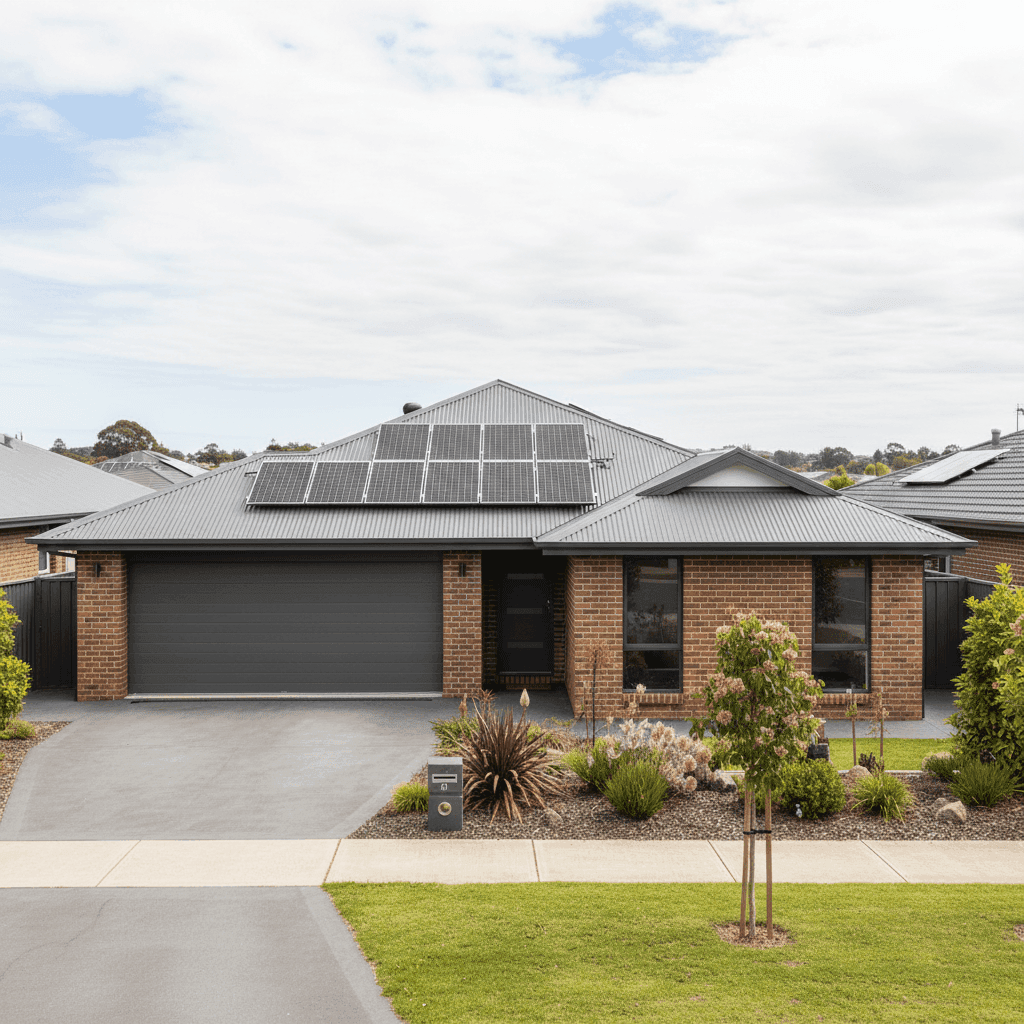
If you own a free standing home in Devonport, Tasmania, you've probably wondered whether you're paying a fair price for your home insurance — or leaving money on the table. This article breaks down a real home and contents insurance quote for a 3-bedroom, 2-bathroom property in Devonport (postcode 7310), comparing it against suburb, state, and national benchmarks so you can make a more informed decision.
---
Is This Quote Fair?
The annual premium for this property came in at $1,425 per year (or roughly $137 per month), covering both building (sum insured: $521,000) and contents ($50,000), each with a $1,000 excess.
Our price rating for this quote is FAIR — Around Average.
That assessment holds up well under scrutiny. Based on 34 quotes collected for the Devonport 7310 area, the suburb average sits at $1,644/yr and the median at $1,655/yr. This quote comes in roughly $220 below the suburb average — a meaningful saving without appearing suspiciously cheap.
To put it in percentile terms: the 25th percentile for Devonport quotes is $1,182/yr and the 75th is $2,023/yr. At $1,425, this premium lands comfortably in the lower-middle portion of the local range — better than average, but not an outlier that might suggest inadequate cover.
The "fair" rating reflects the fact that while the quote beats the local average, it's not dramatically below market. There may still be room to sharpen the price further with targeted comparison shopping.
---
How Devonport Compares
One of the most striking takeaways from this analysis is just how affordable Devonport is relative to the broader insurance market.
| Benchmark | Average Premium | Median Premium |
|---|---|---|
| Devonport 7310 | $1,644/yr | $1,655/yr |
| Tasmania (State) | $2,814/yr | $2,326/yr |
| National | $5,347/yr | $2,764/yr |
| LGA: Latrobe (Tas.) | $2,263/yr | — |
The Tasmanian state average of $2,814/yr is nearly 72% higher than the Devonport suburb average — a significant gap that reflects the relatively low-risk profile of this part of the Apple Isle. Devonport sits on the northern coast of Tasmania and is not classified as a cyclone risk area, which meaningfully reduces the hazard loading that insurers apply in more exposed regions.
Zooming out further, the national average of $5,347/yr is more than three times the Devonport average. Much of that national figure is skewed by high-risk postcodes in Queensland, Western Australia, and parts of northern Australia where cyclone, flood, and bushfire risks drive premiums sharply upward. For Devonport homeowners, this national context is a reassuring reminder that living in a lower-risk region carries real financial benefits.
Even within Tasmania, Devonport compares favourably to the broader Latrobe LGA average of $2,263/yr — suggesting that properties within the 7310 postcode may benefit from specific local factors such as proximity to emergency services, lower crime rates, or reduced flood exposure in certain pockets.
---
Property Features That Affect Your Premium
Several characteristics of this property are worth noting in the context of insurance pricing.
New Construction (2024) A home built in 2024 is subject to the latest Australian building codes, which mandate improved structural integrity, fire resistance, and energy efficiency. Insurers generally view newer builds more favourably, and this is likely contributing to the competitive premium here.
Brick Veneer Walls & Colorbond Roof Brick veneer is one of the most common — and insurer-friendly — external wall materials in Australia. It offers solid fire resistance and durability. Paired with a steel Colorbond roof, which is lightweight, corrosion-resistant, and performs well in wind events, this combination is considered a low-risk construction profile by most underwriters.
Slab Foundation A concrete slab foundation is straightforward to assess and generally associated with lower subsidence and pest-related risks compared to older pier-and-beam or timber subfloor construction. This can work in your favour at claims time and during underwriting.
Solar Panels This property has solar panels installed. While solar adds value to the home, it's worth confirming with your insurer that the panels are explicitly covered under your building sum insured. Some policies include them automatically; others may require a specific endorsement or an adjusted sum insured. Given the replacement cost of a quality solar system, this is a detail worth double-checking.
Ducted Climate Control Ducted systems are a fixed installation and typically covered under building insurance rather than contents. Again, it's prudent to ensure your building sum insured accounts for the cost of replacing this system, as it can represent a significant portion of fit-out value in a modern home.
Above-Average Fittings With above-average fittings quality, the $521,000 building sum insured needs to adequately reflect the cost of rebuilding to the same standard — not just the average cost per square metre. Underinsurance is a common and costly mistake; if your home were destroyed, your insurer would only pay up to the sum insured.
---
Tips for Homeowners in Devonport
1. Review your sum insured annually Building costs in Tasmania — like the rest of Australia — have risen significantly in recent years due to labour shortages and material price increases. A sum insured that was accurate in 2024 may already be lagging behind actual rebuild costs. Use a building cost calculator or speak to a quantity surveyor to verify your coverage remains adequate.
2. Confirm solar panels and ducted systems are covered As noted above, fixed installations like solar panels and ducted air conditioning can sometimes fall through the cracks in policy wording. Read your Product Disclosure Statement (PDS) carefully and contact your insurer if you're unsure. It's a five-minute check that could save you tens of thousands of dollars.
3. Consider your excess strategically Both the building and contents excess on this policy are set at $1,000. A higher excess typically reduces your annual premium — but only makes financial sense if you have the savings to cover that amount comfortably in the event of a claim. If cash flow is a concern, a lower excess may be worth the slightly higher premium.
4. Compare quotes at renewal time Even a "fair" quote can be beaten. The insurance market is competitive, and premiums can vary significantly between providers for the same property. Making a habit of comparing at least two or three quotes each year — particularly at renewal — is one of the simplest ways to keep your costs in check without compromising on cover.
---
Ready to See What You Could Pay?
Whether you're a first-time buyer or a long-term Devonport resident, comparing home insurance quotes is one of the easiest ways to ensure you're getting value for money. CoverClub aggregates real quote data to help you benchmark your premium against your neighbours and the broader market.
Get a home insurance quote today at CoverClub and see how your property stacks up — in Devonport and beyond.