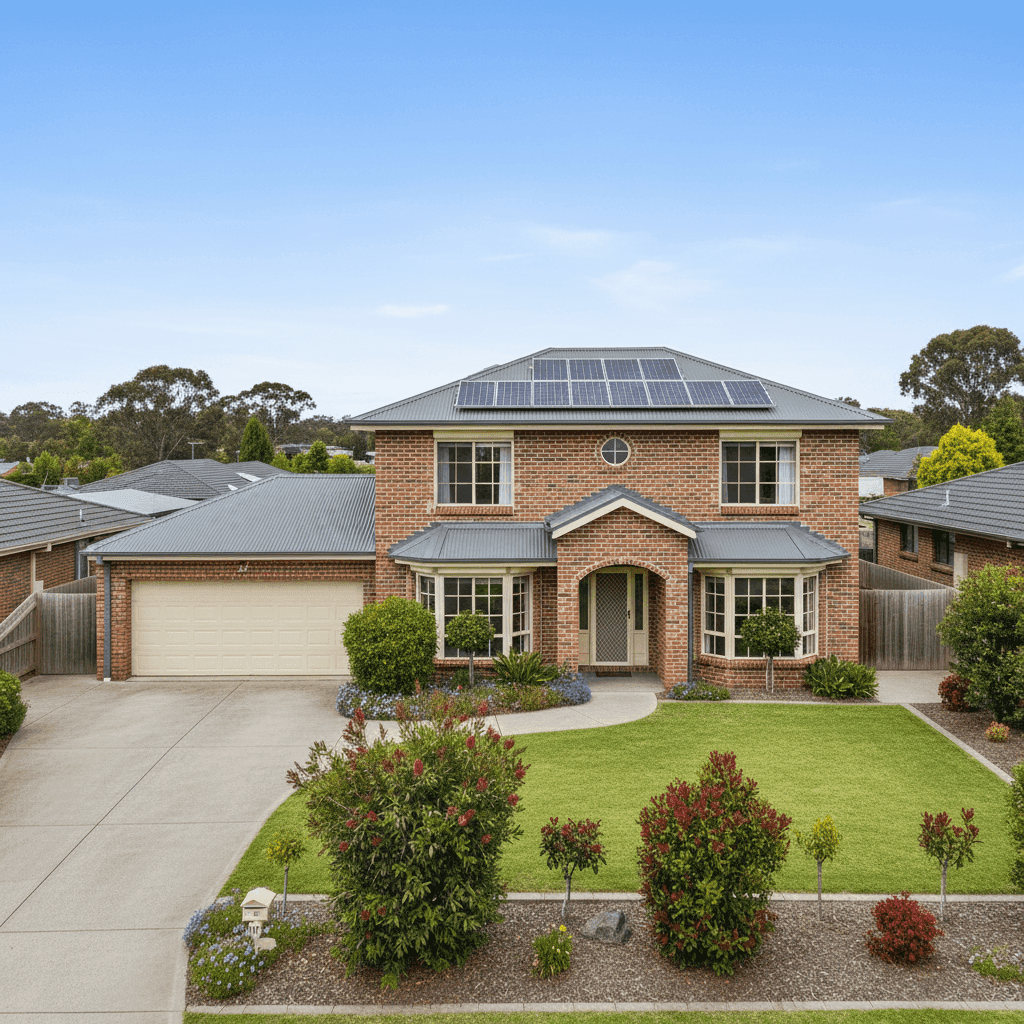
Diamond Creek, nestled in Melbourne's leafy north-eastern fringe within the Nillumbik Shire, is a popular choice for families seeking a semi-rural lifestyle without straying too far from the city. For owners of a free standing home in this suburb, understanding what you should be paying for home and contents insurance is just as important as choosing the right cover. This article breaks down a real quote for a four-bedroom, two-bathroom brick veneer home in Diamond Creek (postcode 3089) — and puts it in context against local, state, and national benchmarks.
---
Is This Quote Fair?
The annual premium for this home and contents policy comes in at $2,426 per year (or $232/month), covering a building sum insured of $972,000 and contents valued at $215,000, each with a $1,000 excess.
Our price rating for this quote is FAIR — Around Average, and the data backs that up. Here's how it stacks up:
| Benchmark | Premium |
|---|---|
| This quote | $2,426/yr |
| Suburb average (Diamond Creek) | $3,036/yr |
| Suburb median (Diamond Creek) | $2,664/yr |
| Suburb 25th percentile | $2,010/yr |
| Suburb 75th percentile | $3,555/yr |
At $2,426, this quote sits below both the suburb average and median, placing it comfortably in the lower half of the pricing range for Diamond Creek. In fact, it's only $416 above the 25th percentile — meaning roughly three-quarters of comparable quotes in the area come in higher. That's a reasonably strong result, though there is still some room to shop around if budget is a priority.
---
How Diamond Creek Compares
To understand whether Diamond Creek is an expensive place to insure, it helps to zoom out and look at the broader picture.
Victoria-wide, the average home and contents premium sits at $3,000/yr, with a median of $2,718/yr. This quote lands below both figures, suggesting the property is being priced competitively relative to the state as a whole.
At the LGA level, the Nillumbik Shire average is $3,693/yr — notably higher than the Diamond Creek suburb average of $3,036/yr. This gap likely reflects the bushfire risk that affects parts of Nillumbik more acutely, particularly properties closer to the urban–bush interface. Diamond Creek itself carries some bushfire exposure, but properties in more built-up pockets of the suburb tend to attract lower premiums than those on the rural fringe.
Zooming out further, the national average is a striking $5,347/yr (median: $2,764/yr). The wide gap between the national average and median is largely driven by high-risk regions — particularly cyclone-prone areas in Queensland and Western Australia — pulling the average upward. For a Victorian homeowner in a non-cyclone zone, the national average is less relevant as a benchmark, but it does underscore how relatively affordable Diamond Creek can be by comparison.
Based on 73 quotes collected for the Diamond Creek area, this property is positioned well within the normal range for the suburb.
---
Property Features That Affect Your Premium
Several characteristics of this property influence how insurers assess and price the risk:
Brick Veneer Walls & Colorbond Roof Brick veneer is one of the most common construction types in Australian suburbia, and insurers generally view it favourably. It offers solid fire resistance and durability. Paired with a steel Colorbond roof — which is lightweight, resistant to corrosion, and performs well in high winds — this combination typically attracts mid-range to competitive premiums.
Stump Foundation & Timber/Laminate Flooring The home sits on stumps, which is common for properties built in Victoria's hillier terrain. While stumps can add some complexity to rebuild cost assessments, they don't typically attract a significant premium loading. Timber and laminate flooring is noted as standard in the property profile and is factored into the contents and building valuation.
Construction Year: 1997 At around 27 years old, this home is relatively modern by Australian standards. Properties built in the mid-to-late 1990s generally comply with building codes that introduced improved structural and fire safety standards, which can work in the homeowner's favour when insurers assess risk.
Solar Panels This property has solar panels installed — a feature that's increasingly common across Australian homes. Solar panels are typically covered under building insurance, but it's worth confirming with your insurer that the panels and associated inverter equipment are explicitly included in your sum insured. Under-insuring solar infrastructure is a common oversight.
Ducted Climate Control Ducted heating and cooling systems are a significant fixed asset and should be factored into your building sum insured. At $972,000, the building cover here appears to account for a home of this size (235 sqm) and specification, including built-in systems like ducted climate control.
No Pool, No Cyclone Risk The absence of a swimming pool removes a common source of liability and maintenance-related claims. Being outside a cyclone risk zone also keeps premiums lower than they would be for equivalent properties in northern Australia.
---
Tips for Homeowners in Diamond Creek
1. Review your bushfire risk rating regularly Parts of Diamond Creek and the broader Nillumbik Shire carry Bushfire Attack Level (BAL) ratings. If your property is near bushland or has a BAL designation, make sure your insurer is aware and that your policy covers bushfire damage appropriately. Failing to disclose this — or choosing a policy that excludes it — could leave you exposed.
2. Double-check your building sum insured At $972,000 for a 235 sqm home, the sum insured works out to roughly $4,136/sqm — a reasonable estimate for a standard-quality brick veneer home in Victoria. However, rebuild costs have risen sharply in recent years due to construction inflation. Use a building cost calculator or speak to a quantity surveyor to ensure your sum insured reflects current replacement costs, not what you paid for the home.
3. Confirm solar panels are explicitly covered As mentioned above, solar panels should be listed under your building cover. Ask your insurer directly whether panels, inverters, and mounting hardware are included, and whether there are any exclusions for storm damage or electrical faults.
4. Compare quotes before renewal A "fair" rating is a good starting point, but the insurance market moves constantly. With a suburb 25th percentile of $2,010/yr, there may be policies offering similar cover at a lower price point. Get a new quote at CoverClub before your renewal date to make sure you're not paying more than you need to.
---
Compare Your Home Insurance Today
Whether you're a long-time Diamond Creek resident or new to the area, it pays to know where your premium sits relative to the market. CoverClub makes it easy to compare home and contents insurance quotes tailored to your property and location. Start your comparison at CoverClub and find out if you could be paying less — or getting more for what you already pay.