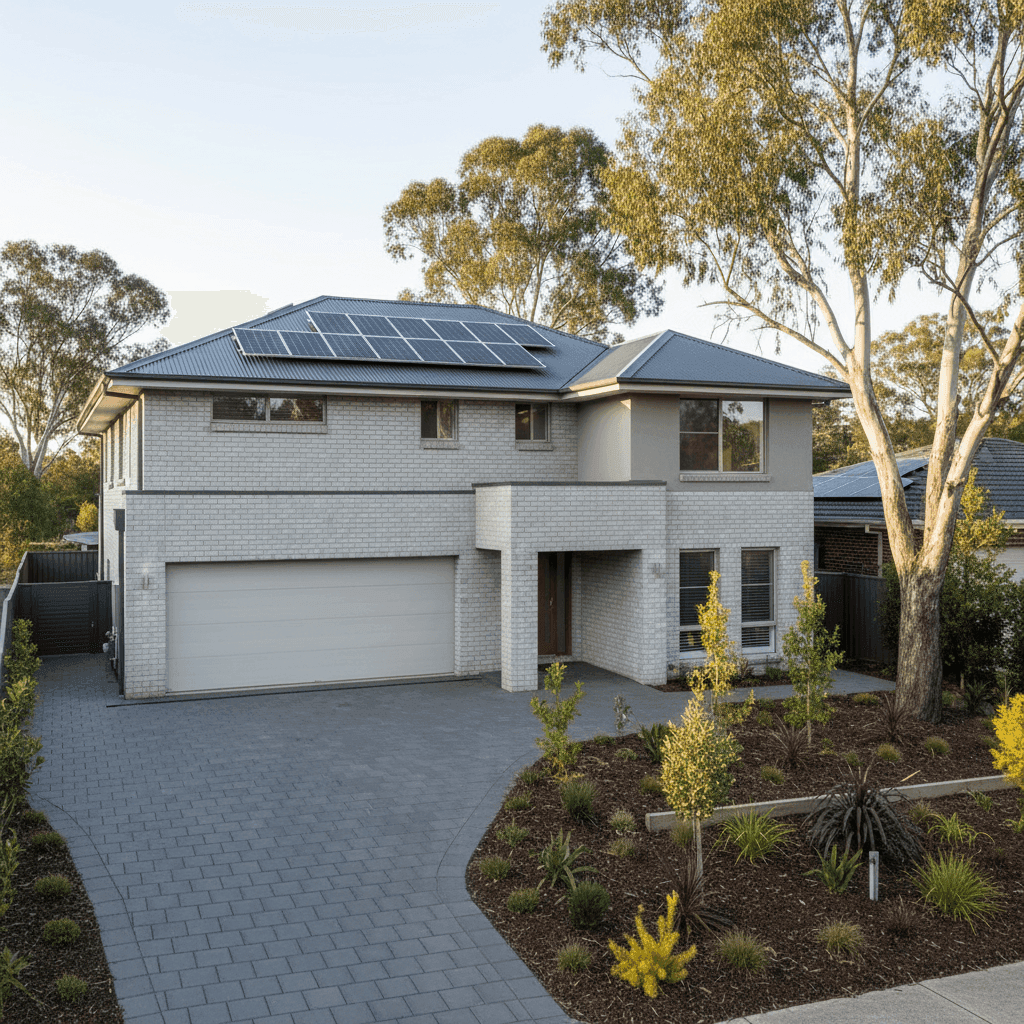
Nestled in the leafy outer north-eastern suburbs of Melbourne, Diamond Creek is a popular choice for families seeking a semi-rural lifestyle without straying too far from the city. This analysis looks at a real home and contents insurance quote for a five-bedroom, free-standing home in Diamond Creek, VIC 3089 — and breaks down exactly what's driving the premium, how it stacks up against local and national benchmarks, and what homeowners in the area can do to keep costs in check.
---
Is This Quote Fair?
The short answer: yes — and then some. This quote came in at $2,317 per year (or $231/month), which earns a CHEAP (Below Average) price rating. That means it sits well below what most comparable properties in the area are paying.
To put that in perspective:
- The suburb average for Diamond Creek is $3,101/yr — meaning this quote is roughly $784 cheaper per year than the local average.
- It also undercuts the suburb median of $2,904/yr and even the 25th percentile of $2,615/yr, placing it among the most competitively priced quotes in the postcode.
For a property insured at $1,193,000 for the building plus $50,000 in contents, this represents genuinely strong value. Homeowners who simply renew with their existing insurer each year — without shopping around — are likely paying significantly more for similar or lesser cover.
---
How Diamond Creek Compares
Diamond Creek sits within the Nillumbik local government area, which is known for its bushland character and elevated fire risk. That environmental context has a real bearing on insurance pricing across the region.
Here's how the numbers line up:
| Benchmark | Annual Premium |
|---|---|
| This Quote | $2,317 |
| Diamond Creek Suburb Average | $3,101 |
| Diamond Creek Suburb Median | $2,904 |
| VIC State Average | $2,921 |
| VIC State Median | $2,694 |
| National Average | $2,965 |
| National Median | $2,716 |
| Nillumbik LGA Average | $3,693 |
What stands out immediately is the Nillumbik LGA average of $3,693/yr — the highest figure in the table, and a telling indicator of how bushfire exposure influences premiums across this council area. Diamond Creek's own suburb average of $3,101/yr also exceeds both the Victorian state average and the national average, reinforcing that location-based risk is a meaningful pricing factor here.
This quote beats every single benchmark in the comparison — a strong outcome by any measure. You can explore more local pricing data on the Diamond Creek suburb stats page, which is based on 49 quotes collected from the area.
---
Property Features That Affect Your Premium
Insurance premiums aren't pulled from thin air — they're calculated based on a detailed profile of the property. Here's how the key features of this home factor into the pricing:
Brick Veneer Walls & Colorbond Roof
Brick veneer is one of the most common wall constructions in Australian suburbia, and insurers generally view it favourably. It offers solid fire resistance and structural durability. Paired with a steel/Colorbond roof, this combination is considered low-to-moderate risk — Colorbond is non-combustible and highly resistant to ember attack, which is particularly relevant in a bushfire-prone region like Nillumbik.
Stump Foundation
The property sits on stumps, which is fairly typical for homes in elevated or sloped terrain — common in the Diamond Creek area. While stumped homes can be more vulnerable to subfloor moisture and certain types of movement, they also allow for easier inspection and maintenance of underfloor areas. Insurers generally price this construction type without significant loading.
Timber/Laminate Flooring
Timber and laminate floors are popular in modern builds and can affect contents and building replacement cost estimates. From an insurance standpoint, they're standard and don't typically attract a premium loading.
Solar Panels
This property has solar panels, which are increasingly common on Australian homes. Many insurers now include solar panels under building cover as a fixed fixture, though it's worth confirming this with your provider. Solar installations can add to the overall replacement cost of a home, so ensuring your sum insured accounts for them is important.
Ducted Climate Control
Ducted heating and cooling is a significant fixed asset in any home. Like solar panels, it forms part of the building and should be factored into your sum insured. Underinsuring these types of integrated systems is a common mistake that can leave homeowners short at claim time.
Building Size & Sum Insured
At 367 sqm, this is a substantial family home. The building sum insured of $1,193,000 reflects the cost to rebuild — not the market value — and is an important figure to get right. Overcooking it inflates your premium unnecessarily; underestimating it risks being caught short. A quantity surveyor or online building calculator can help you land on the right number.
---
Tips for Homeowners in Diamond Creek
1. Don't Ignore Bushfire Risk — But Don't Overpay for It Either
Diamond Creek and the broader Nillumbik area carry elevated bushfire exposure. Make sure your policy includes adequate bushfire cover, and check whether your property has a specific Bushfire Attack Level (BAL) rating. At the same time, shopping around (as this quote demonstrates) can yield significant savings even in higher-risk postcodes.
2. Review Your Sum Insured Annually
Building costs have risen sharply in recent years due to labour and material inflation. A sum insured that was accurate two years ago may no longer reflect what it would actually cost to rebuild today. Set a reminder to revisit this figure each year at renewal.
3. Consider Your Excess Carefully
Both the building and contents excess on this policy are set at $1,000. A higher excess can meaningfully reduce your annual premium — but only makes sense if you could comfortably cover that amount out of pocket in the event of a claim. Run the numbers to find the right balance for your situation.
4. Bundle Building and Contents Cover
This quote covers both home and contents under a single policy. Bundling is often more cost-effective than holding separate policies, and it simplifies the claims process if both are affected by the same event (such as a fire or storm).
---
Compare Your Quote with CoverClub
Whether you're buying, renewing, or just curious about whether you're getting a fair deal, CoverClub makes it easy to see how your premium stacks up. With real quote data from properties across Australia, you can benchmark your cover in minutes. Get a quote today and find out if you're paying too much — or, like this Diamond Creek homeowner, enjoying a genuinely competitive rate.