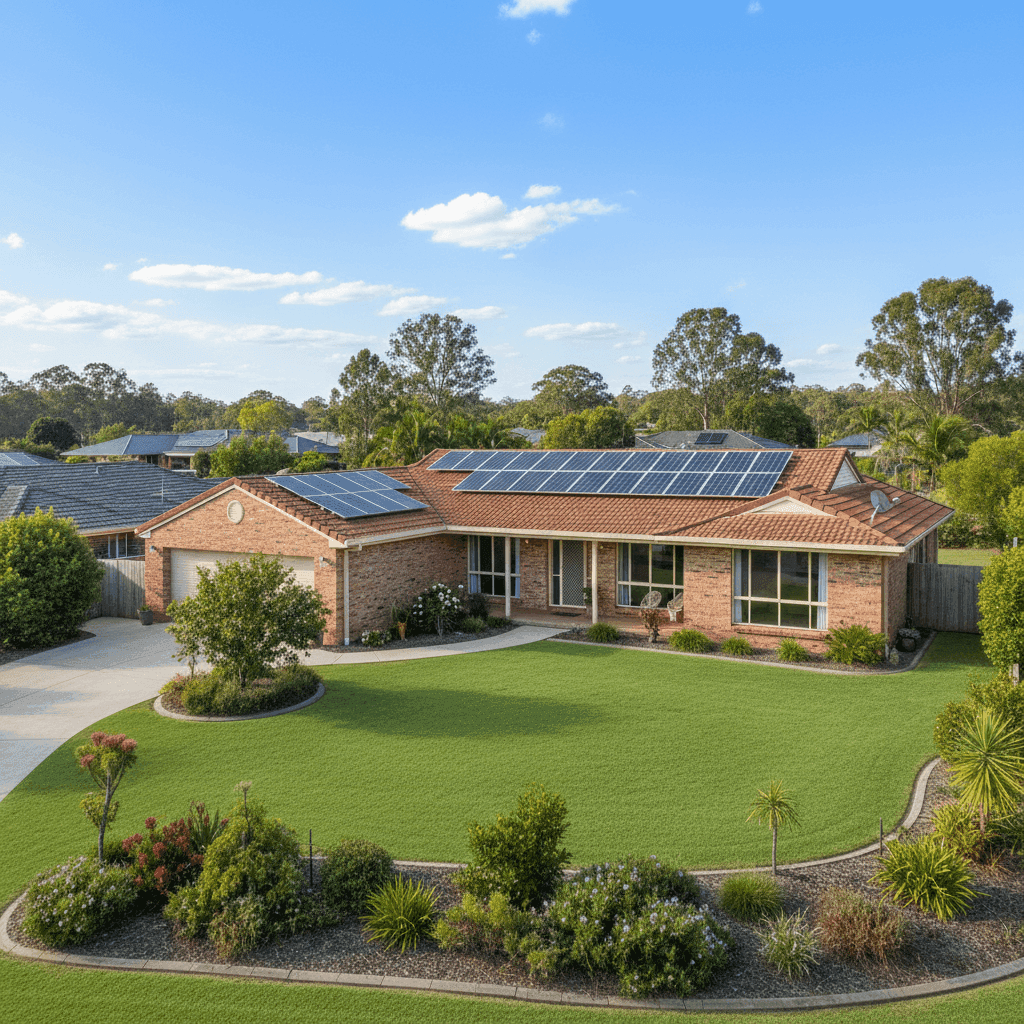
Nestled in the Sunshine Coast hinterland, Diddillibah is a quiet residential pocket that offers a relaxed Queensland lifestyle within easy reach of the coast. If you own a free standing home here — particularly a larger family property — understanding what you should be paying for home and contents insurance is essential. This article breaks down a real quote for a six-bedroom, two-bathroom brick veneer home in Diddillibah (postcode 4559) and puts the numbers in context so you can judge whether your own premium is fair.
---
Is This Quote Fair?
The quote in question comes in at $3,303 per year (or about $323 per month), covering both building and contents for a substantial 411 sqm home. The building is insured for $1,165,000 and contents for $124,000, with a $2,000 excess applying to both.
Our price rating for this quote is CHEAP — below the suburb average — and the data backs that up clearly. The average premium for comparable homes in Diddillibah sits at $4,375 per year, meaning this policyholder is saving roughly $1,072 annually compared to what their neighbours might be paying. Even against the suburb's 25th percentile — the point at which 75% of quotes are more expensive — the suburb benchmark is $3,489/yr, still higher than this quote.
In short: this is a genuinely competitive result. For a home of this size and value, landing below the suburb's cheapest quartile is a strong outcome.
---
How Diddillibah Compares
To really appreciate this quote, it helps to zoom out and look at the broader picture. You can explore the full breakdown on the Diddillibah suburb stats page.
| Benchmark | Premium |
|---|---|
| This quote | $3,303/yr |
| Suburb average (Diddillibah) | $4,375/yr |
| Suburb median | $4,079/yr |
| Suburb 25th percentile | $3,489/yr |
| LGA average (Sunshine Coast) | $7,249/yr |
| QLD state average | $9,129/yr |
| QLD state median | $3,903/yr |
| National average | $5,347/yr |
| National median | $2,764/yr |
A few things stand out here. Queensland's state average of $9,129/yr is dramatically higher than the median of $3,903/yr — a clear sign that the QLD average is being pulled upward by high-risk properties, particularly those in cyclone-prone or flood-affected regions. You can dig into those statewide patterns on the QLD insurance stats page.
At a national level, the average Australian home insurance premium sits at $5,347/yr, though the national median of $2,764/yr tells a more nuanced story. This Diddillibah quote falls between those two national figures — above the median, but well below the average — which is consistent with a larger-than-average home in a relatively low-risk area.
The Sunshine Coast LGA average of $7,249/yr is notably high, likely reflecting coastal and waterway-adjacent properties that attract elevated risk loadings. Diddillibah's hinterland location means it doesn't carry the same coastal exposure, which is reflected in the more moderate suburb-level premiums.
---
Property Features That Affect Your Premium
Several characteristics of this property work in the owner's favour from an underwriting perspective:
Brick Veneer Walls & Tiled Roof Brick veneer is one of the most insurer-friendly external wall materials in Australia. It's durable, fire-resistant, and holds up well in storms — all factors that reduce risk in the eyes of insurers. Combined with a tiled roof (also regarded as a solid, long-lasting roofing material), the structure presents a relatively low claims profile.
Concrete Slab Foundation A slab foundation is considered stable and low-maintenance compared to alternatives like stumps or piers. It's less susceptible to movement, moisture ingress, and pest damage, which can all contribute to costly claims.
Construction Year: 1995 At around 30 years old, this home is mature but not aged. Homes built in the mid-1990s generally comply with reasonable building codes, though insurers may factor in the age of plumbing, electrical systems, and roofing materials when assessing risk.
Solar Panels The presence of solar panels adds a modest layer of complexity to the policy. Panels need to be covered for damage from storms, hail, or fire, and some insurers include them automatically under building cover while others require a specific endorsement. It's worth confirming with your insurer exactly how your solar system is covered.
No Pool, No Cyclone Risk Zone The absence of a swimming pool removes a common liability exposure, while Diddillibah's location outside designated cyclone risk areas means the policy doesn't attract the significant cyclone loading that affects many North Queensland properties.
Timber & Laminate Flooring While attractive and popular, timber and laminate floors can be more susceptible to water damage than tiles. This is worth keeping in mind when assessing your contents cover and understanding what your policy does — and doesn't — cover in the event of a water-related claim.
---
Tips for Homeowners in Diddillibah
1. Review your sum insured regularly At $1,165,000, the building sum insured for a 411 sqm home works out to roughly $2,835 per square metre — a reasonable figure for a quality rebuild in South East Queensland. However, construction costs have risen sharply in recent years, so it's worth revisiting this figure annually to ensure you're not underinsured. Ask your insurer about index-linked cover if it's available.
2. Confirm your solar panel coverage Don't assume your panels are automatically covered. Contact your insurer to verify whether your solar system — including panels, inverter, and mounting hardware — is included under your building policy and up to what value.
3. Shop around at renewal time Even though this quote is already rated as cheap relative to the suburb, premiums can shift significantly at renewal. Loyalty doesn't always pay in insurance — comparing quotes each year through a platform like CoverClub takes only minutes and could save you hundreds.
4. Consider your excess carefully A $2,000 excess on both building and contents is on the higher end of the standard range. While a higher excess typically reduces your premium, make sure you could comfortably cover that amount out of pocket in the event of a claim. If cash flow is a concern, it may be worth exploring policies with a lower excess, even if the annual premium is slightly higher.
---
Compare Your Own Quote
Whether you're renewing your existing policy or buying a home in the area, it pays to know what the market looks like. CoverClub makes it easy to compare home and contents insurance quotes side by side, so you can be confident you're getting a fair deal.