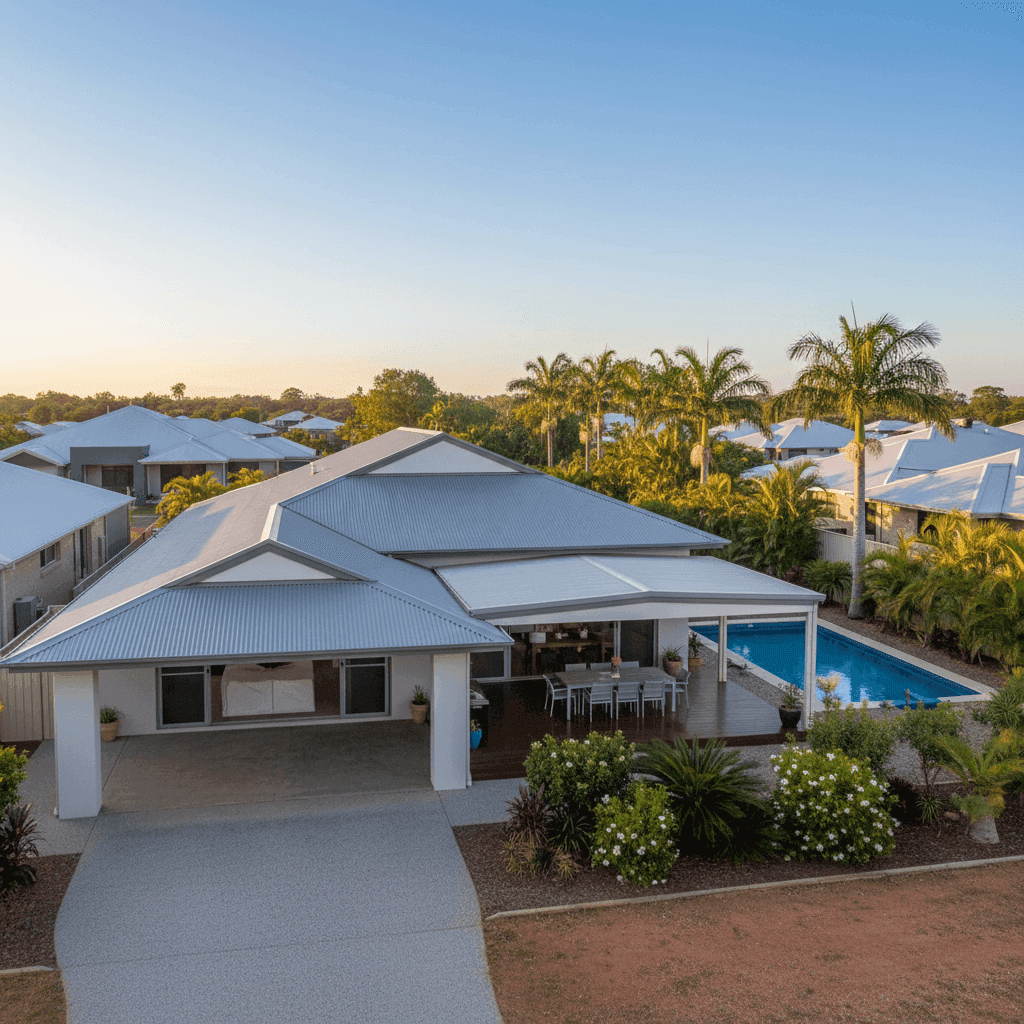
If you own a free standing home in Djugun, WA 6725, you already know that insuring a property in the Kimberley region comes with its own set of challenges — and costs. Djugun sits on the outskirts of Broome, a beautiful but weather-exposed part of Western Australia where cyclone season is a very real consideration for every homeowner. This article breaks down a recent building insurance quote for a three-bedroom, two-bathroom home in the suburb, benchmarks it against local, state, and national data, and offers practical advice for getting the best value on your cover.
---
Is This Quote Fair?
The quote in question is $4,578 per year (or $432/month) for building-only cover on a free standing home with a sum insured of $455,000 and a $1,000 building excess. Our analysis rates this quote as CHEAP — below the suburb average — which is genuinely good news for this homeowner.
To put that in perspective, the suburb average premium in Djugun sits at $6,990 per year, and the median is even higher at $7,159 per year. Even the 25th percentile — meaning the cheapest quarter of quotes in the area — comes in at $6,013 per year. At $4,578, this quote sits well below that threshold, making it an exceptionally competitive result for a cyclone-prone postcode.
The LGA context reinforces this further. Across the Derby-West Kimberley LGA, the average premium is $7,494 per year — nearly $3,000 more than what this homeowner is paying. Securing cover at this price point in such a high-risk region represents a meaningful saving.
---
How Djugun Compares
Understanding where Djugun sits in the broader insurance landscape helps explain why premiums here are elevated compared to most of the country.
| Benchmark | Average Premium |
|---|---|
| Djugun (suburb average) | $6,990/yr |
| Derby-West Kimberley LGA | $7,494/yr |
| Western Australia (state) | $2,811/yr |
| Australia (national) | $5,347/yr |
The gap between Djugun and the WA state average of $2,811/yr is striking — local premiums are roughly 2.5 times higher than the state norm. Compared to the national average of $5,347/yr, Djugun still comes in above the mark, reflecting the elevated risk profile of the region.
It's also worth noting that the national median premium is $2,764/yr, which means the typical Australian homeowner pays far less than someone in the Kimberley. This disparity is almost entirely driven by natural hazard exposure — particularly cyclone and storm surge risk along the WA coast.
You can explore more localised data, including how this postcode tracks over time, on the Djugun suburb stats page.
---
Property Features That Affect Your Premium
Several characteristics of this property have a direct bearing on what insurers charge — and some work in the homeowner's favour more than others.
Cyclone Risk Zone
This is the single biggest premium driver in Djugun. The suburb sits within a designated cyclone risk area, which means insurers apply significant loadings to account for the potential for wind damage, flying debris, and storm surge. This affects virtually every policy in the postcode regardless of the individual property's features.
Aluminium Cladding & Colorbond Roof
The combination of aluminium external walls and a steel/Colorbond roof is actually well-suited to the Kimberley climate. Both materials are highly resistant to corrosion, perform well in high-humidity environments, and — critically — are considered durable under cyclonic wind conditions. Insurers generally view these materials more favourably than, say, weatherboard or fibre cement in a high-wind zone.
Slab Foundation
A concrete slab foundation is the standard and preferred building base in tropical WA. It offers excellent structural stability and is less susceptible to flooding damage than elevated or suspended timber floors. This is a neutral-to-positive factor from an underwriting perspective.
Timber & Laminate Flooring
Internal timber and laminate flooring can be a modest risk factor — these materials are more susceptible to water damage than tiles, which are common in tropical homes. In the event of a storm or flooding event, floor replacement costs can add up quickly, so it's worth confirming your sum insured adequately accounts for this.
Swimming Pool
The presence of a pool adds replacement value to the property and is a factor in determining the appropriate sum insured. Pools can also be damaged during severe weather events, so homeowners should verify whether pool structures and equipment are explicitly covered under their policy.
Ducted Climate Control
Ducted air conditioning is a significant fixed asset in a home of this size and climate. These systems are costly to repair or replace, and damage from power surges, storm events, or general mechanical failure is a common claim type in tropical areas. Again, confirming this is captured in your sum insured is important.
Building Size & Age
At 139 sqm, this is a modestly sized home, which helps keep the sum insured and therefore the premium in check. Built in 2000, the property is old enough to have some wear but young enough to avoid the significant premium loadings that can apply to pre-1980s construction. The standard fittings quality also keeps replacement costs predictable.
---
Tips for Homeowners in Djugun
1. Review Your Sum Insured Annually
Building costs in regional WA have risen sharply in recent years. A sum insured of $455,000 for a 139 sqm home may be appropriate today, but construction costs in the Kimberley are notably higher than metropolitan areas due to freight, labour, and logistics. Use a building cost calculator each year to make sure you're not underinsured.
2. Understand Your Cyclone Excess
Many policies in cyclone-designated areas apply a separate, higher excess specifically for cyclone-related claims — often a percentage of the sum insured rather than a flat dollar amount. Make sure you know what your cyclone excess is, as it can be significantly more than the standard $1,000 listed on your policy.
3. Prepare Your Property Before Cyclone Season
Insurers may reduce or deny claims if a property wasn't reasonably maintained or secured ahead of a known weather event. Before the wet season, check roof fixings, clear gutters, secure loose items, and ensure your pool equipment is protected. Some insurers also offer premium discounts for homes with cyclone-rated shutters or reinforced garage doors.
4. Compare Quotes Every Year
The fact that this quote came in well below the suburb average demonstrates that there is real variation between insurers — even for identical properties in the same postcode. Loyalty doesn't always pay in insurance. Shopping around at renewal time is one of the most effective ways to keep your premiums competitive without sacrificing cover quality.
---
Compare Your Own Quote
Whether you're renewing your policy or buying cover for the first time, it pays to see what the market looks like before you commit. CoverClub makes it easy to compare building and contents insurance quotes for homes across Australia, including high-risk areas like Djugun. Get a quote today and find out whether your current premium is truly competitive — or whether there's a better deal waiting for you.