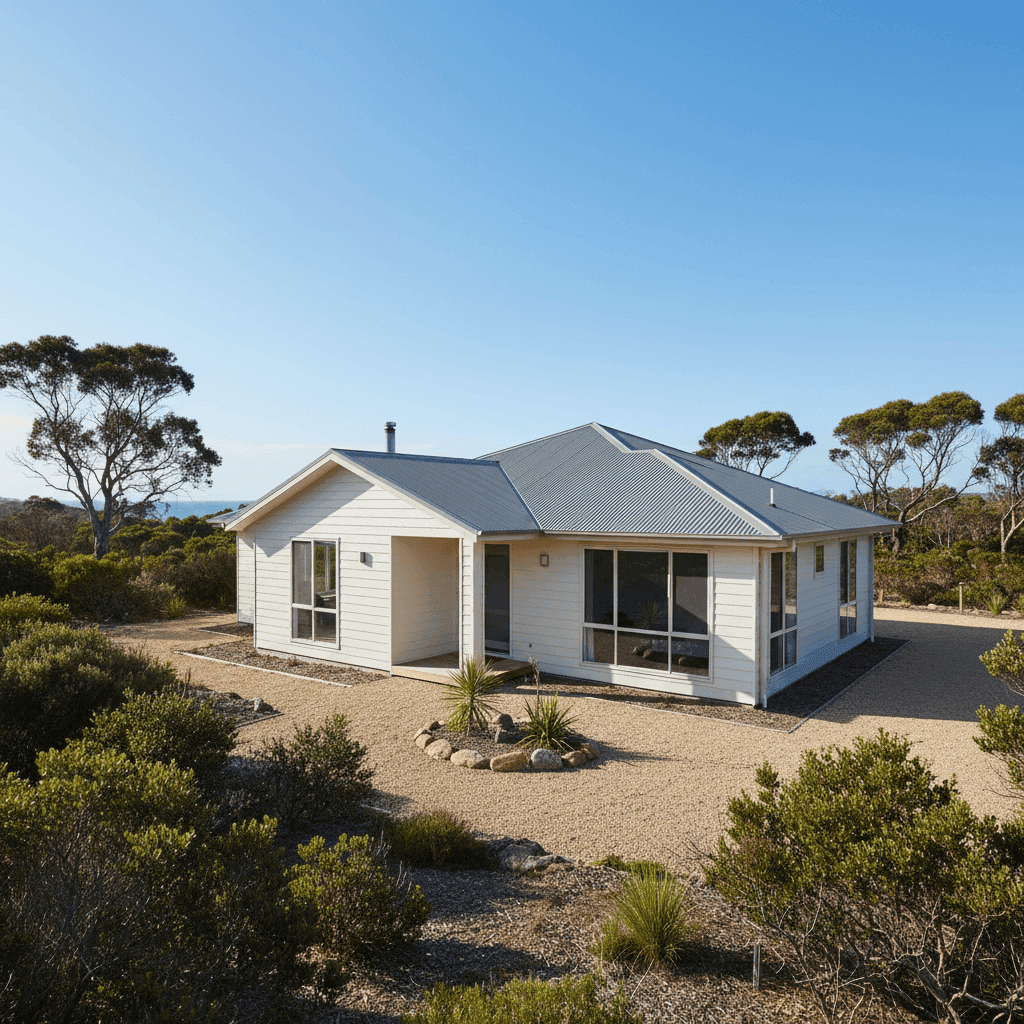
If you own a free standing home in Dolphin Sands, TAS 7190, you might be wondering whether your home insurance premium is competitive — or whether you're quietly overpaying. This article breaks down a real building-only insurance quote for a three-bedroom, one-bathroom home in this coastal Tasmanian suburb, and benchmarks it against local, state, and national data so you can make a more informed decision.
---
Is This Quote Fair?
The quote in question comes in at $2,506 per year (or $233 per month) for building-only cover on a home insured for $535,000, with a $1,000 building excess. Based on CoverClub's pricing data, this quote is rated CHEAP — meaning it sits well below the suburb average.
To put that in perspective, the average home insurance premium across Dolphin Sands currently sits at $4,970 per year, with a median of $4,668. The quote analysed here is roughly 50% below the suburb average — a significant saving by any measure. Even when compared against the suburb's 25th percentile (the cheapest quarter of quotes), which sits at $3,990 per year, this premium still undercuts it by nearly $1,500 annually.
In short: if you received a quote like this one, it represents genuinely strong value for building cover in this area.
---
How Dolphin Sands Compares
Understanding where Dolphin Sands sits in the broader insurance landscape helps contextualise just how much premiums can vary depending on location.
| Benchmark | Average Premium |
|---|---|
| Dolphin Sands (suburb) | $4,970/yr |
| Southern Midlands LGA | $2,582/yr |
| Tasmania (state) | $2,814/yr |
| National | $5,347/yr |
A few things stand out here. First, Dolphin Sands premiums are notably higher than the Tasmanian state average of $2,814 per year — nearly double, in fact. This suggests that insurers are pricing in specific local risk factors for this coastal suburb, which likely include exposure to storm events, coastal weather patterns, and the relative remoteness of the area.
Second, the national average of $5,347 per year is actually in a similar ballpark to Dolphin Sands suburb averages, which is somewhat surprising given that many high-cost national averages are driven by Queensland cyclone zones and flood-prone areas in New South Wales. This tells us that Dolphin Sands is not a cheap suburb to insure by Tasmanian standards.
You can explore the full breakdown of Dolphin Sands insurance statistics, compare it against all of Tasmania, or view the national home insurance picture to see how your own situation stacks up.
---
Property Features That Affect Your Premium
Several characteristics of this particular home are worth examining, as they each play a role in how insurers calculate risk and set premiums.
Hardiplank / Hardiflex External Walls
Fibre cement cladding such as Hardiplank and Hardiflex is generally viewed favourably by insurers. It's non-combustible, resistant to rot and termites, and holds up well in coastal environments — all of which can contribute to a more competitive premium compared to older timber weatherboard homes.
Steel / Colorbond Roof
A Colorbond steel roof is another positive from an underwriting perspective. It's durable, fire-resistant, and performs well under the kind of wind and rain events that coastal Tasmanian properties can experience. Insurers tend to price Colorbond roofs more favourably than older tile or fibro roofing.
Stump Foundation
The home sits on stumps, which is common for properties of this era (built in 1980) and in this region. While stumps can be a consideration for some insurers — particularly around subsidence or pest risk — they also allow for ventilation and can be a practical choice in variable terrain. It's worth ensuring your policy explicitly covers the subfloor structure.
Timber / Laminate Flooring
Timber and laminate floors are a standard feature in many Australian homes and don't typically attract a premium loading. However, in the event of a water damage claim, these materials can be costly to replace, so it's worth confirming your sum insured accounts for this.
Construction Year: 1980
Homes built in the 1980s are generally considered mid-aged stock. While they may lack some of the modern building standards applied to newer constructions, they're also past the point where major structural issues are a surprise. Insurers may factor in the age of plumbing and electrical systems, so keeping these updated can help with both safety and insurability.
Ducted Climate Control
The presence of ducted climate control adds to the replacement cost of the home, and it's important that this is factored into your sum insured. At $535,000, the building cover here appears to account for a reasonably well-appointed home of 130 sqm — but it's always worth reviewing this figure periodically, particularly as building costs continue to rise.
---
Tips for Homeowners in Dolphin Sands
Given the local risk profile and the property's characteristics, here are four practical steps worth considering:
- Review your sum insured annually. Building costs in Tasmania have risen significantly in recent years. A sum insured set a few years ago may no longer reflect the true cost of rebuilding your home to the same standard. Use a building cost estimator or speak with a local builder to sense-check the figure.
- Shop around — premiums vary enormously. As this analysis shows, the gap between the cheapest and most expensive quotes in Dolphin Sands is substantial. The difference between the 25th and 75th percentile quotes alone is over $1,400 per year. Comparing multiple insurers is one of the most effective ways to reduce your premium.
- Ask about your excess options. A $1,000 building excess is fairly standard, but some insurers offer lower premiums in exchange for a higher voluntary excess. If you have a solid emergency fund and are unlikely to make small claims, this trade-off can make financial sense.
- Document your home's features. Given that this property has quality cladding, a Colorbond roof, and ducted climate control, make sure your insurer is aware of these features when pricing your policy. Some insurers offer discounts for properties with superior building materials, and failing to disclose these details could mean you're not getting the best rate available.
---
Compare Your Own Quote
Whether you're renewing your policy or shopping for the first time, comparing quotes is the single best way to ensure you're not overpaying. CoverClub makes it easy to see what multiple insurers would charge for your specific property — in just a few minutes. Get a home insurance quote today and find out where your premium sits relative to your neighbours.