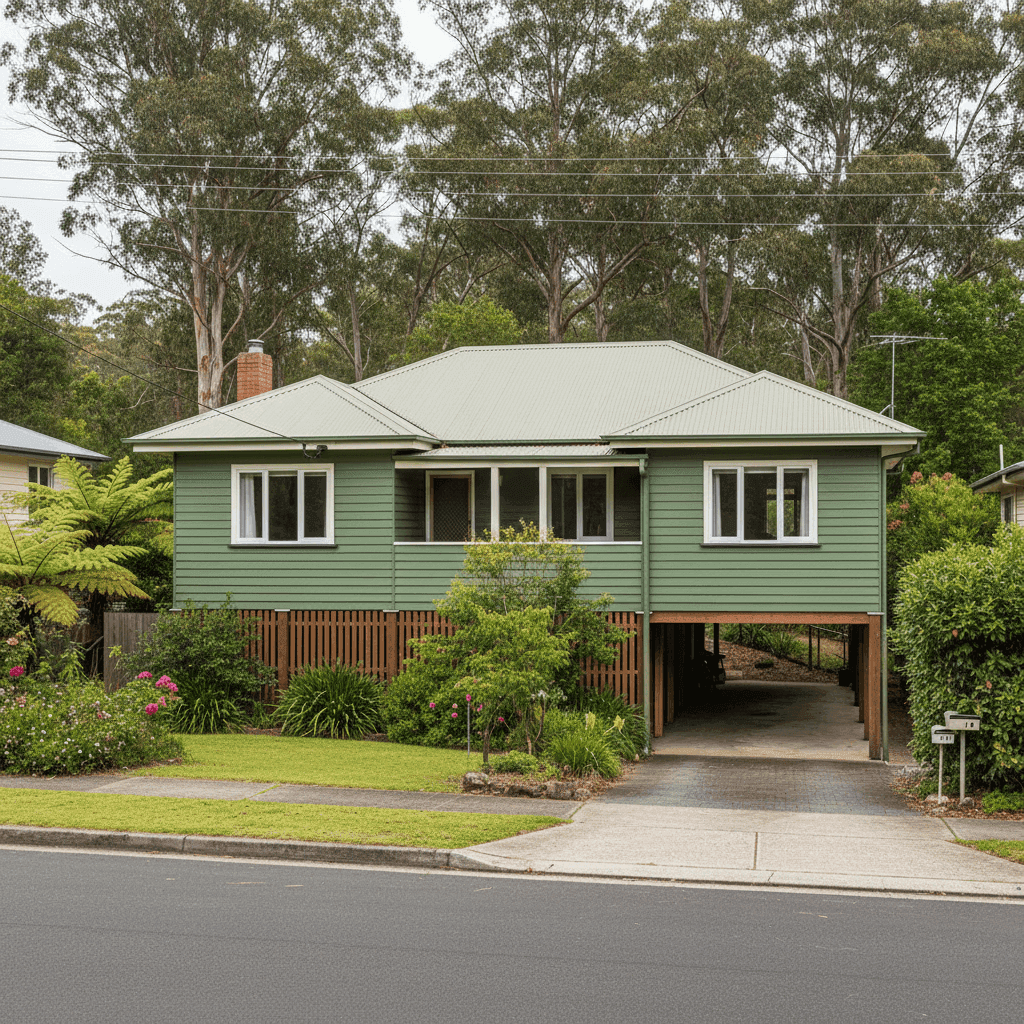
Nestled in the Yarra Ranges east of Melbourne, Don Valley is a quiet semi-rural suburb that attracts homeowners who love the tree-change lifestyle without straying too far from the city. But owning a free standing home in this part of Victoria comes with its own set of insurance considerations — from the age and construction style of local dwellings to the surrounding bushland environment. This article breaks down a real home and contents insurance quote for a 3-bedroom, 2-bathroom property in Don Valley (postcode 3139) and puts it in context with suburb, state, and national data.
---
Is This Quote Fair?
The quote in question comes in at $3,512 per year (or $362/month) for combined home and contents cover, with a building sum insured of $913,000 and contents valued at $248,000. The building excess is set at $3,000, with a separate $1,000 excess for contents claims.
Our price rating for this quote is FAIR — Around Average, and the data backs that up. The suburb average premium in Don Valley sits at $3,370/yr, meaning this quote is only about $142 above the local average — a modest difference of roughly 4%. It falls comfortably within the middle of the market range, well below the suburb's 75th percentile of $3,947/yr, and above the 25th percentile of $2,581/yr.
In other words, while you're not getting the cheapest deal on the street, you're also not being overcharged. For a property with above-average fittings, a 169 sqm footprint, and some characteristics that naturally push premiums higher (more on those below), landing near the suburb average is a reasonable outcome.
That said, "fair" doesn't mean you shouldn't shop around — there's still meaningful room to potentially save, particularly if you adjust your excess levels or compare across multiple insurers.
---
How Don Valley Compares
Understanding where your premium sits relative to broader benchmarks helps you make a more informed decision. Here's how this quote stacks up:
| Benchmark | Annual Premium |
|---|---|
| This Quote | $3,512 |
| Don Valley Suburb Average | $3,370 |
| Don Valley Suburb Median | $3,210 |
| Cardinia LGA Average | $3,089 |
| Victoria State Average | $3,000 |
| Victoria State Median | $2,718 |
| National Average | $5,347 |
| National Median | $2,764 |
A few things stand out here. First, Don Valley premiums are noticeably higher than the Victorian state average of $3,000/yr — reflecting the elevated risk profile of properties in the Yarra Ranges, where bushfire exposure and older housing stock play a role in pricing.
Second, the national average of $5,347/yr looks surprisingly high compared to both local and state figures. This is largely driven by premiums in high-risk regions like Far North Queensland and parts of Western Australia, where cyclone and flood risk push costs dramatically upward. The national median of $2,764/yr is a more representative figure for typical Australian homeowners, and this Don Valley quote sits above that — consistent with the suburb's risk characteristics.
You can explore more local data on the Don Valley suburb stats page, compare against the Victorian state overview, or see how the whole country stacks up on the national insurance stats page.
> Note: The suburb sample size for Don Valley is 14 quotes, which is a relatively small dataset. Averages may shift as more data comes in, so treat these figures as a useful guide rather than a definitive benchmark.
---
Property Features That Affect Your Premium
Several characteristics of this property have a direct influence on what insurers charge. Here's what's at play:
Weatherboard Timber Walls
Weatherboard construction is charming and common in older Victorian homes, but insurers view it as a higher risk than brick or rendered masonry. Timber is more susceptible to fire, rot, and pest damage, which typically results in higher premiums compared to brick-veneer equivalents.
Construction Era (1950)
A home built in 1950 is now over 70 years old. Older homes often have ageing plumbing, wiring, and structural elements that may not meet modern building standards. Insurers factor this in when calculating rebuild costs and the likelihood of claims.
Steel/Colorbond Roof
On the positive side, a Colorbond steel roof is generally viewed favourably by insurers. It's durable, fire-resistant, and low maintenance — which can help moderate premiums compared to older tile or corrugated iron roofing.
Elevated on Stumps
Being elevated by at least one metre on stumps is a defining feature of many older Australian homes. While it provides excellent underfloor ventilation and can reduce flood inundation risk in some scenarios, it also means the subfloor structure requires ongoing maintenance and can be a point of vulnerability in high-wind events.
Above-Average Fittings
With above-average fittings quality, the cost to repair or rebuild to the same standard is higher than a standard home. This is reflected in the $913,000 building sum insured — a figure that needs to keep pace with construction costs, not just market value.
No Pool, Solar, or Ducted Climate Control
The absence of a pool, solar panels, and ducted climate control keeps the risk profile simpler. These additions can increase both the sum insured and the complexity of a claim, so their absence likely has a modest moderating effect on the premium.
---
Tips for Homeowners in Don Valley
If you own or are insuring a property in Don Valley, here are some practical steps to make sure you're getting the right cover at the right price.
1. Review your building sum insured regularly Construction costs have risen significantly in recent years. A sum insured of $913,000 may be appropriate today, but it's worth reassessing annually — particularly for an older home with above-average fittings where rebuild costs can escalate quickly. Underinsurance is one of the most common and costly mistakes homeowners make.
2. Consider your excess strategy This quote carries a $3,000 building excess, which is on the higher side. A higher excess generally reduces your premium, but make sure you can comfortably cover that out of pocket if you need to make a claim. If cash flow is a concern, a lower excess with a slightly higher premium may be the smarter trade-off.
3. Maintain your weatherboard and subfloor Insurers may ask about the condition of your home at claim time. Keeping your weatherboard painted and sealed, and ensuring your stumps are in good condition, not only protects your home — it supports your claim if the worst happens. Some insurers may also offer better terms for well-maintained older homes.
4. Compare quotes before renewal With a "fair" rating, there's a real chance you could find a more competitive premium by shopping around. Loyalty doesn't always pay in insurance — many insurers offer better rates to new customers. Use a comparison tool like CoverClub to benchmark your renewal offer before you accept it.
---
Ready to Compare?
Whether you're reviewing an existing policy or insuring a new home in Don Valley, comparing quotes is the smartest first step. CoverClub makes it easy to see what the market looks like for your specific property — so you can make a confident, informed decision. Get a quote today and find out if you're paying a fair price.