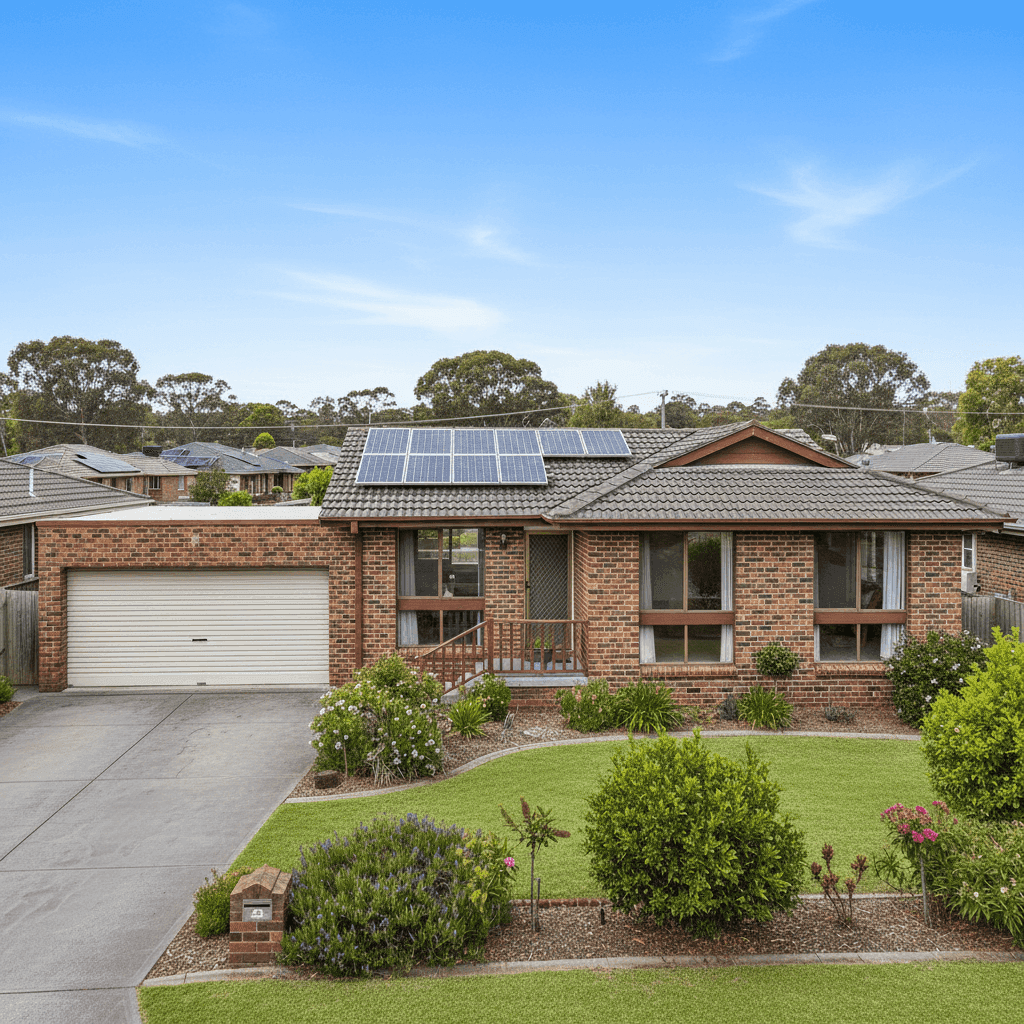
If you own a free standing home in Doonside, NSW 2767, you might be wondering whether you're paying a fair price for your home and contents insurance — or quietly overpaying year after year. This article breaks down a real insurance quote for a four-bedroom brick veneer home in the suburb, putting the numbers into context against local, state-wide, and national benchmarks.
---
Is This Quote Fair?
The short answer: yes — and then some.
This particular quote came in at $1,065 per year (or around $106 per month) for combined home and contents cover, with a building sum insured of $544,000 and contents valued at $100,000. Based on CoverClub's pricing data, this quote is rated CHEAP — meaning it sits well below the average for comparable properties in the area.
To put that in perspective, the suburb average premium in Doonside is $2,127 per year, and the median sits at $1,700. This quote is roughly half the suburb average, and it falls below even the 25th percentile of local quotes ($1,379/yr) — meaning fewer than one in four quotes in the area come in this low.
For a homeowner covering a substantial four-bedroom property with over $640,000 in combined insured value, that's a genuinely strong result.
---
How Doonside Compares
Understanding where Doonside sits in the broader insurance landscape helps explain why premiums here tend to be lower than the NSW and national averages.
| Benchmark | Annual Premium |
|---|---|
| This quote | $1,065 |
| Doonside suburb average | $2,127 |
| Doonside suburb median | $1,700 |
| LGA (Blacktown) average | $2,135 |
| NSW state average | $3,801 |
| NSW state median | $3,410 |
| National average | $2,965 |
| National median | $2,716 |
Doonside and the broader Blacktown LGA sit comfortably below both the NSW state average and the national average. NSW as a whole tends to run expensive — largely due to the diversity of risk profiles across the state, from flood-prone inland regions to coastal areas exposed to storm and erosion risk. Doonside, sitting in Sydney's western suburbs, benefits from a relatively stable risk environment: no cyclone designation, no coastal exposure, and generally manageable flood risk compared to other parts of Greater Sydney.
That said, the suburb average of $2,127 still reflects meaningful variation in what insurers charge. With 18 quotes sampled in the area, there's clearly a wide spread — the 75th percentile sits at $2,835 — so the insurer and policy details matter enormously.
---
Property Features That Affect Your Premium
Several characteristics of this property work in the homeowner's favour when it comes to pricing.
Brick veneer construction is well regarded by Australian insurers. It offers solid fire resistance and structural durability, which typically translates into lower premiums compared to weatherboard or lightweight cladding. Combined with a tiled roof, this home presents a low-risk profile from a materials standpoint — tiles are durable, fire-resistant, and widely understood by insurers.
The slab foundation is another positive. Slab-on-ground construction is common in Western Sydney and is generally considered stable and straightforward to assess for risk purposes.
Solar panels are worth noting. While they add value to the property and are increasingly common across Australian suburbs, they do introduce a minor consideration for insurers — panels can be damaged by hail or storms, and some policies may require specific cover for them. It's worth confirming with your insurer that your solar system is included in the building sum insured.
Ducted climate control is another feature that adds to the replacement value of the home. At 214 sqm, this is a well-appointed four-bedroom, two-bathroom property, and the $544,000 building sum insured reflects a reasonable estimate of rebuild cost for a home of this size and specification in the current construction cost environment.
The absence of a swimming pool keeps things simpler — pools can add complexity to both liability considerations and premium calculations.
Built in 1989, the home is old enough that some wear-and-tear on systems like plumbing and electrical may be factored into risk assessments, though brick veneer homes of this era have generally aged well across Western Sydney.
---
Tips for Homeowners in Doonside
1. Review your building sum insured regularly Construction costs in Australia have risen significantly over the past few years. A sum insured that was adequate two years ago may now fall short of what it would actually cost to rebuild your home. Use a rebuild cost calculator or speak with a quantity surveyor to make sure $544,000 still reflects current rates for your area and construction type.
2. Confirm solar panel coverage If your policy doesn't explicitly cover your solar panels under the building sum insured, you could be left out of pocket after a hail event or storm. Ask your insurer directly whether panels, inverters, and mounting hardware are all included.
3. Don't set and forget Even if your current premium is competitive, it pays to compare at renewal. Insurers regularly adjust their pricing models, and a quote that's cheap today may creep up over successive renewals. Shopping around every year or two is one of the easiest ways to keep your premium in check.
4. Consider your excess settings carefully This quote carries a $3,000 building excess and a $1,000 contents excess. Higher excesses generally reduce premiums, but make sure you're genuinely comfortable meeting those costs in the event of a claim. If $3,000 would be a stretch, it may be worth adjusting your excess and accepting a slightly higher premium for greater peace of mind.
---
Ready to Compare?
Whether you're a Doonside local or simply researching home insurance options in Western Sydney, comparing quotes is the single most effective way to make sure you're not overpaying. Get a quote through CoverClub and see how your property stacks up against the market — it takes just a few minutes and could save you hundreds every year.
For more local data, visit the Doonside suburb insurance stats page or explore NSW-wide home insurance benchmarks.