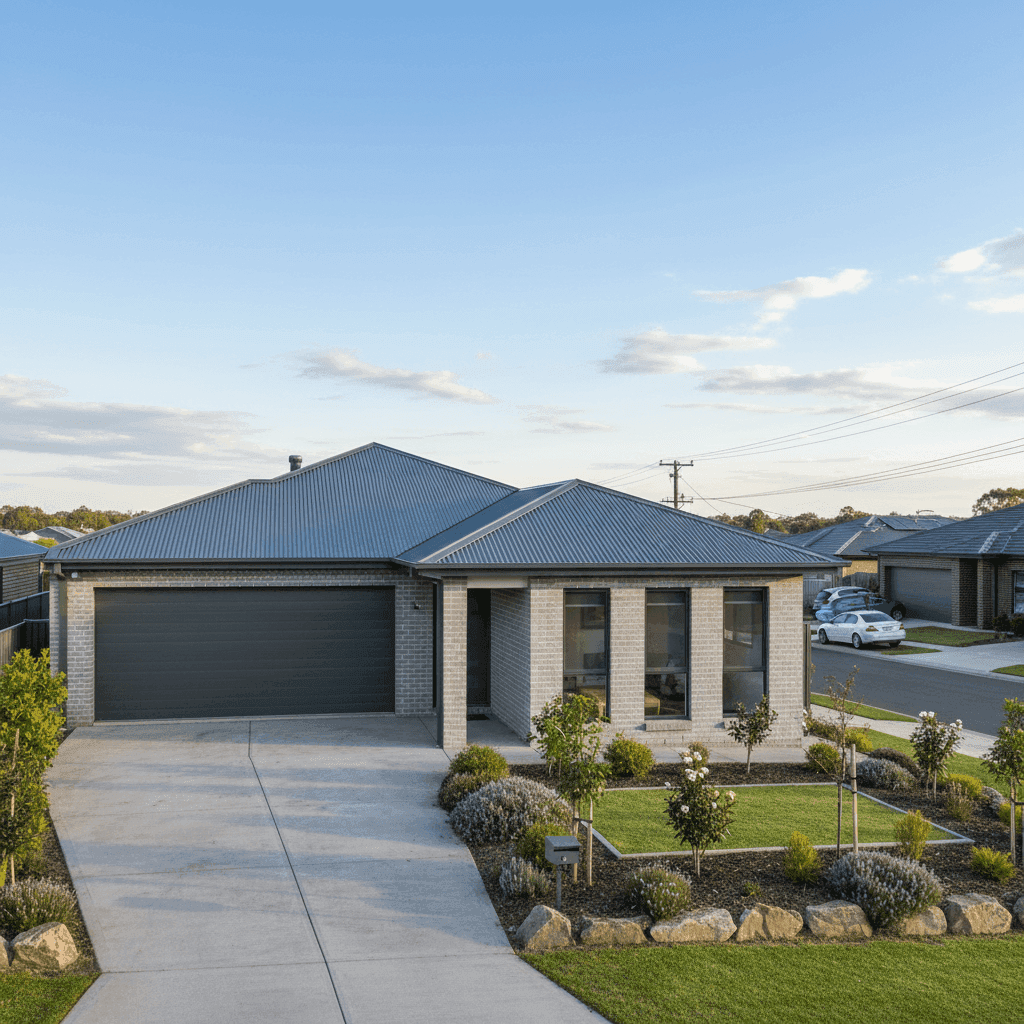
If you own a free standing home in Dora Creek, NSW 2264, you're likely no stranger to the beauty of lakeside living on the Central Coast fringe — but that lifestyle comes with its own set of insurance considerations. This article breaks down a real building-only insurance quote for a three-bedroom, two-bathroom home in the area, benchmarks it against local, state, and national data, and offers practical guidance for getting the best value on your cover.
---
Is This Quote Fair?
The quote in question comes in at $3,573 per year (or $336 per month) for building-only cover, with a sum insured of $546,000 and a building excess of $2,000.
Our price rating for this quote is EXPENSIVE — above average for the Dora Creek area.
To understand why, it helps to look at where this figure sits relative to what other homeowners in the same suburb are paying. The suburb median premium for Dora Creek is $2,405 per year, meaning this quote is roughly $1,168 above the midpoint of the local market. Even the 75th percentile — the upper end of what most locals pay — sits at $3,003 per year, which is still comfortably below this quote.
That said, context matters. The quote isn't wildly out of step with the suburb average of $3,606 per year (based on 13 quotes in the area), which suggests there is meaningful variation in premiums across Dora Creek — likely driven by differences in sum insured, insurer selection, and individual property risk profiles. This quote is priced close to the average but well above the median, which tells us the market here has some high-end outliers pulling the average up.
The bottom line: while this premium isn't the most expensive in the suburb, there's a reasonable chance a comparable policy could be found at a lower price point.
---
How Dora Creek Compares
Zooming out to a broader picture, Dora Creek homeowners are actually paying considerably less than many others across New South Wales and the country as a whole.
| Benchmark | Average Premium | Median Premium |
|---|---|---|
| Dora Creek (suburb) | $3,606/yr | $2,405/yr |
| NSW (state) | $9,528/yr | $3,770/yr |
| National | $5,347/yr | $2,764/yr |
| Lake Macquarie LGA | $11,064/yr | — |
The NSW state average of $9,528 is dramatically higher than local suburb figures — though this is heavily skewed by high-risk and high-value properties across the state, particularly in flood-prone or bushfire-exposed regions. The NSW state median of $3,770 is a more useful comparison point, and it actually sits above this quote, suggesting Dora Creek is relatively affordable compared to much of the state.
Nationally, the median premium of $2,764 is close to the Dora Creek suburb median, reinforcing that this area sits broadly in line with the national norm — though this particular quote is priced above both.
Notably, the Lake Macquarie LGA average of $11,064 is extraordinarily high, suggesting significant risk variation within the broader local government area. Dora Creek's more modest premiums may reflect its specific geographic position within the LGA. You can explore more localised data on the Dora Creek suburb stats page.
---
Property Features That Affect Your Premium
Several characteristics of this property will influence how insurers price the risk:
Construction year (2022): A newly built home is a significant advantage. Modern construction must comply with current Australian building codes, which means better structural integrity, improved fire resistance, and up-to-date electrical and plumbing systems. Insurers generally view newer builds as lower risk, which can work in your favour at renewal time.
Brick veneer walls: Brick veneer is one of the more common — and well-regarded — wall materials from an insurance perspective. It offers solid fire resistance and durability compared to lightweight cladding options, and many insurers price it favourably as a result.
Steel/Colorbond roof: Colorbond roofing is widely used across Australia and is generally considered a low-maintenance, weather-resilient choice. It performs well in high-wind events and is non-combustible, both of which can positively influence your premium.
Slab foundation: A concrete slab is a stable, low-risk foundation type. Unlike homes on stumps or piers, slab foundations have fewer vulnerability points and are generally viewed favourably by underwriters.
Timber/laminate flooring: While not a major pricing driver for building-only cover, the presence of timber or laminate flooring does contribute to the overall replacement cost estimate — which flows through to the sum insured figure.
Ducted climate control: The inclusion of ducted air conditioning is worth noting. This system is typically included in a building sum insured calculation and can add meaningfully to the total rebuild cost. Ensuring your sum insured accurately reflects this is important to avoid underinsurance.
No pool, no solar panels: The absence of a pool removes one source of liability and structural complexity. Similarly, no solar panels means one less system to factor into the rebuild cost or potential damage scenario.
---
Tips for Homeowners in Dora Creek
1. Shop around — seriously. With the suburb median sitting at $2,405 and this quote priced at $3,573, there's a meaningful gap worth investigating. Insurers price risk differently, and a like-for-like policy from a different provider could save you over $1,000 annually. Use a comparison platform like CoverClub to get multiple quotes side by side.
2. Review your sum insured carefully. At $546,000 for a 153 sqm home built in 2022, the sum insured appears reasonable — but building costs have risen sharply in recent years. Make sure your figure reflects current construction costs in the Hunter/Central Coast region, including site clearance, architect fees, and the ducted climate control system. Underinsurance is one of the most common — and costly — mistakes homeowners make.
3. Consider your excess strategically. This policy carries a $2,000 building excess. Opting for a higher excess is one of the simplest ways to reduce your annual premium. If you have the financial buffer to absorb a larger out-of-pocket cost in the event of a claim, increasing your excess to $2,500 or $3,000 could deliver noticeable savings.
4. Ask about loyalty discounts and bundling. If you've been with the same insurer for several years, ask whether a loyalty discount is available — many providers offer these but don't advertise them widely. Equally, if you have contents to insure in future, bundling building and contents cover with the same provider often unlocks a combined discount.
---
Compare Your Options with CoverClub
Whether you're renewing your policy or shopping for the first time, it pays to compare. CoverClub makes it easy to benchmark your home insurance quote against real data from your suburb, your state, and across Australia. Get a quote today and find out whether you're paying a fair price — or leaving money on the table.