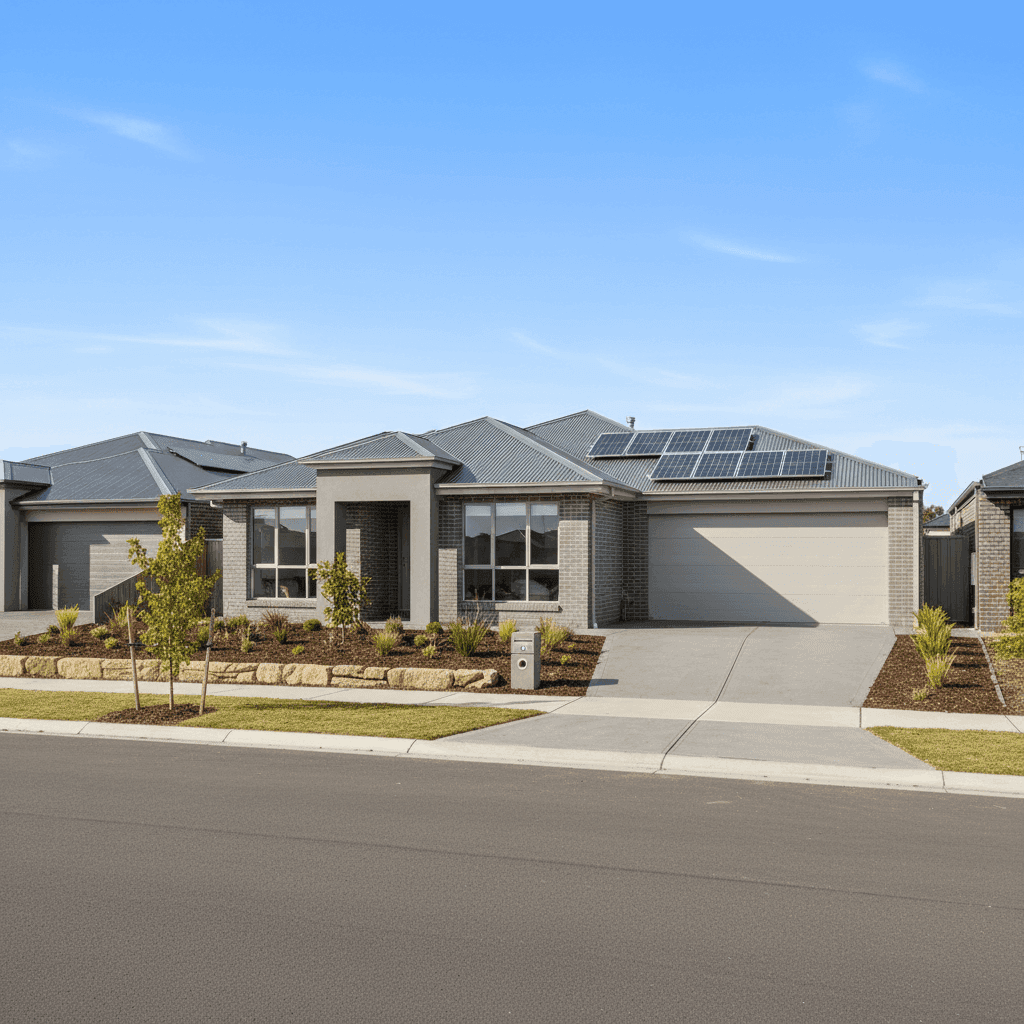
If you own a four-bedroom free standing home in Doreen, VIC 3754, you're probably wondering whether the home insurance quote sitting in your inbox is actually worth accepting — or whether you could be paying less. This article breaks down a real quote for a property in this northern Melbourne suburb, benchmarks it against local, state, and national data, and gives you practical tips for keeping your premiums in check.
---
Is This Quote Fair?
The quote in question is $1,426 per year (or around $139/month) for combined home and contents cover, with a building sum insured of $805,000 and contents valued at $170,000. The building excess sits at $2,000, and the contents excess at $1,000.
Our rating for this quote is FAIR — Around Average.
For Doreen specifically, the suburb average premium is $1,845/year, and the median sits at $1,769/year. This quote comes in well below both of those figures, and it also sits just above the 25th percentile of $1,385/year — meaning roughly three-quarters of comparable quotes in the area cost more. That's a reasonably competitive result.
That said, "fair" doesn't mean "the best available." There's always room to compare, and the spread between the 25th percentile ($1,385/yr) and the 75th percentile ($2,224/yr) in Doreen is significant — nearly $840 per year. That kind of range tells you the insurance market for this suburb is competitive, and shopping around could yield meaningful savings.
---
How Doreen Compares
To put this quote in proper context, it helps to zoom out and look at the broader picture. Here's how Doreen stacks up against Victorian and national benchmarks:
| Benchmark | Average Premium | Median Premium |
|---|---|---|
| Doreen (3754) | $1,845/yr | $1,769/yr |
| Victoria | $2,921/yr | $2,694/yr |
| National | $2,965/yr | $2,716/yr |
| Nillumbik LGA | $4,494/yr | — |
The numbers tell an interesting story. Doreen's average premium is notably lower than both the Victorian and national averages — roughly 37% cheaper than the state average and 38% cheaper than the national figure. This is somewhat surprising given that Doreen sits within the Nillumbik LGA, which carries an average premium of $4,494/year — more than double the suburb average.
This disparity likely reflects the fact that Doreen's newer housing stock and urban-fringe character differ significantly from the more bushfire-exposed areas deeper within Nillumbik (such as Eltham North or Research). Doreen is a predominantly modern residential suburb, which tends to attract more favourable underwriting outcomes.
The quote of $1,426/year sits 51% below the Victorian average and 52% below the national average — a strong result by any measure, even if it's only rated "fair" at the local suburb level.
---
Property Features That Affect Your Premium
Several characteristics of this property influence how insurers price the risk. Here's what stands out:
Brick Veneer Walls & Colorbond Roof This combination is one of the most common — and insurer-friendly — construction types in suburban Australia. Brick veneer offers solid fire resistance, while steel/Colorbond roofing is durable, lightweight, and performs well in storms. Both materials are well understood by insurers and tend to attract standard (rather than loaded) premiums.
Slab Foundation A concrete slab foundation is generally considered low-risk from an insurance perspective. There's no subfloor cavity to worry about, and slab construction is typical of homes built in the 2000s across Melbourne's growth corridors.
Built in 2009 At around 15–16 years old, this home is in a sweet spot for insurers — modern enough to meet contemporary building codes (including improved bushfire and energy standards introduced in the early 2000s), but not so new that replacement costs are at a premium. Homes of this era also tend to have fewer maintenance-related claims than older properties.
Solar Panels Solar panels are increasingly common on Australian homes, but they do add a layer of complexity for insurers. Panels can be damaged by hail, high winds, or falling debris, and they need to be included in the building sum insured. It's worth confirming with your insurer that your panels are explicitly covered under the policy — not all standard policies include them automatically.
Ducted Climate Control Ducted heating and cooling systems are a significant fixed asset and should be factored into your building sum insured. These systems can be expensive to repair or replace, and they're typically considered part of the building (not contents) for insurance purposes.
Above-Average Fittings With above-average quality fittings throughout, the $805,000 building sum insured reflects the higher cost of like-for-like replacement. This is important — underinsurance is a genuine risk in Australia, and homes with quality finishes cost more to rebuild than their standard counterparts.
---
Tips for Homeowners in Doreen
1. Review your building sum insured regularly Construction costs have risen sharply in recent years. A sum insured that was accurate two years ago may no longer reflect the true cost of rebuilding your home today. Use a building cost calculator or speak with a quantity surveyor to make sure your $805,000 figure keeps pace with current labour and material costs.
2. Confirm solar panel coverage in writing Ask your insurer to confirm — in writing — that your solar system (panels, inverter, and associated wiring) is covered under your building policy. Some policies treat panels as an optional extra, and you don't want to discover a gap in cover after a hailstorm.
3. Consider your excess strategy This policy carries a $2,000 building excess and a $1,000 contents excess. Opting for a higher excess is a common way to reduce premiums, but make sure the excess is an amount you could genuinely afford to pay at short notice. If $2,000 would be a stretch, it may be worth paying a slightly higher premium for a lower excess.
4. Shop around at renewal time Even a "fair" quote can become an expensive one if you simply auto-renew year after year. Insurers often offer better rates to new customers than to existing ones. Set a reminder to compare quotes a few weeks before your renewal date — you may find a meaningfully better deal without sacrificing cover quality.
---
Compare Your Home Insurance Today
Whether you're happy with your current quote or looking for something better, CoverClub makes it easy to see how your premium stacks up. Get a home insurance quote at CoverClub and compare your options side by side — it only takes a few minutes, and the savings can be well worth it. You can also explore detailed Doreen suburb insurance statistics or browse Victoria-wide data to better understand what your neighbours are paying.