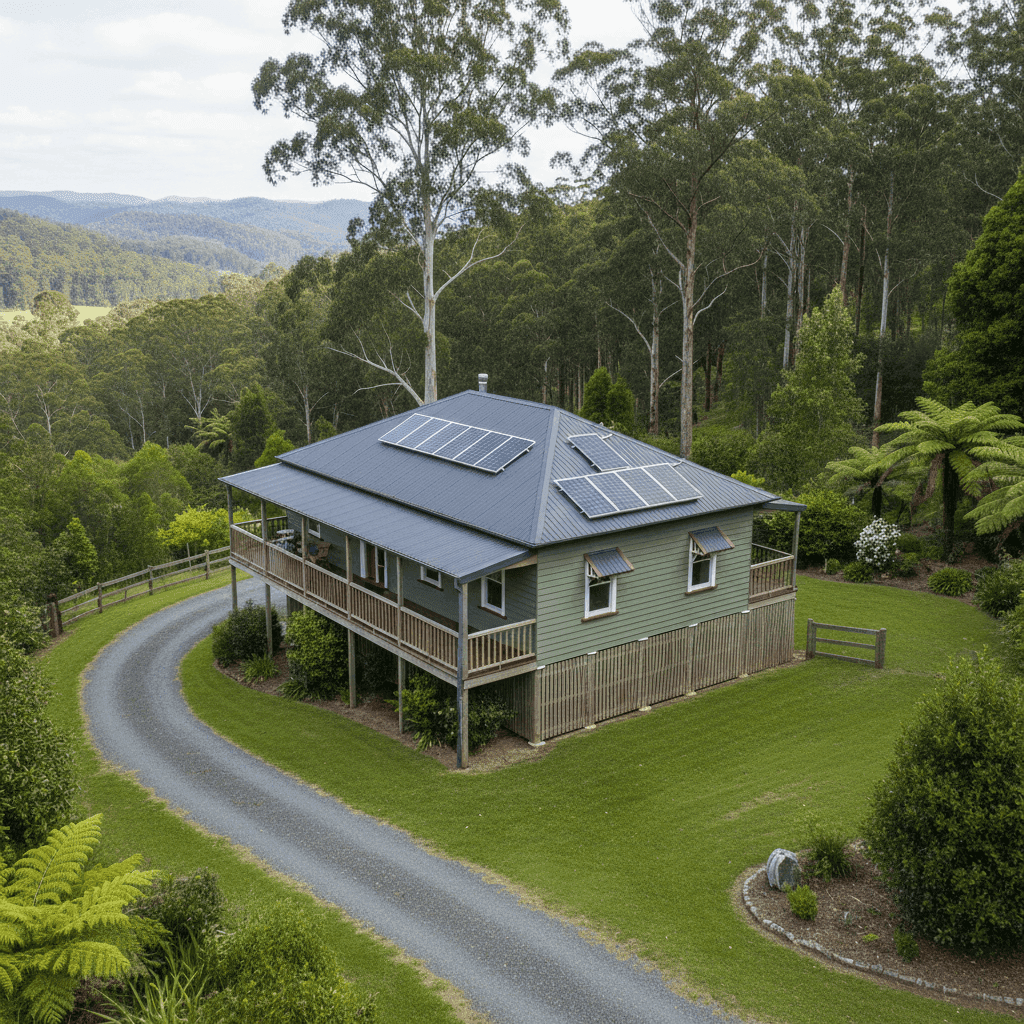
If you own a free standing home in Dorrigo, NSW 2453, you already know this part of the New South Wales Mid North Coast hinterland comes with a distinct character — lush rainforest surrounds, cool-climate weather, and a tight-knit community perched on the escarpment above the Coffs Coast. What you might not know is exactly how much you should be paying to insure it. This article breaks down a real home and contents insurance quote for a 3-bedroom, 1-bathroom free standing home in Dorrigo and puts it in context against local, state, and national benchmarks.
---
Is This Quote Fair?
The quote in question comes in at $3,159 per year (or roughly $296 per month) for combined home and contents cover, with a building sum insured of $674,000 and contents covered to $75,000. Both the building and contents excess sit at $5,000.
Our pricing engine rates this quote as CHEAP — below the suburb average — which is genuinely good news for the homeowner. Based on a sample of 14 quotes collected for the Dorrigo 2453 postcode, the suburb average sits at $3,605/yr and the median at $3,481/yr. This quote lands below both figures, and also comes in just under the suburb's 25th percentile of $3,173/yr — meaning it's among the more competitive prices available in the area.
In short: if you're paying around this amount for comparable cover in Dorrigo, you're doing better than most of your neighbours.
---
How Dorrigo Compares
To put things in perspective, it helps to zoom out and look at Dorrigo's suburb insurance statistics alongside broader benchmarks.
| Benchmark | Annual Premium |
|---|---|
| This quote | $3,159 |
| Dorrigo suburb average | $3,605 |
| Dorrigo suburb median | $3,481 |
| LGA average (Coffs Harbour) | $3,228 |
| NSW average | $9,528 |
| NSW median | $3,770 |
| National average | $5,347 |
| National median | $2,764 |
A few things stand out here. First, the NSW state average of $9,528/yr looks alarming — but averages can be heavily skewed by high-risk coastal and flood-prone postcodes across the state. The NSW median of $3,770/yr is a far more representative figure, and this Dorrigo quote sits comfortably below it.
At the national level, the picture is similar. The national average of $5,347/yr is inflated by high-premium regions in Queensland and Northern Australia, while the national median of $2,764/yr is somewhat lower than this quote — reflecting that many Australian homes carry lower rebuild values or fewer risk factors.
Overall, a Dorrigo homeowner paying $3,159/yr for this level of cover is in a solid position relative to both state and national peers.
---
Property Features That Affect Your Premium
Several characteristics of this property have a meaningful influence on what insurers charge. Here's how the key features stack up:
Weatherboard Timber Walls
Weatherboard construction is extremely common in older Australian homes, and this 1930-built property is a classic example. Timber-clad homes are generally considered higher risk by insurers compared to brick veneer or double-brick construction, primarily because of fire susceptibility and the cost of sourcing and fitting period-appropriate materials during a claim. This likely nudges the premium upward slightly.
Steel / Colorbond Roof
On the flip side, a Colorbond steel roof is viewed favourably by most insurers. It's durable, fire-resistant, and performs well in high-wind events — all of which can help keep premiums in check compared to older roofing materials like terracotta tiles or, particularly, asbestos-containing materials sometimes found on homes of this era.
Elevated on Stumps
The home sits on stumps and is elevated by less than 1 metre. Stump foundations are characteristic of the region and era, and while they can introduce some underfloor vulnerability, the sub-1m elevation means the property doesn't attract the same flood-risk loading that more significantly elevated homes in genuinely flood-prone areas might. Insurers generally treat this as a neutral-to-mild risk factor.
Construction Year: 1930
Age matters in insurance. A home built in 1930 carries a higher likelihood of containing materials or systems that are expensive to replace or repair — think intricate timber joinery, older electrical wiring, or non-standard wall cavities. Insurers typically apply age-related loadings to pre-war homes, so this will be contributing to the premium to some degree.
Solar Panels
Solar panels add replacement value to the property and introduce a modest electrical risk factor. Most standard home insurance policies in Australia cover rooftop solar as part of the building, but it's worth confirming this is explicitly included in any policy you hold or consider.
Ducted Climate Control
A ducted climate control system is a higher-value fitting compared to split-system air conditioning, and its inclusion will have contributed to the $674,000 building sum insured. Ensuring this system is accurately reflected in your sum insured is important to avoid being underinsured.
---
Tips for Homeowners in Dorrigo
1. Review Your Sum Insured Annually
Building costs across regional NSW have risen significantly in recent years. With a 1930s weatherboard home, the cost to rebuild using quality materials that match the original character can be substantial. Review your $674,000 sum insured each year — ideally using an independent building cost calculator — to ensure it keeps pace with current construction rates.
2. Ask About Timber and Heritage Loadings
Some insurers apply specific loadings for pre-war or heritage-style timber homes. When comparing quotes, ask each insurer directly whether they apply such loadings and what their claims process looks like for older properties. The cheapest premium isn't always the best value if the claims experience is poor.
3. Consider Your Excess Carefully
Both the building and contents excess on this policy sit at $5,000 — a relatively high figure. A higher excess typically reduces your premium, but it means you'll need to fund the first $5,000 of any claim yourself. If a $5,000 out-of-pocket cost in the event of a claim would be a financial strain, it may be worth comparing quotes with a lower excess to find the right balance.
4. Don't Overlook Contents Cover
At $75,000, the contents cover here is moderate. If you've made significant purchases — furniture, appliances, musical instruments, tools — or if you're working from home and have business equipment on the premises, it's worth doing a proper contents audit. Underinsurance on contents is one of the most common issues homeowners face at claim time.
---
Compare Your Options with CoverClub
Whether you're renewing your existing policy or shopping around for the first time, comparing quotes is the single most effective way to make sure you're not overpaying. Get a home insurance quote through CoverClub and see how your premium stacks up against the market — it takes just a few minutes and could save you hundreds of dollars a year.