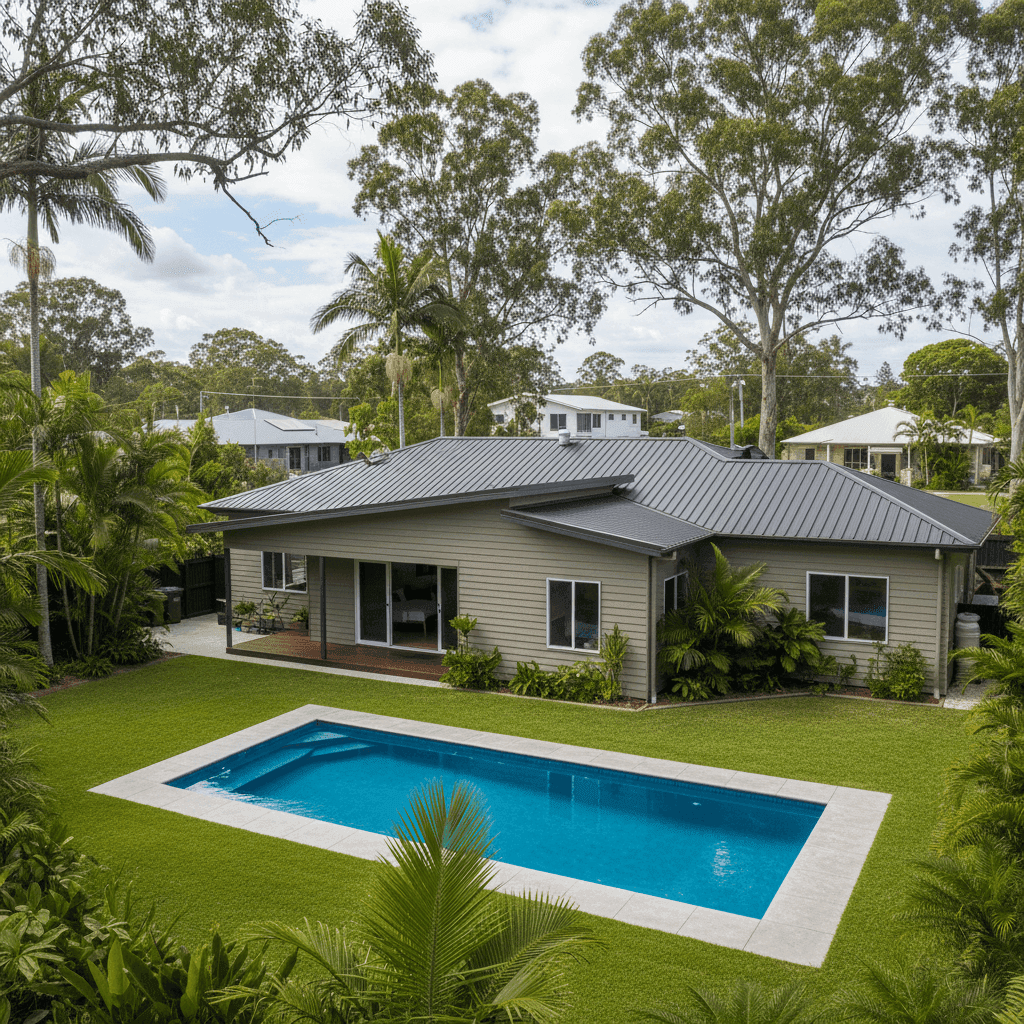
If you own a free standing home in Draper, QLD 4520, you're likely already aware that home insurance is one of those non-negotiable costs of property ownership — but that doesn't mean you should pay more than you need to. This article breaks down a real home and contents insurance quote for a four-bedroom property in Draper, compares it against suburb, state, and national benchmarks, and offers practical tips to help you make the most of your cover.
---
Is This Quote Fair?
The quote in question comes in at $3,678 per year (or $346 per month) for combined home and contents insurance, covering a building sum insured of $1,005,000 and contents valued at $115,000. Both the building and contents excess are set at $2,000.
Based on our pricing data, this quote is rated CHEAP — below the suburb average for Draper. That's genuinely good news for the homeowner. The local suburb average sits at $4,423 per year, meaning this quote is roughly $745 cheaper annually than what most Draper residents are paying. Compared to the suburb median of $4,805, the saving is even more pronounced — over $1,100 per year.
It's worth noting that the excess of $2,000 on both building and contents is on the higher end. A higher excess typically reduces your annual premium, so part of the reason this quote looks attractive is that the policyholder is accepting more out-of-pocket cost in the event of a claim. That's a reasonable trade-off for many homeowners — particularly those who are financially comfortable absorbing a moderate claim themselves — but it's something to factor into your overall assessment of value.
---
How Draper Compares
To put this quote in proper context, it helps to zoom out and look at the broader pricing landscape. Here's how Draper stacks up:
| Benchmark | Annual Premium |
|---|---|
| This Quote | $3,678 |
| Draper Suburb Average | $4,423 |
| Draper Suburb Median | $4,805 |
| Draper 25th Percentile | $3,862 |
| Draper 75th Percentile | $4,938 |
| QLD State Average | $9,129 |
| QLD State Median | $3,903 |
| National Average | $5,347 |
| National Median | $2,764 |
| Brisbane LGA Average | $16,277 |
Note: Suburb data is based on a sample of 12 quotes — a useful guide, though a relatively small sample.
A few things stand out here. First, this quote actually sits below the Draper 25th percentile of $3,862, meaning it's cheaper than at least three-quarters of comparable quotes in the suburb. That's a strong result.
Second, the QLD state average of $9,129 looks alarmingly high — but this is heavily skewed by high-risk areas in regional and northern Queensland, where cyclone exposure, flood zones, and remote locations push premiums into the stratosphere. The QLD median of $3,903 is a far more representative figure for southeast Queensland suburbs like Draper, and this quote comes in just below that too.
Against the national average of $5,347, the Draper quote looks competitive. The national median of $2,764 is lower, but that reflects the large number of lower-risk, lower-value properties across Australia that bring the midpoint down.
For more localised data, you can explore Draper's suburb insurance stats to see how quotes in your area are trending.
---
Property Features That Affect Your Premium
Every property is different, and insurers assess a wide range of factors when calculating your premium. Here's how the key characteristics of this Draper home are likely influencing its price:
Weatherboard timber walls are generally considered a moderate-to-higher risk construction type by insurers. Timber is more susceptible to fire and pest damage than brick or rendered masonry, which can push premiums slightly higher. That said, many Australian homes — particularly those built before the 2000s and in leafy suburban areas — feature weatherboard construction, and insurers price it accordingly.
Steel/Colorbond roofing is viewed favourably by most insurers. It's durable, low-maintenance, and performs well in storms and heavy rain. Compared to terracotta or concrete tiles, Colorbond roofs are less likely to crack or shift under weather stress, which can contribute to a more competitive premium.
Slab foundation is the standard for homes built in this era and is generally considered stable and low-risk from an insurance perspective — particularly in a non-cyclone zone like Draper.
Timber and laminate flooring can be a factor in contents and building claims, particularly in flood or water damage scenarios, but it's unlikely to be a major premium driver on its own.
The swimming pool adds some liability exposure to the policy — pools are a consideration for public liability cover included in most home insurance policies. However, pools are common in southeast Queensland and are a routine inclusion.
Ducted climate control adds to the overall replacement value of the home, which is reflected in the $1,005,000 building sum insured. Ensuring your sum insured accurately reflects full rebuild costs — including features like ducted air conditioning — is essential to avoid being underinsured.
The property is not in a cyclone risk area, which is a significant premium advantage. Cyclone-rated properties in northern Queensland can face premiums several times higher than those in the southeast.
---
Tips for Homeowners in Draper
1. Review your sum insured annually Building costs in southeast Queensland have risen significantly in recent years. A sum insured of $1,005,000 for a 214 sqm home built in 2004 with standard fittings appears reasonable, but construction costs fluctuate. Use a building calculator or speak to a quantity surveyor to confirm your figure is current — being underinsured at claim time can be a costly mistake.
2. Consider whether your excess is right for you The $2,000 excess on both building and contents is contributing to the lower premium here. If you'd prefer a lower out-of-pocket cost in the event of a claim, ask your insurer what the premium looks like with a $500 or $1,000 excess. The difference in annual cost might be less than you expect.
3. Don't overlook contents coverage A contents value of $115,000 for a four-bedroom, three-bathroom home is worth scrutinising. Walk through each room and tally up the replacement value of furniture, appliances, electronics, clothing, and valuables. It's easy to underestimate — especially in larger homes — and contents underinsurance is surprisingly common.
4. Compare quotes at renewal Even if you're happy with your current insurer, it pays to shop around every year. Insurers regularly adjust their pricing models, and a quote that was competitive last year may not be the best available today. Use a comparison tool to benchmark your renewal offer before you commit.
---
Ready to Compare?
Whether you're reviewing an existing policy or shopping for the first time, comparing quotes is the single most effective way to ensure you're getting fair value. Get a home insurance quote at CoverClub and see how your premium stacks up against real data from your suburb and beyond.