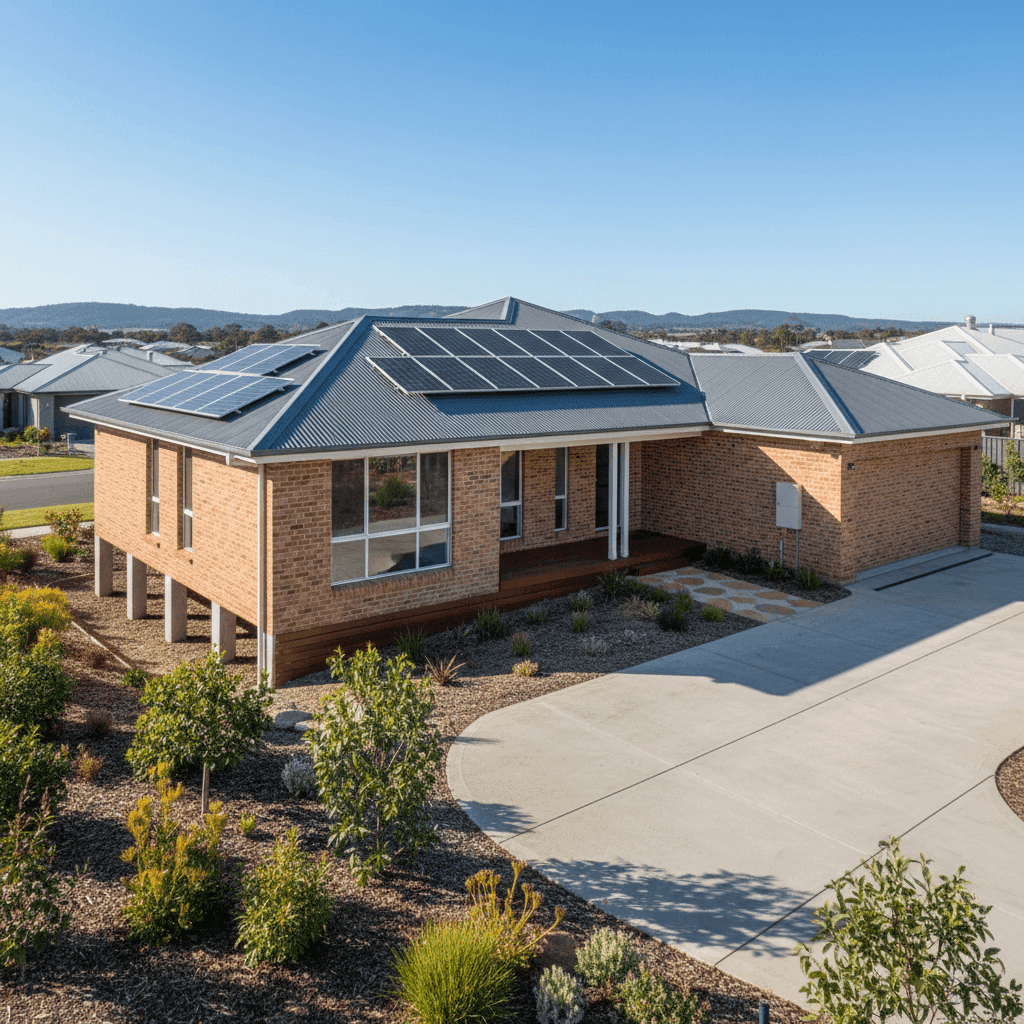
Getting a handle on what you should be paying for home insurance in regional New South Wales can be tricky — premiums vary enormously depending on where you live, what your home is made of, and which insurer you approach. This article breaks down a real home and contents insurance quote for a four-bedroom, two-bathroom free standing home in Dripstone, NSW 2820, examining how it stacks up against local, state and national benchmarks. Whether you own a similar property or are simply curious about what insurance costs in this part of the Dubbo region, read on for a thorough analysis.
---
Is This Quote Fair?
The short answer: yes — and then some. The quote in question comes in at $3,134 per year (or $306 per month) for combined home and contents cover, with a building sum insured of $1,001,000 and contents valued at $150,000. CoverClub's pricing engine rates this as CHEAP — meaning it sits well below average for the area.
To put that in perspective, the suburb average premium for Dripstone sits at $4,506 per year, and the median is $4,233. This quote lands below even the 25th percentile for the suburb ($3,308), meaning it's cheaper than at least 75% of comparable quotes collected in the area. That's a genuinely strong result.
The building excess is $2,000 and the contents excess $1,000 — slightly higher than some policies, but a reasonable trade-off if it's contributing to the lower annual premium. For homeowners who rarely claim, a higher excess in exchange for a lower ongoing cost is often the smarter financial move.
---
How Dripstone Compares
Understanding where Dripstone sits in the broader insurance landscape helps frame just how competitive — or otherwise — premiums in this suburb tend to be. Here's how the numbers line up:
| Benchmark | Average Premium | Median Premium |
|---|---|---|
| Dripstone (NSW 2820) | $4,506/yr | $4,233/yr |
| NSW State | $3,801/yr | $3,410/yr |
| National | $2,965/yr | $2,716/yr |
| Dubbo LGA | $2,170/yr | — |
A few things stand out here. First, Dripstone premiums run notably higher than both the NSW state average and the national average — the suburb average of $4,506 is about 19% above the NSW figure and over 50% above the national median. This likely reflects a combination of factors including local weather risk, property values, and the relatively small sample size of 14 quotes collected for this suburb.
Interestingly, the broader Dubbo LGA average of $2,170 is considerably lower than the Dripstone suburb figure, which suggests there may be meaningful variation within the LGA depending on the specific street, elevation, or property characteristics. It's worth noting that the Dripstone sample size is small (14 quotes), so these averages should be interpreted with some caution — a few high-value properties can skew the numbers.
Explore the full data on the Dripstone suburb stats page, the NSW state overview, or the national insurance stats to dig deeper into the comparisons.
---
Property Features That Affect Your Premium
Insurance underwriters assess risk property by property, and the characteristics of this home play a meaningful role in determining where the premium lands.
Brick veneer construction is generally viewed favourably by insurers. It offers solid fire resistance and durability compared to weatherboard or clad alternatives, which can translate to more competitive premiums. Paired with a Colorbond steel roof, the home benefits from materials that are both resilient and low-maintenance — steel roofing is resistant to fire, rot and pests, all of which matter when an insurer is calculating risk.
The home is built on stumps (stump foundations), which is common for homes of this era in regional NSW. Elevated foundations can actually be advantageous in areas prone to minor surface flooding, as water is less likely to penetrate the living space. The property is noted as being elevated by less than one metre, which provides some natural drainage benefit without the additional complexity of a full Queenslander-style high-set design.
Timber and laminate flooring is worth noting from a contents and building perspective. Timber floors can be costly to repair or replace if water damage occurs, which is something to confirm is adequately covered under your policy — particularly for events like burst pipes or storm ingress.
The home's above-average fittings quality is a factor that pushes the sum insured higher. Higher-quality kitchens, bathrooms and fixtures cost more to replace, and the $1,001,000 building sum insured reflects this. Getting the sum insured right is critical — underinsurance is one of the most common (and costly) mistakes homeowners make.
Solar panels are present on this property. It's essential to confirm with your insurer that rooftop solar is explicitly covered under the building policy, as some policies treat panels as a separate item or impose sub-limits. With solar systems often worth $8,000–$15,000 or more, this is not a detail to overlook.
Finally, ducted climate control adds to the replacement value of the home and should be captured in the building sum insured. Systems like these are expensive to replace and are sometimes undervalued when homeowners estimate their rebuild costs.
---
Tips for Homeowners in Dripstone
1. Review your sum insured annually Building costs have risen significantly across regional NSW in recent years. A sum insured that was accurate in 2020 may no longer reflect current rebuild costs. Use a professional building cost estimator or ask your insurer to run an updated calculation — being underinsured at claim time can leave you thousands of dollars out of pocket.
2. Confirm solar panel coverage explicitly Don't assume your solar system is covered. Ask your insurer directly whether panels are included under the building definition, what sub-limits apply, and whether accidental damage (such as hail impact) is covered. This is especially relevant given the investment involved.
3. Consider your excess strategically This quote carries a $2,000 building excess and $1,000 contents excess. If you have a solid emergency fund and have not made a claim in several years, maintaining a higher excess in exchange for a lower premium is a financially sound approach. However, if you'd struggle to cover a $2,000 outlay in an emergency, a lower excess — even at a higher premium — may be worth it.
4. Compare quotes at renewal, every time The insurance market shifts year to year, and loyalty doesn't always pay. Even if your current premium is already rated as cheap, running a comparison at renewal takes minutes and could reveal an even better deal — or confirm you're already on the best available rate.
---
Compare Home Insurance Quotes in Dripstone
Whether you're renewing an existing policy or insuring a property for the first time, CoverClub makes it easy to see how your quote compares to real data from your suburb and beyond. Get a quote today and find out if you're paying a fair price — or if there's a better deal waiting for you.