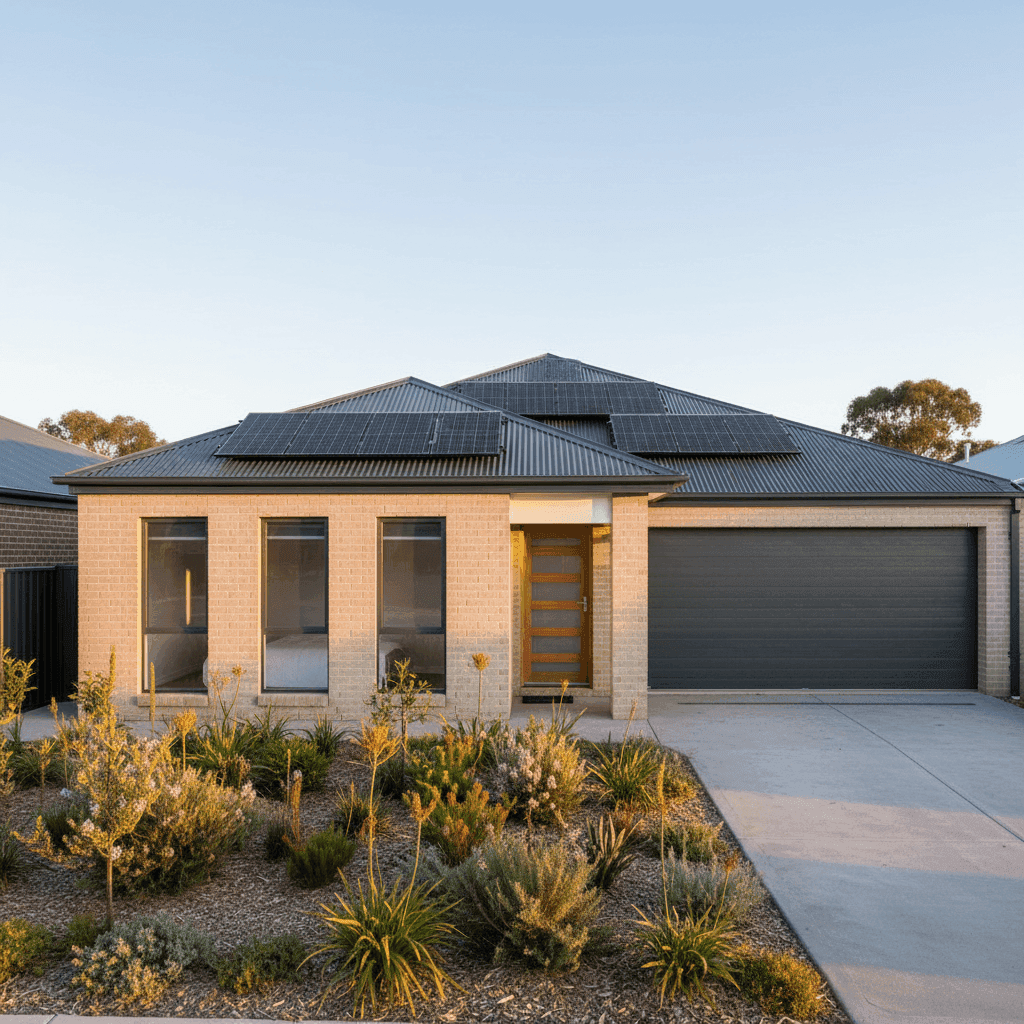
Drysdale is a growing coastal township on the Bellarine Peninsula, sitting about 25 kilometres south of Geelong and within easy reach of Port Phillip Bay. As more families and sea-changers make the move to this corner of Victoria, understanding what home insurance actually costs — and whether a given quote represents good value — has never been more important. This article breaks down a real home and contents insurance quote for a four-bedroom, free-standing home in Drysdale and puts it in context against suburb, state, and national benchmarks.
---
Is This Quote Fair?
The quote in question comes in at $1,478 per year (or $155 per month) for a combined home and contents policy. The building is insured for $990,000, with contents covered for $50,000. The building excess sits at $4,000, while the contents excess is a more modest $500.
Our price rating for this quote is FAIR — Around Average, and the data backs that up. Looking at 46 quotes collected for the Drysdale 3222 area, the suburb average premium is $1,774 per year and the median is $1,763. This quote lands meaningfully below both figures, which is a positive sign. In fact, it sits just above the 25th percentile mark of $1,437, meaning it's cheaper than roughly three-quarters of comparable quotes in the suburb.
In practical terms, this homeowner is paying less than most of their neighbours for similar coverage — which is a solid outcome. That said, "fair" doesn't mean "the best available." There's always room to compare, and a few hundred dollars in annual savings is well worth a short search.
---
How Drysdale Compares
To appreciate where this quote sits, it helps to zoom out and look at the broader picture.
| Benchmark | Average Premium | Median Premium |
|---|---|---|
| Drysdale 3222 | $1,774/yr | $1,763/yr |
| Greater Geelong LGA | $1,754/yr | — |
| Victoria | $3,000/yr | $2,718/yr |
| National | $5,347/yr | $2,764/yr |
Drysdale — and the Greater Geelong region more broadly — comes out looking quite affordable compared to Victorian averages. The state average of $3,000 per year is nearly double the suburb average, which reflects the significant premium loading applied to higher-risk postcodes across Victoria, particularly those affected by bushfire, flood, or storm exposure.
The national average of $5,347 is striking, though it's worth noting this figure is heavily skewed by extremely high premiums in cyclone-prone regions of Queensland and Western Australia. The national median of $2,764 is a more useful comparison point, and Drysdale sits well below it.
For homeowners in this part of the Bellarine Peninsula, the risk profile is relatively benign — no cyclone designation, and the area doesn't carry the same bushfire or flood loading as many other Victorian postcodes. That's reflected in the competitive local premiums.
---
Property Features That Affect Your Premium
Several characteristics of this particular property will have influenced the quote, both positively and negatively.
Brick veneer construction is generally well-regarded by insurers. It offers solid fire resistance and structural durability, and it's one of the most common wall materials in Victoria. Compared to weatherboard or other timber-clad homes, brick veneer typically attracts lower premiums.
Steel/Colorbond roofing is another tick in the right column. Colorbond is durable, low-maintenance, and performs well in a range of weather conditions. It's less susceptible to storm damage than older tile roofs and is commonly associated with more competitive insurance pricing.
Slab foundation is the standard for newer builds and presents minimal risk from an insurer's perspective, particularly in an area without significant soil movement or flood history.
Constructed in 2025, this is essentially a brand-new home. Newer properties benefit from modern building codes, up-to-date electrical and plumbing systems, and materials that meet current Australian Standards — all of which reduce the likelihood of a claim and can positively influence premiums.
Solar panels are worth flagging. While they add value to a property, they also add replacement cost in the event of storm or hail damage. Homeowners should confirm with their insurer that solar panels are explicitly covered under the building policy — not all standard policies include them automatically, and some apply sublimits.
Ducted climate control and above-average fittings quality both contribute to a higher sum insured, which is reflected in the $990,000 building cover. Underinsuring a well-appointed home is a common and costly mistake, so it's reassuring to see the coverage level set appropriately for the property's quality.
Timber and laminate flooring is a contents consideration as much as a building one. Timber floors can be expensive to replace or repair following water damage, so it's worth checking whether floor coverings are included under the building or contents section of the policy.
---
Tips for Homeowners in Drysdale
1. Don't set and forget your sum insured. Construction costs have risen sharply in recent years, and a building sum insured that was accurate when you first took out a policy may no longer reflect what it would actually cost to rebuild. Review your $990,000 figure annually and cross-check it against current building cost calculators.
2. Confirm solar panel coverage in writing. Solar systems can cost $10,000–$20,000 or more to replace. Contact your insurer directly and ask how your panels are covered — whether for storm, hail, fire, and accidental damage — and whether any sublimits apply.
3. Consider the trade-off on your building excess. The $4,000 building excess on this policy is on the higher side. A higher excess typically lowers your annual premium, but it means more out-of-pocket cost when you do need to make a claim. Think about whether that trade-off suits your financial situation, particularly for a newer home where unexpected major repairs are less likely but not impossible.
4. Compare at renewal, not just at purchase. Insurance loyalty rarely pays. The most competitive quote you receive today may not be the most competitive one in 12 months. Set a reminder to compare your options before each renewal — it takes less time than you might think and could save you hundreds of dollars.
---
Ready to See What You Could Pay?
Whether you're a new homeowner in Drysdale or coming up to renewal on an existing policy, it pays to know where you stand. CoverClub makes it easy to compare home and contents insurance quotes side by side, so you can see exactly how your options stack up. Get a quote today at CoverClub and find out if there's a better deal waiting for you.