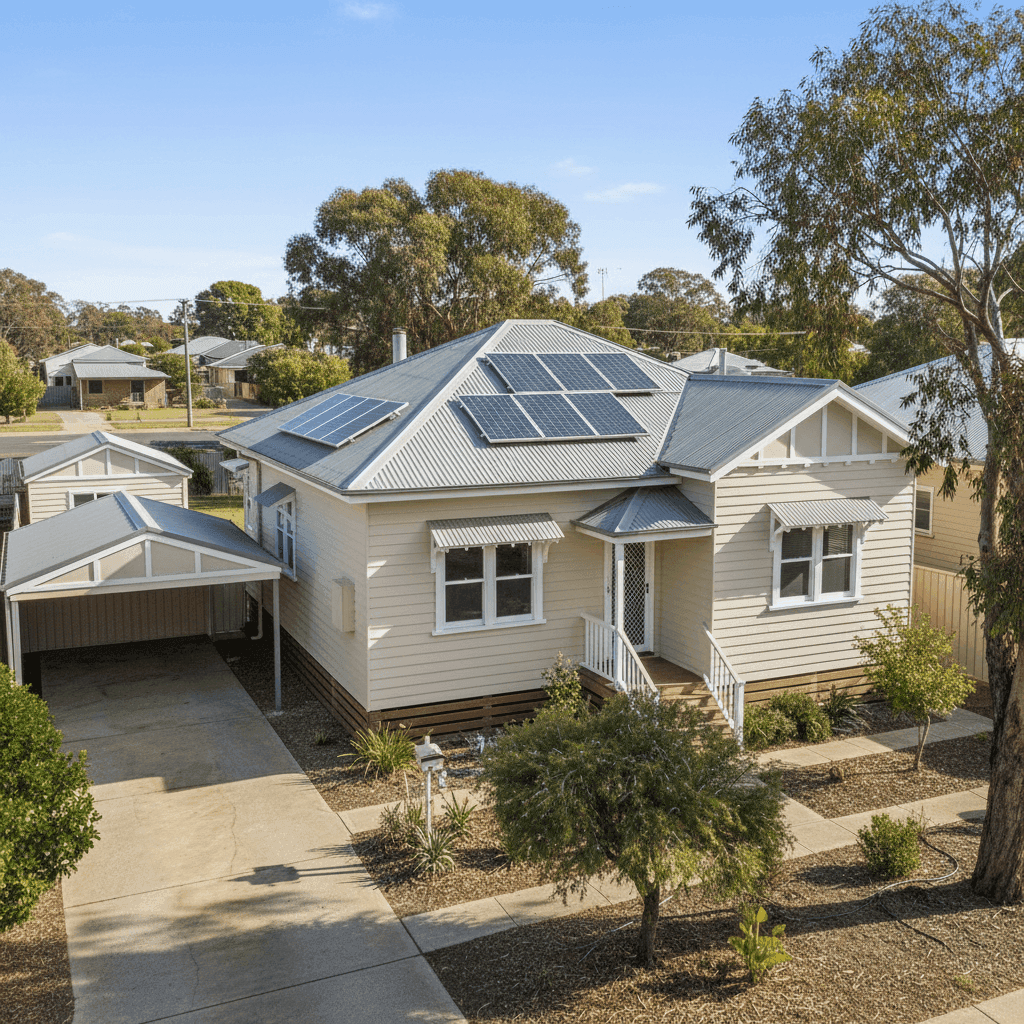
If you own a four-bedroom free standing home in Dubbo, NSW 2830, you might be wondering whether your home and contents insurance premium is reasonable — or whether you're paying well above the odds. This article breaks down a real quote of $8,524 per year (or $836/month) for a property in Dubbo, compares it against local, state, and national benchmarks, and offers practical advice for homeowners in the region.
---
Is This Quote Fair?
The short answer: this quote is rated Expensive — above average for the area.
At $8,524 annually, this premium sits noticeably higher than what most Dubbo homeowners are paying. To put it in perspective, the suburb average premium is $4,389/yr and the median sits at just $2,216/yr. That means this quote is roughly 1.9× the suburb average and nearly four times the suburb median — a significant gap that warrants closer scrutiny.
It's worth noting that the 75th percentile for Dubbo premiums reaches $7,013/yr, so while most residents pay far less, a portion of the market does approach this price range. Still, at $8,524, this quote exceeds even that upper quartile threshold, placing it firmly in the top tier of premiums seen locally.
The building sum insured of $620,000 and contents cover of $100,000 are substantial figures, and the total insured value will naturally push premiums higher. However, even accounting for the generous coverage amounts, the price signals that several property-specific risk factors are likely driving the cost upward.
---
How Dubbo Compares
Understanding where Dubbo sits in the broader insurance landscape helps contextualise this quote. Here's a snapshot:
| Benchmark | Average Premium | Median Premium |
|---|---|---|
| Dubbo (NSW 2830) | $4,389/yr | $2,216/yr |
| NSW (State) | $3,801/yr | $3,410/yr |
| National | $2,965/yr | $2,716/yr |
| Warrumbungle LGA | $2,683/yr | — |
A few things stand out here. Dubbo's average premium is higher than both the NSW state average and the national average, suggesting that properties in this postcode carry elevated risk profiles compared to much of the country. Interestingly, the Warrumbungle LGA average of $2,683/yr is considerably lower than the Dubbo suburb average, which may reflect the diversity of property types and risk profiles across the broader local government area.
You can explore the full breakdown of premiums for this postcode at the Dubbo insurance stats page, compare it against the NSW state overview, or see how it stacks up on the national insurance stats page.
The spread between Dubbo's 25th percentile ($1,122/yr) and 75th percentile ($7,013/yr) is remarkably wide — a range of nearly $6,000 — which tells us that property characteristics in this suburb vary enormously and have a major bearing on what individual homeowners end up paying.
---
Property Features That Affect Your Premium
Several characteristics of this particular property are likely contributing to its above-average premium. Let's unpack the key ones:
Weatherboard Timber Walls
Weatherboard wood construction is one of the most significant premium drivers in Australian home insurance. Timber is considerably more susceptible to fire, rot, and pest damage than brick or rendered block, and insurers price this risk accordingly. For a home built in 1980, ageing weatherboard can also present maintenance concerns that increase the likelihood of a claim.
Steel / Colorbond Roof
On the positive side, a Colorbond steel roof is generally viewed favourably by insurers. It's durable, fire-resistant, and low-maintenance compared to older tiled or fibrous cement roofing. This may provide a modest offset against some of the timber wall risk.
Stump Foundation
Homes on stumps (also called pier foundations) are common in regional NSW, particularly in older builds. While they offer good ventilation and flexibility, they can be more vulnerable to certain types of structural movement, pest ingress, and flooding. Insurers may apply a loading to stump-based homes, particularly where the stumps are original to a 1980 build.
Size and Age of the Property
At 406 sqm, this is a generously sized home. Larger homes cost more to rebuild, which directly influences the building sum insured and, in turn, the premium. Combined with a construction year of 1980, the age of the home means it may not meet current building codes, potentially increasing rebuild complexity and cost.
Granny Flat
The presence of a granny flat adds an additional structure to insure. This increases the overall replacement cost and may introduce additional liability considerations, both of which can push the premium higher.
Solar Panels
Solar panels are a relatively minor factor but do add to the replacement value of the property. They can also introduce specific risks around electrical faults or storm damage, which some insurers factor into their pricing.
---
Tips for Homeowners in Dubbo
If you're looking to manage your home insurance costs without sacrificing meaningful cover, here are four practical steps worth considering:
- Review your sum insured carefully. A building sum insured of $620,000 is substantial. Make sure this figure reflects the actual cost to rebuild — not the market value of the property. Overinsuring is a common and costly mistake. Use a reputable building cost calculator or engage a quantity surveyor to validate the figure.
- Maintain your weatherboard exterior. Insurers reward well-maintained properties. Keeping your timber walls painted, sealed, and free from rot or pest damage can reduce your risk profile over time. Some insurers may also offer discounts if you can demonstrate recent maintenance or pest inspections.
- Shop around and compare multiple quotes. The wide premium spread in Dubbo (from $1,122 to over $7,000 per year) shows that different insurers price this suburb very differently. Never accept your renewal quote without checking alternatives — savings of thousands of dollars per year are genuinely possible.
- Consider your excess settings. This quote carries a $2,000 building excess and $1,000 contents excess. Opting for a higher voluntary excess is one of the most straightforward ways to reduce your annual premium. If you have a solid emergency fund, accepting a higher out-of-pocket cost in the event of a claim can translate to meaningful ongoing savings.
---
Compare Your Options with CoverClub
Whether this quote reflects fair value for your specific circumstances or you suspect you're paying too much, the smartest move is to compare. CoverClub makes it easy to see what multiple insurers would charge for your home — in minutes, with no obligation. Get a quote today and find out whether you could be paying less for the same level of protection.