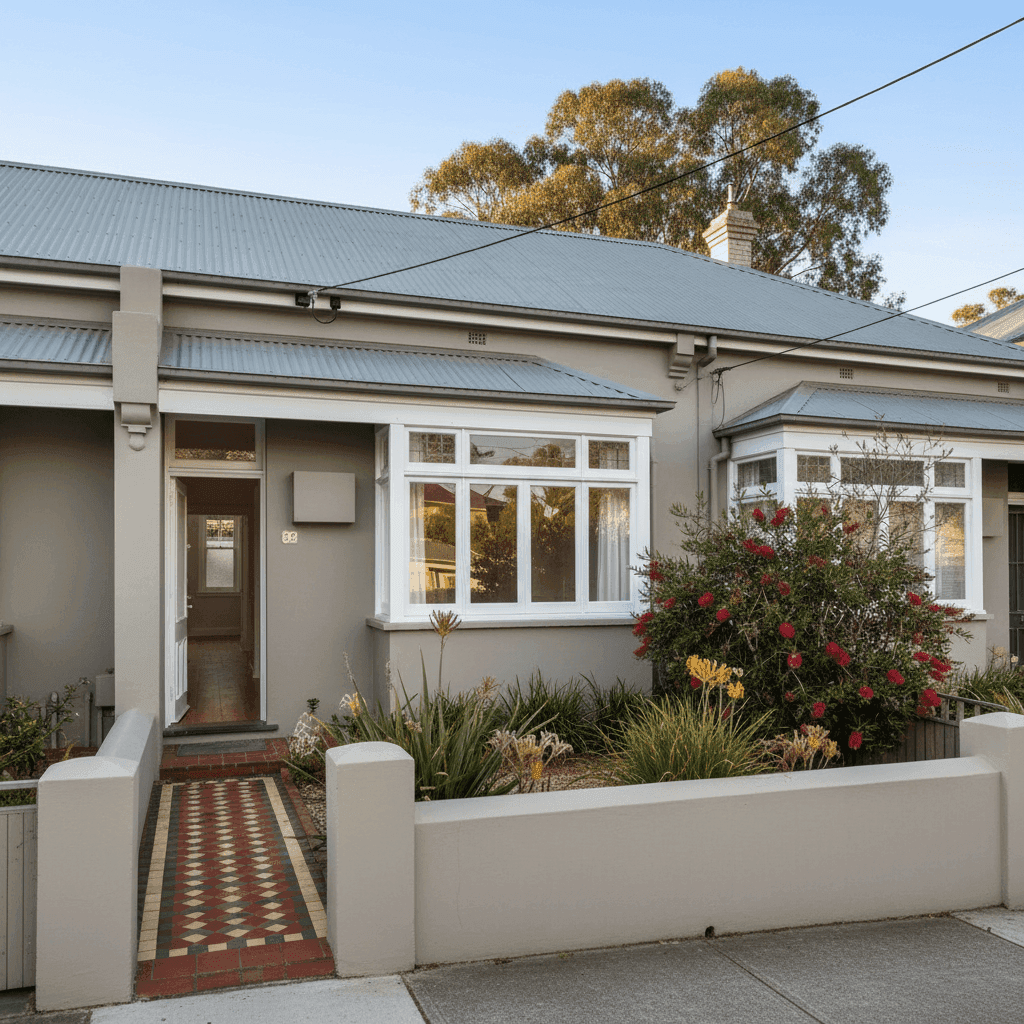
If you own a semi detached home in Dulwich Hill, NSW 2203, you're likely well aware of the suburb's appealing mix of Federation-era character and inner-west convenience. But with charm comes age, and with age comes the question: how much should you really be paying to insure your home? This article breaks down a real building insurance quote for a 2-bedroom, 1-bathroom semi detached property in Dulwich Hill — and puts the numbers into context so you can make a more informed decision.
---
Is This Quote Fair?
The quote in question comes in at $1,458 per year (or $156 per month) for building-only cover, with a sum insured of $505,000 and a building excess of $4,000. Our analysis rates this quote as FAIR — around average.
That "fair" rating is a meaningful signal. It doesn't mean you're getting a bargain, but it does mean you're not being overcharged either. For a property of this age, construction type, and location, landing near the middle of the market is a reasonable outcome — particularly when you consider the variables at play in Sydney's inner west.
It's worth noting that a $4,000 excess is on the higher side. Insurers often offer lower premiums in exchange for a higher excess, so if this quote was actively structured that way, the base rate before the excess trade-off may have been somewhat higher. Homeowners should weigh up whether they're comfortable covering the first $4,000 of any claim out of pocket.
---
How Dulwich Hill Compares
To understand whether this quote is genuinely competitive, it helps to look at the broader pricing landscape. Here's how the $1,458 annual premium stacks up:
| Benchmark | Premium |
|---|---|
| This quote | $1,458/yr |
| Dulwich Hill 25th percentile | $1,046/yr |
| Dulwich Hill median | $1,714/yr |
| Dulwich Hill average | $1,867/yr |
| Dulwich Hill 75th percentile | $2,704/yr |
| Inner West LGA average | $2,955/yr |
| NSW average | $9,528/yr |
| NSW median | $3,770/yr |
| National average | $5,347/yr |
| National median | $2,764/yr |
(Based on [29 quotes collected for Dulwich Hill](https://coverclub.com.au/stats/NSW/2203/dulwich-hill). [View NSW stats](https://coverclub.com.au/stats/NSW) or [national stats](https://coverclub.com.au/stats/national).)
A few things stand out here. At $1,458, this quote sits below both the suburb median ($1,714) and the suburb average ($1,867) — which is a positive sign. It's also well below the Inner West LGA average of $2,955, and comfortably beneath the NSW and national medians.
The state and national averages are significantly inflated by high-risk properties — think flood-prone regions, cyclone zones in Queensland, and bushfire-affected areas — so the median figures are generally a more useful comparison point for a suburban Sydney property like this one. Against the NSW median of $3,770 and the national median of $2,764, this quote looks quite competitive.
That said, the cheapest quotes in the suburb are sitting around the 25th percentile of $1,046/yr, which means there's still potential room to save if you shop around. It's always worth comparing multiple insurers before committing.
---
Property Features That Affect Your Premium
Several characteristics of this property will have influenced how insurers priced this quote.
Age of construction (1919): This is one of the most significant factors. A home built over 100 years ago carries higher rebuild risk — older plumbing, wiring, and structural elements can all contribute to claims. Insurers factor this in when calculating premiums, and some may apply age loadings or exclusions for pre-existing wear and tear.
External walls — Concrete: Concrete construction is generally viewed favourably by insurers. It offers strong resistance to fire, impact, and structural movement compared to timber-framed homes, which can help moderate the premium.
Roof — Steel/Colorbond: Colorbond roofing is widely regarded as one of the more insurer-friendly roof types in Australia. It's durable, low-maintenance, and performs well in adverse weather. This likely works in the homeowner's favour when it comes to pricing.
Foundation — Slab: Slab foundations are standard in Australian residential construction and don't typically attract any premium loading. They're considered stable and are well understood by insurers.
Semi detached configuration: Sharing a wall with a neighbouring property introduces some unique considerations. Any structural issue affecting the shared wall could involve both properties, and claims in these scenarios can sometimes be more complex. Some insurers price this risk into their premiums.
No pool, solar panels, or ducted climate control: The absence of these features keeps the risk profile relatively straightforward. Each of these additions can increase the sum insured or introduce specific risks that push premiums higher.
Building size — 139 sqm: At 139 square metres, this is a modest footprint for a Sydney property, which helps keep the sum insured and premium at a manageable level.
---
Tips for Homeowners in Dulwich Hill
1. Review your sum insured regularly With a sum insured of $505,000, it's important to ensure this figure reflects the actual cost to rebuild your home — not its market value. Construction costs in Sydney have risen sharply in recent years, and being underinsured is a real risk. Use a building cost calculator or consult a quantity surveyor to verify your figure annually.
2. Consider whether your excess is working for you The $4,000 building excess on this policy is relatively high. If you've chosen a higher excess to reduce your premium, make sure you genuinely have those funds accessible in the event of a claim. If cash flow is a concern, it may be worth comparing policies with a lower excess, even if the annual premium is slightly higher.
3. Check for age-related exclusions Given the 1919 construction date, it's worth reading your policy's fine print carefully. Some insurers exclude damage related to gradual deterioration, pre-existing defects, or original building materials. Knowing what's covered — and what isn't — before you need to make a claim is essential.
4. Shop around at renewal time Insurance premiums can shift significantly between insurers, even for identical properties. With the suburb's 25th percentile sitting at $1,046/yr, there's a reasonable chance a more competitive quote exists. Comparing options each year at renewal is one of the simplest ways to avoid overpaying.
---
Compare Your Own Quote
Whether you're renewing soon or just curious about what you're currently paying, CoverClub makes it easy to see how your premium stacks up. Get a home insurance quote at CoverClub and compare your results against real data from Dulwich Hill and across Australia — so you can walk into your next renewal with confidence.