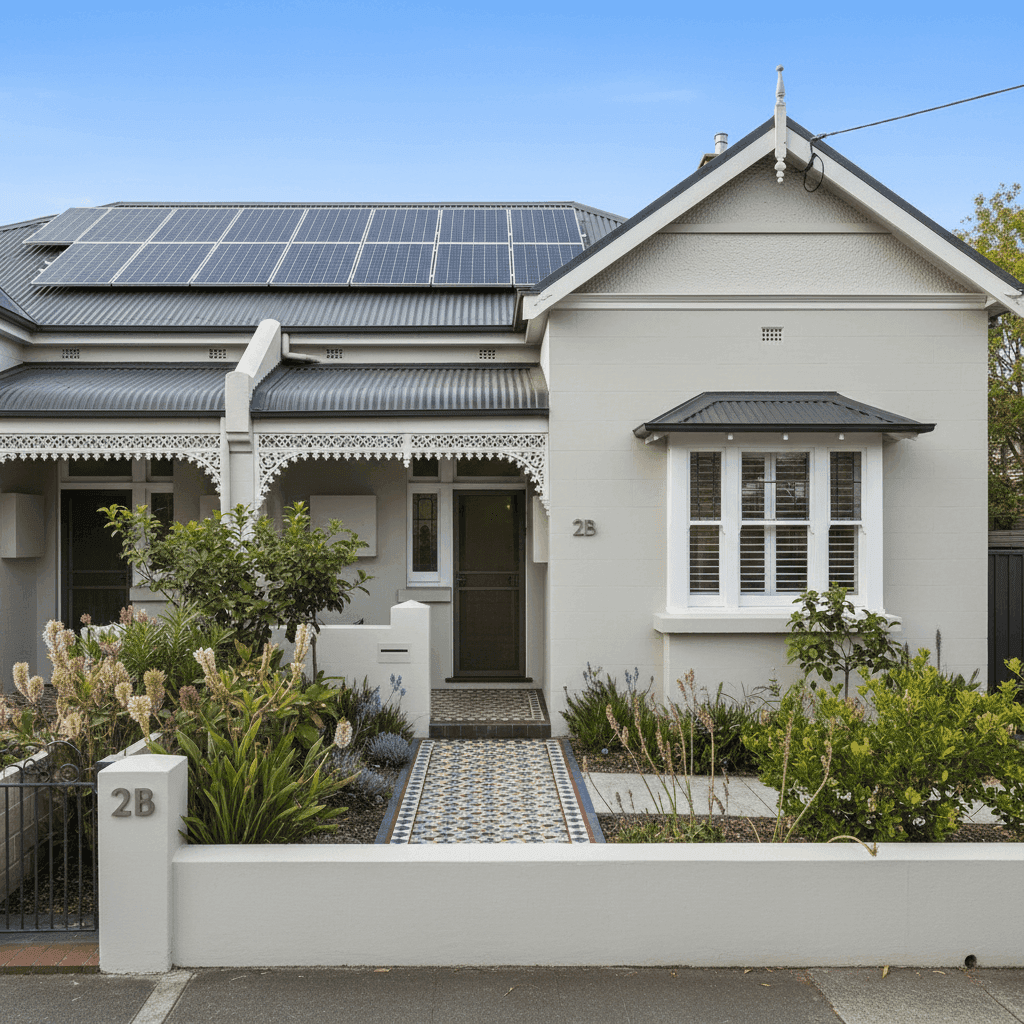
Dulwich Hill is one of Sydney's most characterful inner-west suburbs — a leafy pocket of federation-era semis, tree-lined streets, and a tight-knit community feel. If you own a semi detached home here, you're sitting on a significant asset, and making sure it's properly protected is just as important as the property itself. This article breaks down a recent building-only insurance quote for a 2-bedroom semi detached in Dulwich Hill (NSW 2203), putting the price in context against local, state, and national benchmarks so you can judge whether you're getting a fair deal.
---
Is This Quote Fair?
The annual premium on this quote comes in at $956 per year (or $93/month), which CoverClub's pricing engine rates as CHEAP — below average for this type of property in this location.
To put that in perspective: the average building insurance premium across Dulwich Hill sits at $1,857 per year, with a median of $1,507. That means this quote is roughly 49% below the suburb average and 37% below the suburb median — a substantial saving by any measure.
Even compared to the 25th percentile of local quotes (i.e., the cheapest quarter of premiums in the area), which sits at $1,382/yr, this quote still comes in well under that threshold. In short, if you were offered this premium, it would be well worth taking seriously.
It's worth noting that the building sum insured is set at $700,000 with a $2,000 building excess. A higher excess is one lever insurers use to reduce premiums, so that's worth factoring into your assessment — if you ever need to make a claim, you'd be covering the first $2,000 out of pocket.
---
How Dulwich Hill Compares
Zooming out beyond the suburb reveals just how varied home insurance costs can be across New South Wales and the country at large.
| Benchmark | Average Premium | Median Premium |
|---|---|---|
| Dulwich Hill (NSW 2203) | $1,857/yr | $1,507/yr |
| Inner West LGA | $1,832/yr | — |
| NSW State | $3,801/yr | $3,410/yr |
| National (Australia) | $2,965/yr | $2,716/yr |
The contrast with the NSW state average is striking. At $3,801/yr, the typical NSW homeowner pays roughly double what Dulwich Hill residents tend to pay. Much of that state average is pulled upward by high-risk regions — coastal flood zones, bushfire-prone areas in regional NSW, and cyclone-affected communities in the north. Dulwich Hill, sitting comfortably in Sydney's inner west, benefits from a comparatively benign risk profile.
Similarly, the national average of $2,965/yr is nearly three times this particular quote. Even against the national median of $2,716/yr, this property's premium looks remarkably competitive.
You can explore how other properties in the postcode are priced by visiting the Dulwich Hill insurance stats page, or broaden your view with the full NSW state insurance data.
> Note: The suburb sample size here is 12 quotes, which is a reasonable snapshot but not a huge dataset. Averages can shift as more data comes in, so it's always smart to compare multiple live quotes rather than relying solely on benchmarks.
---
Property Features That Affect Your Premium
Several characteristics of this particular property work together to influence where the premium lands.
Construction Era & Materials
Built in 1921, this semi detached is over a century old — a common vintage in Dulwich Hill, where federation and inter-war housing stock dominates. Older homes can attract higher premiums due to the cost of like-for-like restoration (period cornicing, timber joinery, original brickwork), but this property's concrete external walls are a mitigating factor. Concrete is considered a robust, fire-resistant material by most insurers, which can help keep premiums down compared to, say, weatherboard or fibrous cement cladding.
Roof Type
The steel/Colorbond roof is a modern, durable material that insurers generally view favourably. It's resistant to fire, rot, and many forms of storm damage. If the roof has been replaced or upgraded at some point — as is common with older homes — that's exactly the kind of improvement that can positively influence your premium.
Foundation & Flooring
A slab foundation combined with tile flooring suggests a property that's less susceptible to certain types of water damage and subsidence compared to homes with suspended timber floors and footings. These are subtle factors, but they contribute to the overall risk profile insurers assess.
Solar Panels
This property has solar panels, which are increasingly common across Sydney's inner west. It's important to check whether your policy explicitly covers solar panels as part of the building. Some policies include them automatically; others treat them as an optional add-on. Given the replacement cost of a solar system can run into the thousands, this is worth confirming with your insurer.
No Pool, No Ducted Climate Control
The absence of a swimming pool removes one source of liability and maintenance risk that insurers factor in. Similarly, no ducted climate control system means fewer mechanical components that could fail and cause damage — both minor but positive signals for your premium.
---
Tips for Homeowners in Dulwich Hill
1. Don't set-and-forget your sum insured Building costs have risen sharply in recent years. A sum insured of $700,000 may be appropriate today, but it's worth reassessing annually. Underinsurance is a real risk — if your rebuild cost exceeds your coverage, you'll be left out of pocket after a major claim. Use a building cost estimator or speak with a quantity surveyor to validate your figure.
2. Confirm solar panel coverage explicitly As mentioned above, solar panels can fall into a grey area in some policies. Before renewing or switching, ask your insurer directly: "Are my solar panels covered under the building policy, and up to what value?" Get the answer in writing.
3. Review your excess strategically This quote carries a $2,000 building excess. A higher excess lowers your premium but increases your out-of-pocket cost at claim time. If you have the savings buffer to absorb a $2,000 expense, this is a smart trade-off. If not, it may be worth comparing quotes with a lower excess to understand the premium difference.
4. Compare at least three quotes at renewal Even if your current insurer offers a competitive rate, the home insurance market shifts constantly. Spending 10 minutes comparing quotes at renewal could save you hundreds — and you might find equivalent or better cover at a lower price. The inner west market is competitive, and loyalty doesn't always pay.
---
Ready to Compare?
Whether you're reviewing an existing policy or shopping for cover on a new purchase, seeing multiple quotes side by side is the fastest way to know if you're getting value. Get a home insurance quote at CoverClub and see how your premium stacks up against the suburb, state, and national benchmarks — in minutes, for free.